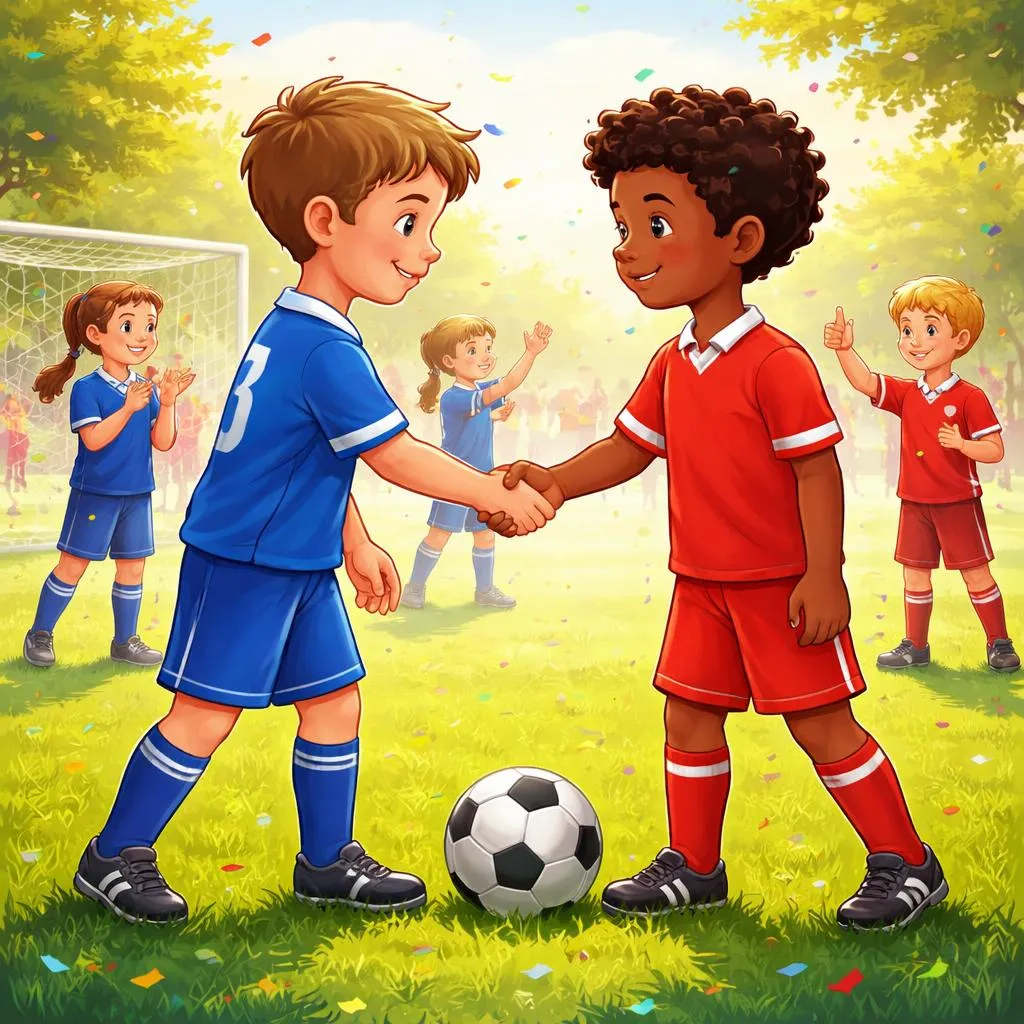

What Do These Expressions Mean? “Good game” and “well played” both praise the effort and skill of an opponent after a match. They tell another child that you respect how they played, no matter who won. Children say these words after soccer games, board games, or video games. Both build good sportsmanship.
“Good game” means the entire match was enjoyable and fairly competed. It is short and common. A child says it when shaking hands after a soccer game. It is the classic sportsmanship phrase.
“Well played” means your specific moves and decisions were skillful. It is more about complimenting the opponent's talent. A child says it after a close chess match. It feels more focused on the other person's skill.
These expressions seem similar. Both say “I respect you as a player.” Both end a game with kindness. But one is about the game while one is about the player.
What's the Difference? One is about the game as a whole. One is about the opponent's skill. “Good game” is for the shared experience. It says “that was fun for both of us.” It is for team sports and friendly play.
“Well played” is for the opponent's performance. It says “you made good moves.” It is for individual skill games like chess or tennis. It feels more thoughtful.
Think of a child after a soccer match. “Good game, everyone” is right. “Well played” to one player is also nice. One is for the team. One is for the individual.
One is for all sports. The other is for skill-based games. “Good game” works for every competition. “Well played” works best for chess, card games, or one-on-one sports. Use the first for everything. Use the second for skill compliments.
Also, “good game” is often said quickly after a match. “Well played” is said more slowly, with more thought. Both are kind. Both show respect.
When Do We Use Each One? Use “good game” after any game or sport. Use it for soccer, basketball, board games, or video games. Use it as a quick, kind closing. It fits all competition.
Examples at home and play: “Good game, everyone. That was fun.” “Good game. You ran really fast.” “Good game. Let's play again tomorrow.”
Use “well played” for skill-based games. Use it for chess, checkers, tennis, or card games. Use it to compliment a specific move. It fits thoughtful moments.
Examples for skill: “Well played. That was a smart move.” “Well played. You tricked me at ” “Well played. I couldn't figure out your strategy.”
Children can use both. “Good game” for everything. “Well played” for when they want to praise a smart move. Both build good sports.
Example Sentences for Kids Good game: “Good game. You almost beat me.” “Good game. That was close.” “Good game. Let's high-five.”
Well played: “Well played. Your move was clever.” “Well played. You had me trapped.” “Well played. I learned something from you.”
Notice “good game” is quick and friendly. “Well played” is more like a tip of the hat. Children learn both. One for fun. One for respect.
Parents can use both. After a family game night: “good game, everyone.” After a chess match: “well played. You are getting so good.” Children learn different levels of praise.
Common Mistakes to Avoid Some children say “good game” only when they win. That is not sportsmanship. Say it even when you lose. Being kind in loss is true strength.
Wrong: Only says “good game” after winning. Better: Say “good game” after every game, win or lose.
Another mistake: saying “well played” sarcastically. If you are angry you lost, saying “well played” in a mean voice is rude. Say it with a genuine smile. Sarcasm is not sportsmanship.
Wrong: “Well played.” (sarcastic tone, crossed arms) Right: “Well played.” (smiling, sincere)
Some learners forget to make eye contact when saying these phrases. Look at the person. Nod. Shake hands. Sportsmanship is shown with your whole body. Words plus actions equal respect.
Also avoid saying “good game” if it was not a good game. If someone cheated or was mean, say “thank you for playing.” Be honest but not mean. You do not have to praise bad behavior.
Easy Memory Tips Think of “good game” as a handshake. Two hands meet. Eyes meet. Quick and warm. For all games.
Think of “well played” as a small bow. The head nods. Respect is shown. Thoughtful and specific. For skill games.
Another trick: remember the audience. “Good game” for teams and groups. “Well played” for individual opponents. Team gets “good game.” Individual gets “well played.”
Parents can say: “Game for a team. Well played for a chess dream.” That means group sports get “good game.” One-on-one skill games get “well played.”
Practice at home. After tag: “good game.” After chess: “well played.” Two different sportsmanship levels.
Quick Practice Time Let us try a small exercise. Choose the better phrase for each situation.
A child's soccer team loses 5-0. The child wants to be a good sport to the other team. a) “Well played. You are better.” b) “Good game. You played well.”
A child loses a close chess match. The opponent made a brilliant final move. a) “Good game.” b) “Well played. That last move was amazing.”
Answers: 1 – b. A team sport after a loss fits the kind “good game.” 2 – b. A one-on-one skill game with a clever move fits “well played.”
Fill in the blank: “When my team loses a basketball game, I still say ______ to the other team.” (“Good game” is the classic sportsmanship phrase for all sports.)
One more: “When my friend beats me in checkers with a smart trap, I say ______.” (“Well played” fits the skill-based compliment.)
Sportsmanship is character. “Good game” says “I respect this match.” “Well played” says “I respect your skill.” Teach your child both. A child with good sportsmanship will always be invited to play.
Wrap-up “Good game” is a quick, kind phrase for any competition, showing respect for the match itself. “Well played” is a more thoughtful compliment for an opponent's skill in one-on-one or strategy games. Use “good game” for all sports, team games, and friendly matches. Use “well played” for chess, card games, tennis, or when you want to praise a smart move. Both phrases build good sportsmanship. A child who says both plays with honor and wins at kindness.