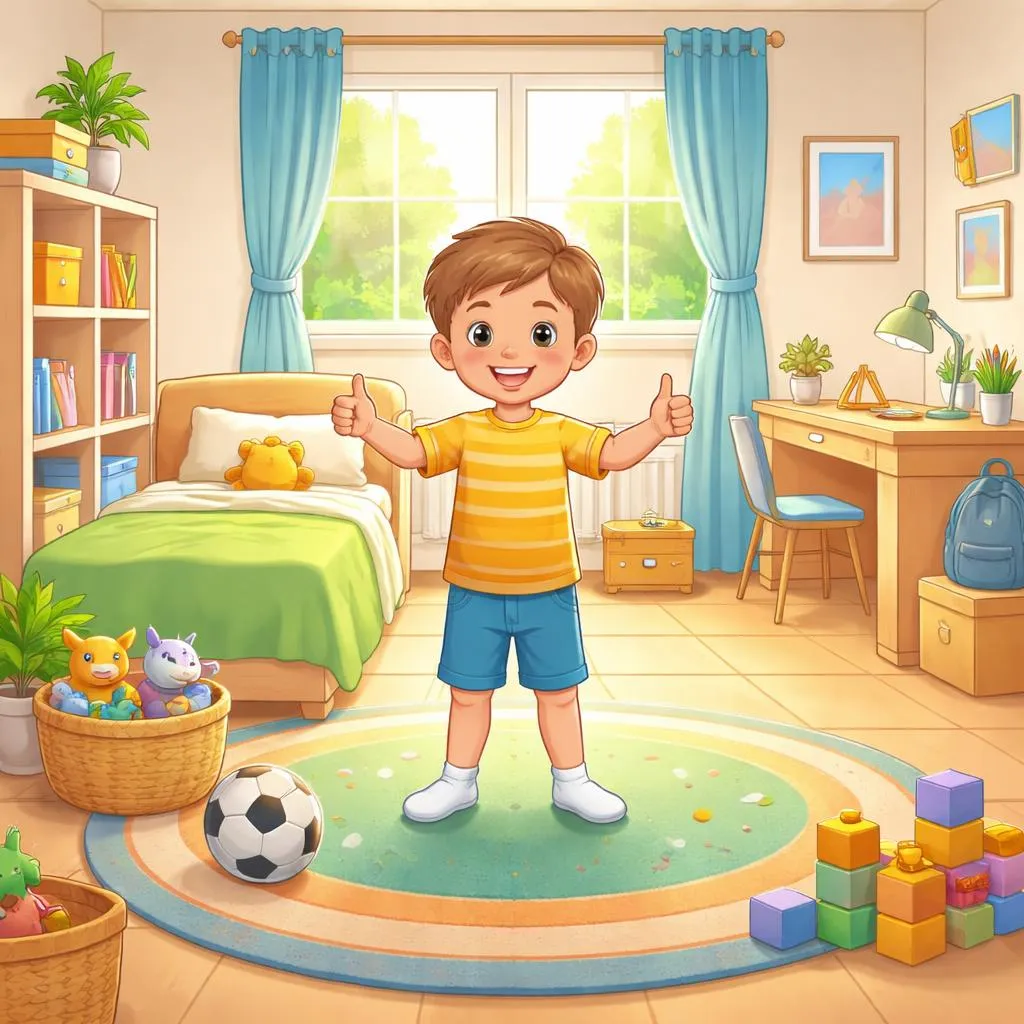

What Do These Expressions Mean? “It's neat” and “it's tidy” both describe a space or object that is clean and well-organized. They tell someone that everything is in its place and looks orderly. Children say these words after cleaning a room, making a bed, or arranging toys. Both show pride.
“It's neat” means orderly, clean, and arranged in a pleasing way. It is common and positive. A child says it after lining up their crayons. It is a warm word.
“It's tidy” means everything is in its proper place with no mess. It is more specific to organization. A parent says it after a child puts away clothes. It feels cozy and calm.
These expressions seem similar. Both say “it's not messy.” Both show approval. But one is about overall appearance while one is about proper placement.
What's the Difference? One is about orderly appearance. One is about proper placement. “It's neat” describes a space that looks clean and orderly. It can be about writing, clothes, or a room. It is a general compliment.
“It's tidy” describes that everything is in its correct place. It is about storage and organization. A tidy desk has pencils in the holder. It is more specific.
Think of a child making their bed. The pillows are straight. “It's neat” is right. The toys are in the bins. “It's tidy” is also right. One is about looks. One is about storage.
One is for overall appearance. The other is for put-away-ness. “It's neat” can describe handwriting. “It's tidy” does not describe handwriting. Use the first for looks. Use the second for organization.
Also, “neat” can mean “cool” in slang. “That trick is neat” means it's cool. “Tidy” is not slang. Context tells the meaning.
When Do We Use Each One? Use “it's neat” for orderly appearance. Use it for a clean desk, a made bed, or neat handwriting. Use it as a general compliment. It fits visual order.
Examples at home: “Your room is neat. Good job.” “It's neat how you lined up the books.” “Your handwriting is so neat.”
Use “it's tidy” for proper placement of items. Use it after organizing a closet or putting away toys. Use it to describe storage. It fits organization.
Examples for organization: “The toy box is tidy. Everything has a place.” “It's tidy in here. I can find everything.” “The shelf is tidy. No piles.”
Children can use both. “It's neat” for looks. “It's tidy” for organization. Both praise hard work.
Example Sentences for Kids It's neat: “Your drawing is neat. The lines are straight.” “The living room looks neat after we cleaned.” “It's neat how you folded your clothes.”
It's tidy: “The closet is tidy. All shoes are paired.” “It's tidy when my crayons are in the box.” “The kitchen drawers are tidy now.”
Notice “it's neat” is about the look. “It's tidy” is about where things go. Children learn both. One for appearance. One for organization.
Parents can use both. Made bed: “it's neat.” Put-away toys: “it's tidy.” Children learn different cleaning compliments.
Common Mistakes to Avoid Some children say “tidy” when they mean “neat.” Both are fine, but using them correctly teaches precision. Save “tidy” for things that have a place. Use “neat” for visual order.
Wrong: “Your picture is tidy.” Better: “Your picture is neat.”
Another mistake: saying “neat” for things that are not orderly. A pile of stuff is not neat. Be honest. Praise when it truly is neat.
Wrong: “It's neat” (messy room). Better: “Let's make it neat together.”
Some learners think “tidy” is only for small spaces. A whole house can be tidy. A closet can be tidy. Any place with proper storage can be tidy.
Also avoid saying “neat” to mean “cool” if the child might confuse it. “That trick is neat” means cool. “Your room is neat” means clean. Context helps.
Easy Memory Tips Think of “it's neat” as a straight line. The line is even. No bumps. Pleasing to the eye. For appearance.
Think of “it's tidy” as a labeled box. Everything goes in its home. You can find it. For organization.
Another trick: remember the focus. “Neat” is for the eye. “Tidy” is for the system. Eye gets “neat.” System gets “tidy.”
Parents can say: “Neat for a treat for your eyes. Tidy for a surprise of where supplies lie.” That means visual order gets “neat.” Organized storage gets “tidy.”
Practice at home. Made bed: “it's neat.” Organized toy bins: “it's tidy.” Two different clean kinds.
Quick Practice Time Let us try a small exercise. Choose the better phrase for each situation.
A child finishes a drawing with straight lines and even coloring. a) “It's tidy.” b) “It's neat. The lines are perfect.”
A child puts all their books on the shelf in height order. Everything has a place. a) “The shelf is neat.” b) “The shelf is tidy. I can find any book.”
Answers: 1 – b. A drawing with straight lines and even coloring fits the visual “neat.” 2 – b. A shelf with organized storage fits the place-based “tidy.”
Fill in the blank: “When I make my bed with straight sheets and fluffed pillows, I say it's ______.” (“Neat” is the visual, appearance-based choice.)
One more: “When I put all my markers back in the holder by color, I say the desk is ______.” (“Tidy” fits the organized, proper-placement description.)
A clean space feels good. “It's neat” praises the look. “It's tidy” praises the system. Teach your child both. A child who knows the difference learns to clean with purpose.
Wrap-up “It's neat” describes something that looks orderly, clean, and pleasing to the eye. “It's tidy” describes something where every item is in its proper place. Use “it's neat” for a made bed, neat handwriting, or a clean drawing. Use “it's tidy” for organized closets, toy bins, or shelves. Both phrases celebrate hard work and order. A child who learns to say “neat” and “tidy” learns to take pride in their space.