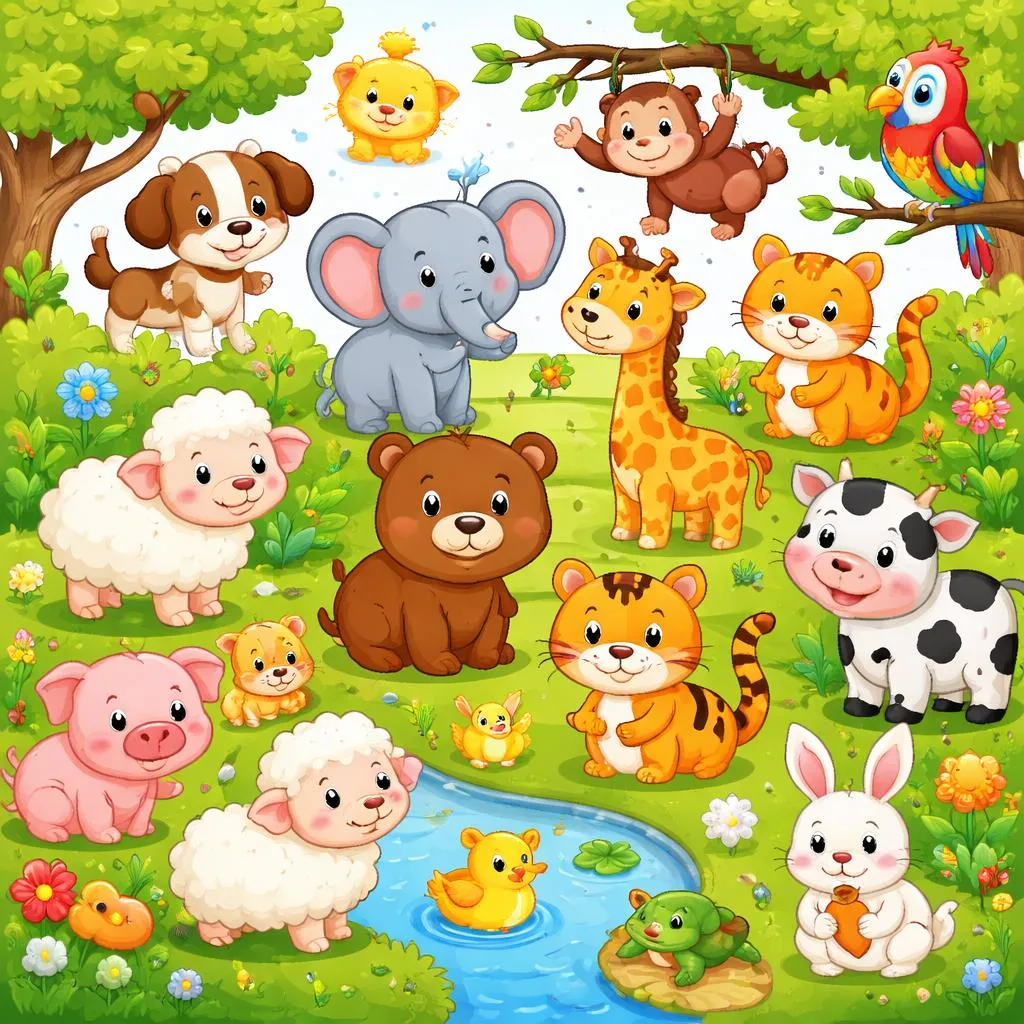

Animals animals name is a common beginner topic. It feels simple. It feels friendly.
Animal names appear early in language learning. They help learners connect words with images.
This topic supports vocabulary growth, reading confidence, and early speaking skills in a calm and natural way.
Why Animal Names Are Easy to Learn
Animal names are concrete.
You can see animals. You can imagine animals.
Clear images support memory.
This makes animal names perfect for children and beginner learners.
Farm Animals Names
Farm animals are familiar.
Cow Pig Sheep
These animals appear in stories. They appear in songs.
Farm animal names feel traditional and clear.
More Farm Animal Names
Horse Goat Chicken
These names are short. They are easy to say.
Short words are easier to remember.
Pet Animals Names
Pets live close to people.
Dog Cat Fish
These names feel personal. Many learners know them already.
Pet names help learners talk about daily life.
Common Pet Animal Names
Rabbit Hamster Bird
These animals are gentle. Their names sound soft.
Soft sounds feel friendly.
Wild Animals Names
Wild animals feel exciting.
Lion Tiger Bear
These names appear in cartoons. They appear in picture books.
Wild animals capture attention.
More Wild Animal Names
Elephant Giraffe Zebra
These animals look different. Their names feel special.
Difference helps memory.
Jungle Animals Names
Jungle animals feel playful.
Monkey Snake Parrot
These names appear in children’s stories. They support imagination.
Ocean Animals Names
Ocean animals feel calm.
Fish Whale Dolphin
Water animals create strong pictures.
Pictures support learning.
More Ocean Animal Names
Shark Octopus Crab
These names add variety. Variety keeps interest.
Bird Animals Names
Birds appear everywhere.
Bird Duck Swan
Bird names are common in poems.
More Bird Names
Eagle Owl Penguin
Bird names help describe nature.
Nature words feel peaceful.
Insect Animals Names
Insects are small but common.
Ant Bee Fly
These names appear often. They are easy to recognize.
More Insect Names
Butterfly Spider Ladybug
These names feel playful. They attract attention.
Baby Animals Names
Baby animals feel cute.
Puppy Kitten Chick
These names appear in stories. They build emotional connection.
Emotion helps memory.
Animal Names and Sounds
Animals make sounds.
Dog says woof. Cat says meow.
Sound connection supports recall.
Animal Names and Actions
Animals move.
Birds fly. Fish swim.
Action words build simple sentences.
Animal Names in Simple Sentences
Simple sentences feel safe.
The dog runs. The cat sleeps.
These sentences build confidence.
Animal Names and Plural Forms
Animals can be many.
One cat. Two cats.
Plural forms appear naturally.
Animal Names and Colors
Animals have colors.
A black dog. A white sheep.
Color plus animal creates clear images.
Animal Names and Size Words
Size words fit animals.
Big elephant. Small mouse.
Opposites feel clear.
Animal Names and Counting
Counting uses animals.
Three birds. Five fish.
Animals support number learning.
Animal Names and Sorting
Sorting helps thinking.
Farm animals. Wild animals.
Groups help memory.
Animal Names and Games
Games use animals often.
Guess the animal. Point to the animal.
Play reduces stress.
Animal Names and Songs
Songs repeat animal names.
Repetition feels natural. Music supports memory.
Animal Names and Flashcards
Flashcards work well.
Picture and word together. Animal and name together.
Visual pairing improves recall.
Animal Names and Classroom Language
Classrooms use animals.
Circle the dog. Color the cat.
These commands feel friendly.
Animal Names and Early Reading
Early books use animals.
Pictures support meaning. Words feel clear.
This builds reading confidence.
Animal Names and Listening Practice
Listening improves recognition.
Learners hear animal names in songs and videos.
Repeated listening builds familiarity.
Animal Names and Speaking Practice
Speaking starts small.
I see a dog. I like cats.
Short sentences feel easy to say.
Animal Names and Writing Practice
Writing supports accuracy.
Learners write animal names. They notice letters.
Spelling improves slowly.
Animal Names and Children
Children love animals.
Animals feel friendly. They feel safe.
Safe topics support learning.
Animal Names and Adult Learners
Adults enjoy animal words too.
They feel relaxing. They feel familiar.
Simple vocabulary builds early success.
Animal Names and Culture
Animals appear in cultures.
Stories use animals. Symbols use animals.
Animal names open cultural awareness.
Animal Names and Memory
Memory grows with use.
Animals appear often. Their names repeat.
Repetition keeps words active.
Animal Names and Vocabulary Growth
Animal names build a base.
Once learned, learners add adjectives.
Fast dog. Big horse.
Vocabulary grows naturally.
Animal Names and Sentence Growth
Sentences expand slowly.
The dog runs. The brown dog runs fast.
Animals support expansion.
Animal Names and Confidence
Confidence comes from success.
Animal names are easy wins.
Easy wins motivate learners.
Animal Names in Daily Life
Animals appear everywhere.
Books. Media. Signs.
Daily exposure supports retention.
Animal Names as Learning Foundations
Animals animals name is more than a simple topic.
It supports vocabulary, sentence building, and early communication.
With clear images, short sentences, and gentle repetition, animal names become familiar, easy to recall, and enjoyable to use, forming a strong foundation for confident and happy English language learning.
Animal Names and Daily Routines
Animals fit daily routines.
The dog eats. The cat sleeps.
Daily actions feel familiar.
Familiar actions support understanding.
Animal Names and Morning Language
Morning language uses animals.
The bird sings. The rooster wakes people.
Morning scenes feel calm.
Calm language supports focus.
Animal Names and Night Language
Night feels quiet.
The owl watches. The cat rests.
Night animals introduce time awareness.
Time words add meaning.
Animal Names and Weather Talk
Weather language uses animals.
Birds fly in the sun. Dogs stay inside in rain.
Weather plus animals build context.
Context supports comprehension.
Animal Names and Place Words
Place words fit animals.
The fish is in water. The cow is on the farm.
Prepositions feel natural. Meaning stays clear.
Animal Names and Simple Questions
Questions use animals well.
What animal is this. Where is the cat.
Questions invite answers. Answers build confidence.
Animal Names and Answer Patterns Again
Answer patterns repeat.
It is a horse. It is a bird.
Repetition strengthens structure.
Animal Names and Yes No Language
Yes no questions feel easy.
Do you like dogs. Yes, I do.
Short answers feel safe.
Animal Names and Preferences
Preferences use animals.
I like cats. I like birds.
Personal language feels meaningful.
Meaning supports memory.
Animal Names and Likes and Dislikes
Dislikes appear gently.
I do not like snakes. I do not like spiders.
Emotion words connect to experience.
Animal Names and Family Language
Family talk uses animals.
My dog is small. Her cat is white.
Possessive words appear naturally.
Animal Names and Describing Friends
Friends talk about animals.
Your dog is cute. His rabbit is fast.
Description builds detail. Detail builds fluency.
Animal Names and Classroom Commands
Commands use animals.
Point to the lion. Circle the fish.
Action plus animal keeps focus.
Animal Names and Listening Games
Listening games feel fun.
Listen and point. Listen and say.
Animals make games easy.
Animal Names and Memory Games
Memory games repeat animals.
Match the animal. Find the same animal.
Repetition supports retention.
Animal Names and Story Sequences
Stories use animals.
The dog runs. The dog stops.
Sequence words add order.
Order supports comprehension.
Animal Names and Beginning Stories
Beginning stories stay simple.
The cat sleeps. The mouse runs.
Short stories feel achievable.
Animal Names and Problem Stories
Simple problems appear.
The bird is lost. The bird finds home.
Emotion adds interest.
Animal Names and Moral Stories
Animals teach gently.
The slow turtle wins. The fast rabbit waits.
Messages stay soft. Learning stays light.
Animal Names and Imagination
Imagination supports language.
The lion talks. The fish smiles.
Creative play reduces fear.
Animal Names and Pretend Play
Pretend play feels safe.
Be a dog. Be a bird.
Movement supports memory.
Animal Names and Body Movement
Movement matches animals.
Jump like a frog. Walk like a bear.
Body learning supports language learning.
Animal Names and Sound Imitation
Sound imitation helps.
Meow Moo
Sound play feels joyful.
Joy supports learning.
Animal Names and Rhythm
Rhythm fits animals.
Clap for each animal name. Say slowly.
Rhythm supports pronunciation.
Animal Names and Pronunciation Practice
Pronunciation improves with animals.
Clear consonants. Clear vowels.
Animal words are easy to practice.
Animal Names and Spelling Awareness
Spelling appears slowly.
Dog Cat
Short words reduce stress.
Animal Names and Letter Recognition
Letters feel clearer.
D for dog. C for cat.
Letter pairing supports early reading.
Animal Names and Alphabet Review
Animals match letters.
A for ant. B for bear.
Alphabet learning feels playful.
Animal Names and Sorting by Size
Sorting helps thinking.
Big animals. Small animals.
Visual contrast supports understanding.
Animal Names and Sorting by Place
Place sorting helps.
Land animals. Water animals.
Categories organize vocabulary.
Animal Names and Sorting by Sound
Sound sorting feels fun.
Loud animals. Quiet animals.
Listening skills improve naturally.
Animal Names and Real World Observation
Real life shows animals.
Pets at home. Birds outside.
Observation reinforces vocabulary.
Animal Names and Picture Books
Picture books repeat animals.
Images support meaning. Words feel safe.
Reading becomes enjoyable.
Animal Names and Early Fluency
Fluency starts small.
Recognizing animal names feels fluent.
Success motivates learners.
Animal Names and Review Cycles
Review keeps words active.
Short review. Daily exposure.
Consistency matters.
Animal Names and Long-Term Memory
Long-term memory needs use.
Animals appear often. Their names repeat.
Repetition keeps memory strong.
Animal Names and Confidence Building
Confidence grows step by step.
Animal words feel easy.
Easy words lead to harder words.
Animal Names and Vocabulary Expansion
Expansion feels natural.
Add colors. Add actions.
The black dog runs.
Language grows smoothly.
Animal Names and Sentence Length
Sentence length increases slowly.
The dog runs. The small dog runs fast.
Growth feels natural.
Animal Names and Communication Skills
Communication starts with naming.
Naming leads to describing. Describing leads to sharing.
Animals support all steps.
Animal Names and Emotional Safety
Animals feel safe.
Safe topics reduce anxiety.
Low anxiety supports learning.
Animal Names and Teaching Simplicity
Simple teaching works best.
Clear words. Clear pictures.
Animals fit simplicity well.
Animal Names and Learner Independence
Independent learners recognize animals easily.
They read signs. They understand stories.
Confidence supports independence.
Animal Names and Lifelong Use
Animal words stay useful.
They appear in books. They appear in media.
They never disappear.
Animal Names as Core Vocabulary
Animals animals name forms core vocabulary.
It supports early success, steady progress, and joyful learning.
With repeated exposure, short sentences, and playful use, animal names continue to help learners build vocabulary, expand sentences, and develop confidence in a natural and friendly way through every stage of language learning.