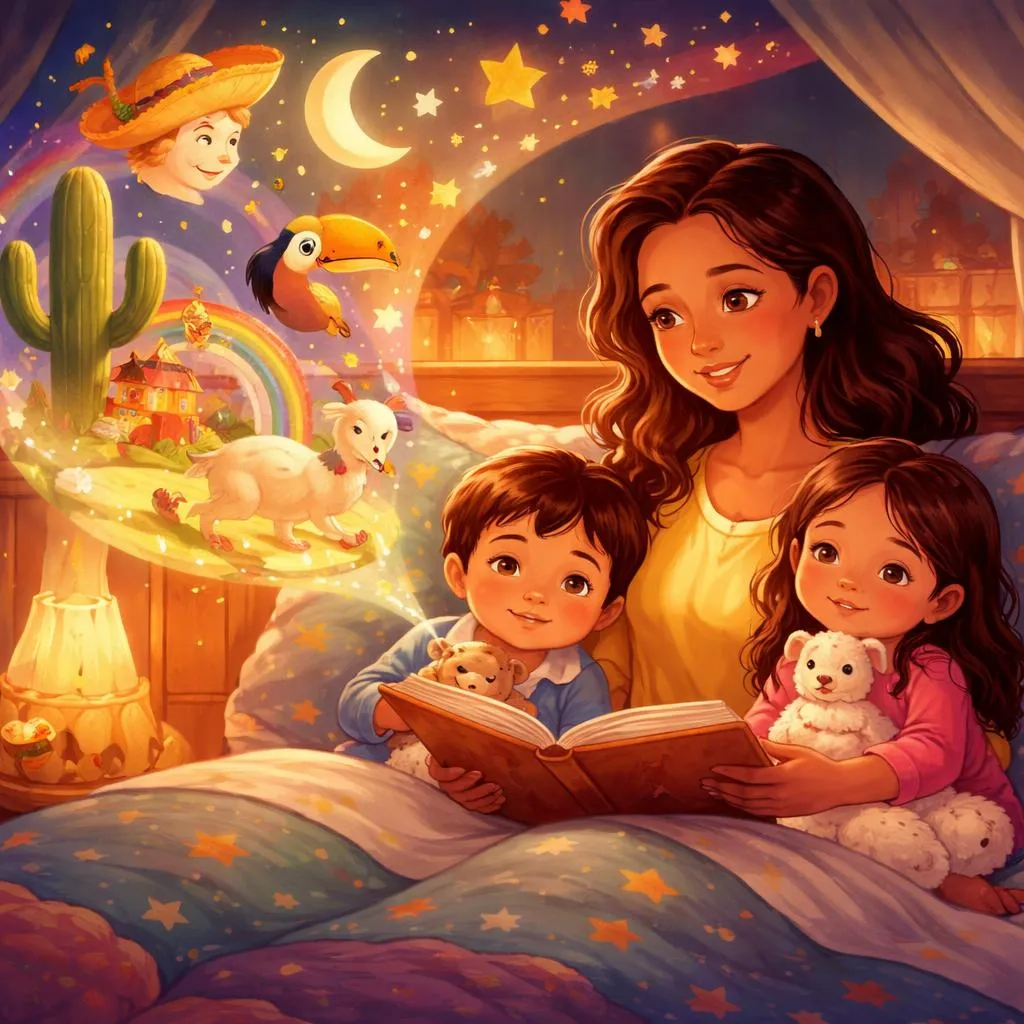

The quiet moments before sleep are a perfect time for connection—and for imagination to soar. For families exploring Spanish, or for those who simply love its musical sound, sharing bedtime stories en espa?ol can be a magical part of the nightly ritual. These tales are more than just words in another language. They are passports to different ways of seeing the world, wrapped in gentle humor and warm endings. Listening to or reading bedtime stories in Spanish can soothe, entertain, and open little minds. Let’s embark on three original stories, each with a sprinkle of Spanish flavor and a lot of heart. They’re designed to be fun, gentle, and perfect for drifting off with a smile, no matter what language you dream in.
story one: The Little Jar of Olive Oil
In a sunny kitchen in a white-painted house, there lived a small, green bottle of olive oil. His name was Aceite. He was proud of his golden-green liquid. “I am the soul of the kitchen!” he would say to the bag of flour. “Without me, no sofrito, no deliciousness!” The flour, Harina, just sat there quietly.
Aceite’s dream was to be part of a grand, traditional paella. He imagined himself sizzling in a giant pan, mingling with saffron and rice. But every day, he was used for small things. A drizzle on a salad. A splash in a simple soup. “This is not my destiny!” Aceite complained. “I am meant for a fiesta, not a lettuce leaf!”
One night, he decided to take matters into his own… well, he didn’t have hands. He decided to roll. He tipped himself over on the shelf. Plop! He landed on the counter. He rolled past the sleeping coffee maker. Gurgle, it mumbled in its sleep. He rolled toward the stovetop. This was it! He would find the paella pan himself!
But he rolled too far. He rolled right off the edge of the counter! For a terrifying second, he was airborne. Then, SPLASH! He landed not in a pan, but in a shallow dish of water next to the potted basil plant. The dish was meant to keep the plant’s soil moist. Aceite floated on the surface, a shiny, golden-green slick. “Oh, no,” he whispered. “I am a salad dressing for a plant. This is the worst.”
Just then, the morning sun came through the window. It hit the dish of water and oil. The light fractured into a tiny, brilliant rainbow on the kitchen wall. The little girl came in for breakfast. She saw the rainbow. “?Mira, Mamá! Un arcoíris en la cocina!” she cried. (“Look, Mom! A rainbow in the kitchen!”). She was delighted. She thought the plant had made magic.
Aceite, floating in the dish, saw her joy. He was making a rainbow. It wasn’t paella, but it was beautiful. The mom cleaned him up, dried him off, and put him back on the shelf. “You made quite a mess, little Aceite,” she said with a smile. “But you also made a little magic.” That evening, the mom used Aceite to make a simple, garlic soup—sopa de ajo. The family ate it with crusty bread, saying it was the best ever. Aceite swirled in the delicious broth. He finally understood. His job wasn’t just for fiestas. It was to make everyday things special. To make rainbows on walls and simple soups taste like home. He felt very important. That night, he sat quietly on his shelf, next to Harina the flour, both dreaming of the next day’s quiet, delicious magic.
story two: The Slipper That Wanted to Flamenco
In a cozy bedroom, there was a pair of soft, blue slippers. The right slipper was content. The left slipper, named Zapato, was not. He had seen a flamenco dancer on a poster. The dancer’s shoes tapped with fiery passion. ?Tap, tap, tacón! “That,” thought Zapato, “is what a shoe should do! Not just shuffle to the bathroom.”
He tried to practice. When the boy put him on, Zapato would try to tap. But the boy just dragged his feet. Shhh-flop, shhh-flop. “No, no!” Zapato thought. “Like this! Tap, tap!” One night, the boy kicked him off. Zapato slid under the bed. This was his chance! Alone in the dark, he tried to move. He could only wiggle his fuzzy fabric. A dust bunny rolled by. “What are you doing?” it whispered. “I am practicing flamenco!” Zapato declared. “You look like a worm with a cold,” said the dust bunny, and rolled away.
Zapato was discouraged. Then, he heard a sound. Drip… drop… drip…. It was the leaky bathroom faucet. The rhythm was steady. Drip (one), drop (two), drip (three), drop (four). It was a compás, a rhythm! Zapato listened. He started to tap his toe in time. Tap (one), tap (two), tap (three), tap (four). He wasn’t fiery, but he was in time! A cricket in the wall heard him. The cricket started to chirp in rhythm. Chirp-chirp, chirp-chirp!
Soon, they had a tiny, nighttime concert. The faucet was the cajón drum. The cricket was the singer. And Zapato was the dancer, tapping his softest taps. Drip-drop, tap-tap, chirp-chirp! They played a slow, sleepy flamenco for the silent house. It wasn’t loud or fierce. It was a lullaby flamenco.
The boy, half-asleep, heard the gentle tapping. In his dream, he was at a quiet, moonlit plaza in Espa?a, watching a slow, beautiful dance. He smiled. In the morning, he found Zapato under the bed. He picked him up. “There you are,” he said. He put Zapato on and walked to the kitchen. This time, Zapato didn’t fight it. He just enjoyed the walk. But in his fuzzy heart, he kept the rhythm. That night, when the faucet dripped, Zapato just listened and smiled. He was a flamenco slipper. Not on a stage, but in a quiet bedroom, keeping time with the night. It was the most important performance of all.
story three: The Cooking Pot That Was Afraid of Noise
Olla was a big, red ceramic cooking pot. She lived on a shelf. She was beautiful, but very shy. She hated loud noises. The blender’s roar made her tremble. The microwave’s beep made her lid rattle. Her favorite place was the cupboard, dark and quiet.
One day, the abuela (grandmother) came to visit. She took Olla down. “Today, we make a proper puchero,” Abuela said. Puchero is a hearty stew. Olla was scared. She was placed on the loud, fiery stove! Things got worse. Abuela chopped vegetables loudly. Chop chop chop! She poured in water. Splash! She turned the flame high. The fire roared underneath Olla! She felt her ceramic body get warm, then hot. Bubbles began to rise inside her. Blip… blop….
“This is terrible!” Olla thought. But then, something changed. The bubbles rose in a steady rhythm. Blip… blop… blip-blop…. The loud chopping was done. The only sounds were the gentle bubble of the stew and Abuela’s soft humming. The smells were incredible—beef, chorizo, garbanzo beans. Olla was not just holding food; she was creating it. The noises weren’t scary; they were part of making something wonderful.
The family gathered. They laughed and talked. The ladle clinked gently against Olla’s side as Abuela served. Clink, clink. It was a friendly sound. Olla felt proud and warm, full of something that made people happy. After dinner, she was washed and placed back on her shelf, clean and cool.
That night, a thunderstorm began. BOOM! A huge crack of thunder shook the house. The little girl woke up, frightened. Olla, on her shelf, felt the old fear. But then she remembered the sounds of the day. The chop, the bubble, the clink, the laughter. They were all parts of something good. The next thunderclap came. CRACK! This time, Olla didn’t tremble. Instead, she imagined the thunder was a giant, in the sky’s kitchen, making his own puchero. The lightning was his match. The rain was the water. It was just a noisy recipe in a very big pot.
The girl came into the kitchen, scared. She saw Olla sitting calmly on the shelf. She climbed up, hugged Olla’s cool, round side, and listened to the storm. Olla felt brave. Together, they listened until the thunder became a distant rumble, then just the peaceful sound of rain. Pitter-patter. The girl fell asleep right there. Olla held her steady. She wasn’t afraid of noise anymore. She knew that even the loudest sounds were part of making something—a story, a memory, a cozy moment. And that was a beautiful thing.
Sharing stories like these, with their gentle nods to language and culture, makes bedtime a richer experience. Bedtime stories en espa?ol (or stories that celebrate the Spanish-speaking world) are about more than words. They’re about rhythm, family, and finding joy in everyday things—like a talkative bottle of oil, a dancing slipper, or a brave cooking pot. These bedtime stories end where all good stories should: in a place of quiet contentment. The adventures are over, the gentle laughs have faded, and a deep, comfortable silence fills the room. It’s a silence that feels like a warm blanket, ready to welcome dreams from any corner of the world. Buenas noches. Goodnight.