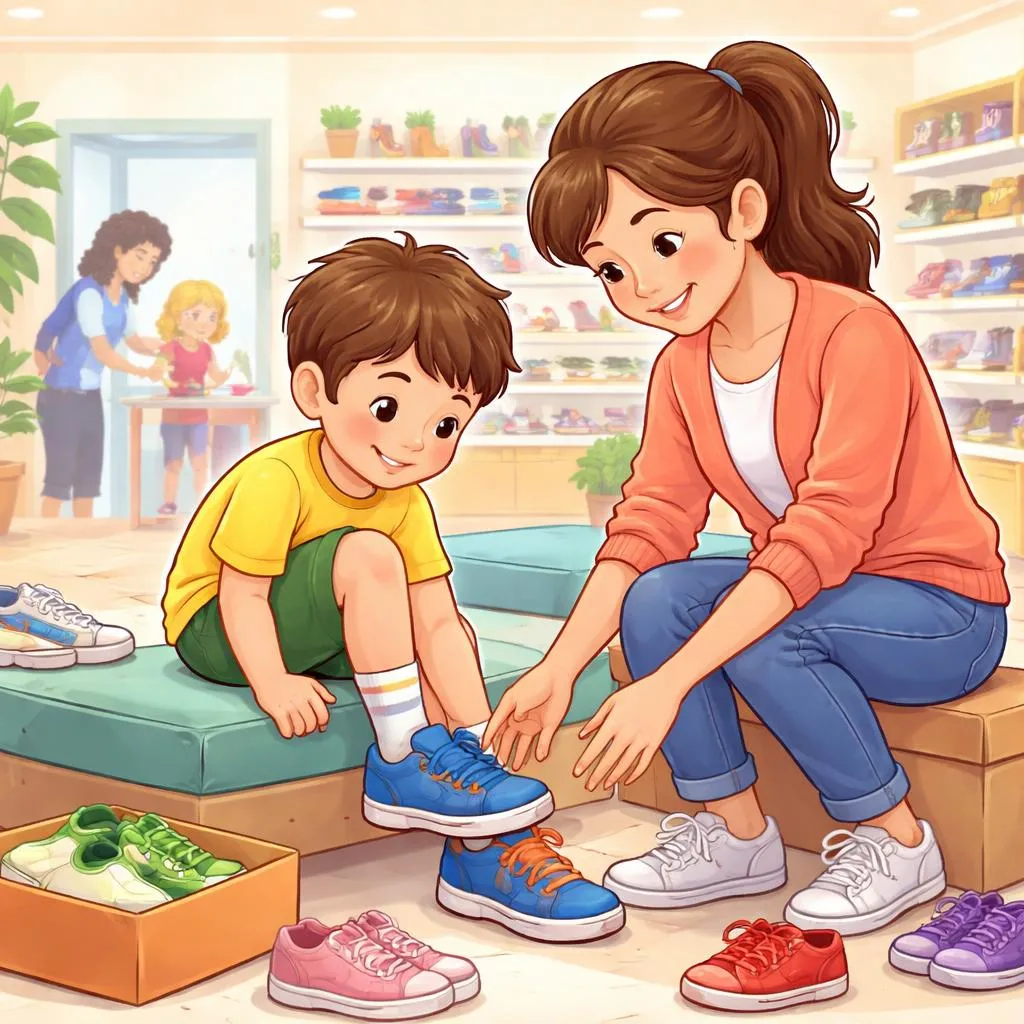

What Do These Expressions Mean? “Try it on” and “test the fit” both mean to put on clothing or equipment to see if it is comfortable and the right size. They tell a child to wear the item before deciding to keep or buy it. Children hear these words in clothing stores, shoe stores, or at home with new clothes. Both prevent buying the wrong size.
“Try it on” means put the clothing on your body to see how it looks and feels. It is common and direct. A parent says it when holding up a pair of pants. It is the everyday phrase.
“Test the fit” means check whether the item sits properly and feels comfortable. It is more formal and technical. An adult might say it about sports equipment or tools. It is less common for everyday clothing.
These expressions seem similar. Both ask a child to check size and comfort. Both prevent returns and discomfort. But one is for everyday talk while one is for more careful checking.
What's the Difference? One is for everyday clothing. One is for more careful or technical checks. “Try it on” is what parents say at the store. It is simple and natural. It works for shirts, pants, shoes, and hats.
“Test the fit” is for equipment where fit matters for safety or performance. A helmet, a life jacket, or a sports gear. It sounds more serious. It is less common for a t-shirt.
Think of a child buying sneakers. “Try them on and walk around” is right. “Test the fit by wiggling your toes” is also fine, but “try them on” is the usual phrase. One is everyday. One is more specific.
One is for all ages. The other is for older children. “Try it on” for a toddler. “Test the fit” for a teenager in sports gear. Use the first for daily. Use the second for special equipment.
Also, “test the fit” implies checking function, not just looks. You test the fit of a helmet to see if it protects. You try on a dress to see if you like it. Choose based on importance.
When Do We Use Each One? Use “try it on” for everyday clothing and shoes. Use it for shirts, pants, dresses, and casual shoes. Use it to see how something looks and feels. It fits most shopping.
Examples at home: “Try it on before we buy it.” “You need to try on the jeans to see if they are long enough.” “Try on the costume to make sure it fits.”
Use “test the fit” for safety gear or performance equipment. Use it for helmets, life jackets, backpacks, or sports pads. Use it when fit affects safety. It fits careful checking.
Examples for safety: “Test the fit of the helmet. It should not move.” “Before we buy the life jacket, test the fit in the pool.” “Test the fit of the hiking boots. Walk up and down the ramp.”
Children can use both. “Try it on” for clothes. “Test the fit” for safety gear. Both are useful.
Example Sentences for Kids Try it on: “Try it on and show me in the mirror.” “You can try on the shirt in the dressing room.” “Always try on shoes before you buy them.”
Test the fit: “Test the fit of the bike helmet. It should be snug.” “Test the fit of the backpack. It should not hurt your shoulders.” “Test the fit of the gloves. You need to grip your handlebars.”
Notice “try it on” is for everyday clothes. “Test the fit” is for safety and performance gear. Children learn both. One for style. One for safety.
Parents can use both. Shopping for jeans: “try it on.” Buying a bike helmet: “test the fit.” Children learn different fit checks.
Common Mistakes to Avoid Some parents skip the try-on step. Buying without trying on leads to returns. Always try on clothes, especially for children who grow fast. Five minutes of trying saves returns.
Wrong: Buys clothes without letting child try them on. Better: “Try it on first. Let's see if it fits.”
Another mistake: saying “test the fit” for casual clothes. It sounds too serious. Save “test the fit” for safety gear. For jeans, say “try them on.”
Wrong: “Test the fit of this t-shirt.” Better: “Try on this t-shirt.”
Some learners forget to move in the clothes. Trying on means moving. Ask the child to sit, stretch, and wiggle. Clothes should move with them.
Also avoid ignoring a child's fit feedback. If a child says “it's too tight,” believe them. Do not say “it will stretch.” Comfort matters for happy kids.
Easy Memory Tips Think of “try it on” as a dressing room mirror. You look. You turn. You smile. For everyday clothes. Casual and common.
Think of “test the fit” as a safety check. You push. You shake. You wiggle. For helmets and life jackets. Serious and careful.
Another trick: remember the stakes. “Try it on” for comfort. “Test the fit” for safety. Comfort gets “try it on.” Safety gets “test the fit.”
Parents can say: “Try for the mirror. Test for a clearer fear.” That means clothes get “try it on.” Safety gear get “test the fit.”
Practice at home. New shirt: “try it on.” Bike helmet: “test the fit.” Two different fit checks.
Quick Practice Time Let us try a small exercise. Choose the better phrase for each situation.
A family is shopping for school uniforms. The child needs to check if the pants are the right length. a) “Test the fit of the pants.” b) “Try on the pants. Let's see the length.”
A child is buying a new ski helmet. The parent wants to make sure it will protect the child's head. a) “Try on the helmet to see if you like the color.” b) “Test the fit of the helmet. It must not move when you shake your head.”
Answers: 1 – b. School uniform shopping fits the everyday “try it on.” 2 – b. Safety gear for sports fits the careful “test the fit.”
Fill in the blank: “When I buy new jeans, I need to ______ before I buy them.” (“Try them on” is the natural, everyday choice for clothing.)
One more: “When I get a new bike helmet, I ______ to make sure it is safe.” (“Test the fit” fits the serious safety check.)
Fitting things properly saves money and protects bodies. “Try it on” keeps clothes comfortable. “Test the fit” keeps safety gear working. Teach your child both. A child who checks fit grows up smart about their own body.
Wrap-up “Try it on” is the everyday phrase for putting on clothing to check size and style. “Test the fit” is a more careful check, usually for safety gear or performance equipment. Use “try it on” for shirts, pants, shoes, and casual wear. Use “test the fit” for helmets, life jackets, and sports pads. Both phrases prevent buying the wrong size. A child who learns to check fit will always be comfortable and safe.