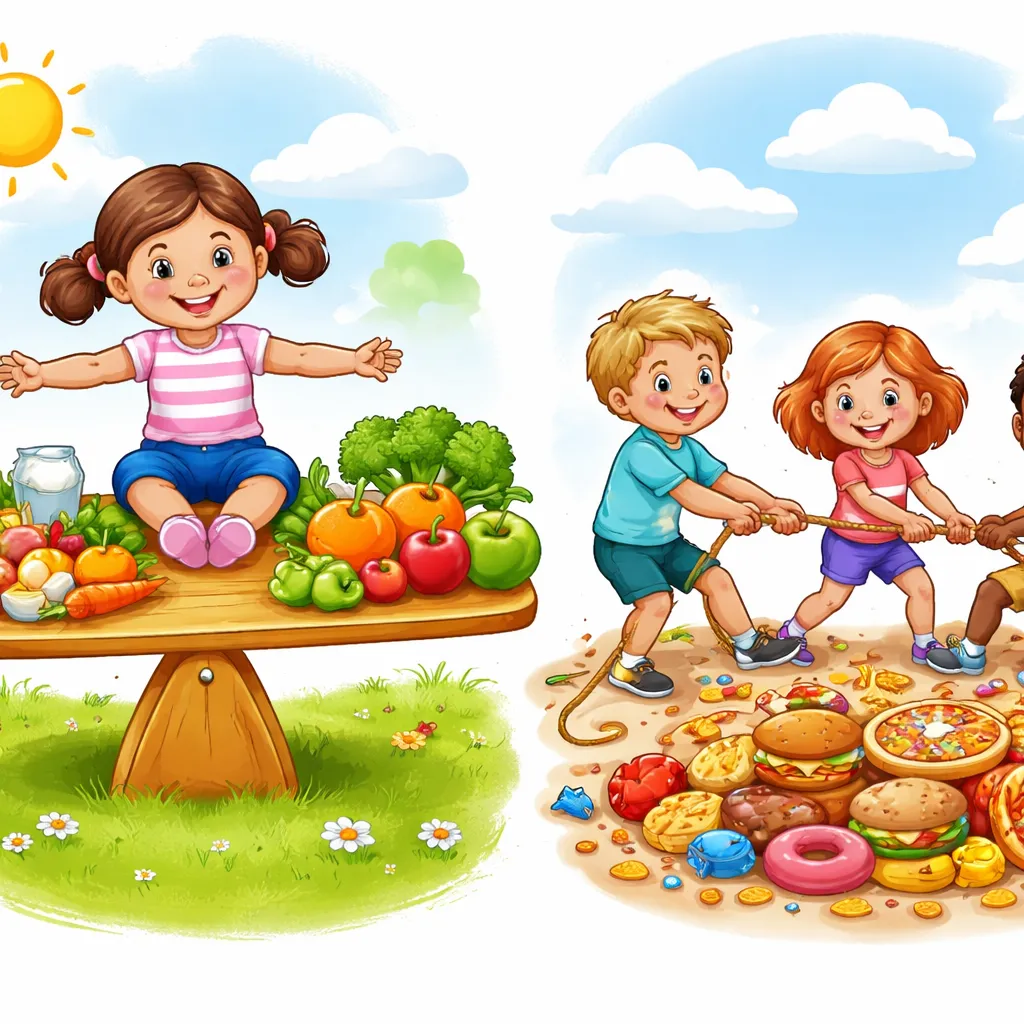

Children love seesaws. They also try to pour equal amounts of juice. Parents often hear kids say, “This scale is balanced.” Or “Cut the sandwich into even pieces.” But are these two words the same? Can we always use one instead of the other? This article helps families explore the words “balanced and even” together. We will compare them with similar words. We will see which one fits a healthy meal and which one fits a smooth surface. Let us help your child describe fairness, equality, and smoothness with confidence.
Are Similar Words Really Interchangeable? Many English words describe equality or smoothness. But they each carry different focus. “Balanced” and “even” both mean “equal in weight, amount, or surface.” Yet we use them in different situations. A balanced diet has the right mix of foods. An even surface has no bumps. You cannot always swap them. For example, a balanced person stays calm. An even person stays steady. Both are good, but they feel different. So similar words are not always interchangeable. Parents can show this with real objects. Point to a balanced scale. Then point to an even table top. Ask your child: “Can I call the scale even?” Yes, but it sounds less precise. Teaching these small differences builds a strong vocabulary.
Set 1: Balanced vs Even — Which One Is More Common? “Balanced” appears very often in daily English. We say balanced diet, balanced life, balanced budget, balanced approach. “Even” appears equally often but in different contexts. People say even surface, even number, even distribution, even temperature. In children’s books, both are common. “Balanced” shows up for health and fairness. “Even” shows up for numbers, surfaces, and equality. Look at Google Ngram. Both words have similar frequency. For young learners, teach “even” first for surfaces and numbers. Teach “balanced” for scales, health, and fairness. This order helps kids describe what they see first.
Set 2: Balanced vs Even — Same Meaning, Different Contexts Both words mean “equal or level.” But context separates weight from surface. “Balanced” describes things that have equal weight, force, or importance. A balanced scale, balanced team, balanced opinion. “Even” describes things that are flat, smooth, or equal in amount. An even floor, even score, even split. You can have a balanced diet that is not even in portions. You can have an even surface that is not balanced on a scale. So one word is about opposing forces in harmony. The other word is about uniformity and flatness. Tell your child: “Balanced means two sides are equal. Even means the whole thing is flat or equal all over.”
Set 3: Balanced vs Even — Which Word Is “Bigger” or More Emphatic? “Balanced” often feels more dynamic and active. A balanced person manages many things. A balanced ecosystem adapts. “Even” feels more static and descriptive. An even temperature stays the same. An even surface does not change. So “balanced” carries a sense of ongoing adjustment and harmony. “Even” carries a sense of sameness and stability. For children, explain this way: “Balanced means things work together well. Even means everything is the same or flat.” A balanced meal has different foods in the right amounts. An even surface has no bumps. Both are good, but one is about mixing, the other about uniformity.
Set 4: Balanced vs Even — Concrete vs Abstract Both words work concretely and abstractly. Concrete “balanced”: balanced scale, balanced wheel, balanced load. Abstract “balanced”: balanced life, balanced view, balanced decision. Concrete “even”: even floor, even cut, even number. Abstract “even”: even temper, even chance, even match. However, “balanced” in abstract contexts suggests harmony between different parts. “Even” in abstract contexts suggests consistency or fairness. A balanced argument considers both sides. An even playing field means fair competition. For children, start with concrete meanings. Show a balanced seesaw. Show an even piece of paper. Later, introduce abstract uses through stories. Explain that a “balanced person” stays calm. An “even temper” means not getting too angry or too happy.
Set 5: Balanced vs Even — Verb or Noun? First Understand the Role Both words are adjectives. “Balance” is the verb and noun. “Even” can be a verb meaning to make flat. “Even out the dough.” For young children, focus on adjectives. “This scale is balanced.” “This floor is even.” Later, teach the verb “balance.” “Balance the spoon on your nose.” Teach the verb “even.” “Even the edges with scissors.” This builds grammar naturally. Also teach the nouns “balance” and “evenness.” “The balance of the scale is perfect.” “The evenness of the table helps us draw.” Keep it simple. Your child will learn these forms over time. Start with the adjectives.
Set 6: Balanced vs Even — American English vs British English Both words work similarly in American and British English. However, small differences exist. In the UK, “balanced” is very common in health writing. “Balanced meal.” In the US, same. “Even” in British English can mean “exactly” as an adverb. “Even better.” Americans use it the same way. In the US, “even” for numbers is universal. “Even numbers end in 0,2,4,6,8.” Britons use the same. For children, these differences are minor. Teach the core meanings. A family activity: compare a US health website and a UK one. Count how many times “balanced” and “even” appear. You will see “balanced” more on health sites.
Set 7: Balanced vs Even — Which Fits Formal Situations? Both words work in formal and informal settings. “Balanced” appears in nutrition, economics, and psychology. “Balanced diet,” “balanced budget,” “balanced personality.” “Even” appears in math, construction, and sports. “Even number,” “even surface,” “even score.” For school reports, both are excellent. “Balanced” is more common for harmony. “Even” is more common for uniformity. Teach your child this rule: “Use balanced for things that have different parts working together. Use even for things that are flat, equal, or the same all over.” In a science report about nutrition, “balanced meal” is correct. In a math report about numbers, “even numbers” works best.
Set 8: Balanced vs Even — Which One Is Easier for Kids to Remember? Both words are easy for young children. “Balanced” has two syllables. “Bal-anced.” The “bal” sound is like “ball.” “Even” has two syllables too. “E-ven.” The “e” sound is like “eagle.” A three-year-old can say both. But “even” connects to numbers and cutting things in half. Children learn “even” in preschool math. “Balanced” connects to seesaws and scales. For very young children, start with “even” for cutting sandwiches and sharing. “Make even pieces.” Introduce “balanced” for seesaws and scales. “Sit so the seesaw is balanced.” This side-by-side learning works well. Use real examples. An even surface is flat. A balanced scale has equal weight on both sides.
Mini Exercise: Can You Spot the Differences Between These Similar Words? Read each sentence with your child. Choose “balanced” or “even.” Answers below.
Please cut the cake into _______ pieces so everyone gets the same.
A _______ diet includes fruits, vegetables, and protein.
The scale was perfectly _______ with one apple on each side.
The floor needs to be _______ before we install the tiles.
She has a very _______ temper. She rarely gets upset.
Bonus question: Is this sentence correct? “The balanced of the table helped me draw a straight line.” Why or why not?
Answers: 1. even, 2. balanced, 3. balanced, 4. even, 5. even. Bonus: Not correct. “Balanced” is an adjective, not a noun. Say “The evenness of the table helped me draw a straight line” or “The balanced table helped me draw.”
Talk about each answer. Ask your child which sentences describe weight and harmony. Which describe flatness and equal amounts. This discussion builds precision. Do the exercise again with real objects. A seesaw? Balanced. A smooth table? Even. A scale? Balanced. A cut sandwich? Even pieces.
Parent Tips: How to Help Kids Learn and Remember Similar Words You can teach “balanced and even” during daily moments. Breakfast time: “A balanced meal has different foods. Cut the toast into even triangles.” Playtime: “Make the seesaw balanced. Spread the blocks into even rows.” Math time: “Even numbers are 2,4,6. Balanced equations have equal sides.” Art time: “Draw an even line across the page. Mix colors for a balanced picture.” Use your body. Hold your arms out like a scale to show balanced. Flatten your hand to show even. Say the words as you move. Play the “Balanced or Even” sorting game. Gather ten examples. A seesaw? Balanced. A smooth table? Even. A scale with equal weights? Balanced. A cut apple into two equal halves? Even. A good diet? Balanced. A flat road? Even. Ask your child to explain each choice. Do not correct mistakes harshly. Instead, ask “Are two sides equal? That is balanced. Is it flat or all the same? That is even.” This gentle guidance works better than rules. Read books about fairness and shapes. “The Balanced Seesaw” or “Even Steven.” Pause on each page. Ask “Is this balanced or even? Why?” Keep a fairness journal. Draw one balanced thing and one even thing each week. Label them. Review old entries. Praise specific observations. “You noticed that a balanced life has different parts, but an even score means both teams have the same points. Excellent.” This positive feedback builds a fair and observant child. Your child will soon see balanced and even things everywhere. They will also understand the difference between harmony of different parts and uniformity of flatness or equality. That is a sophisticated skill for a young learner. Keep exploring words together. Every seesaw, every sandwich, every scale offers a new chance to learn about balance and evenness.