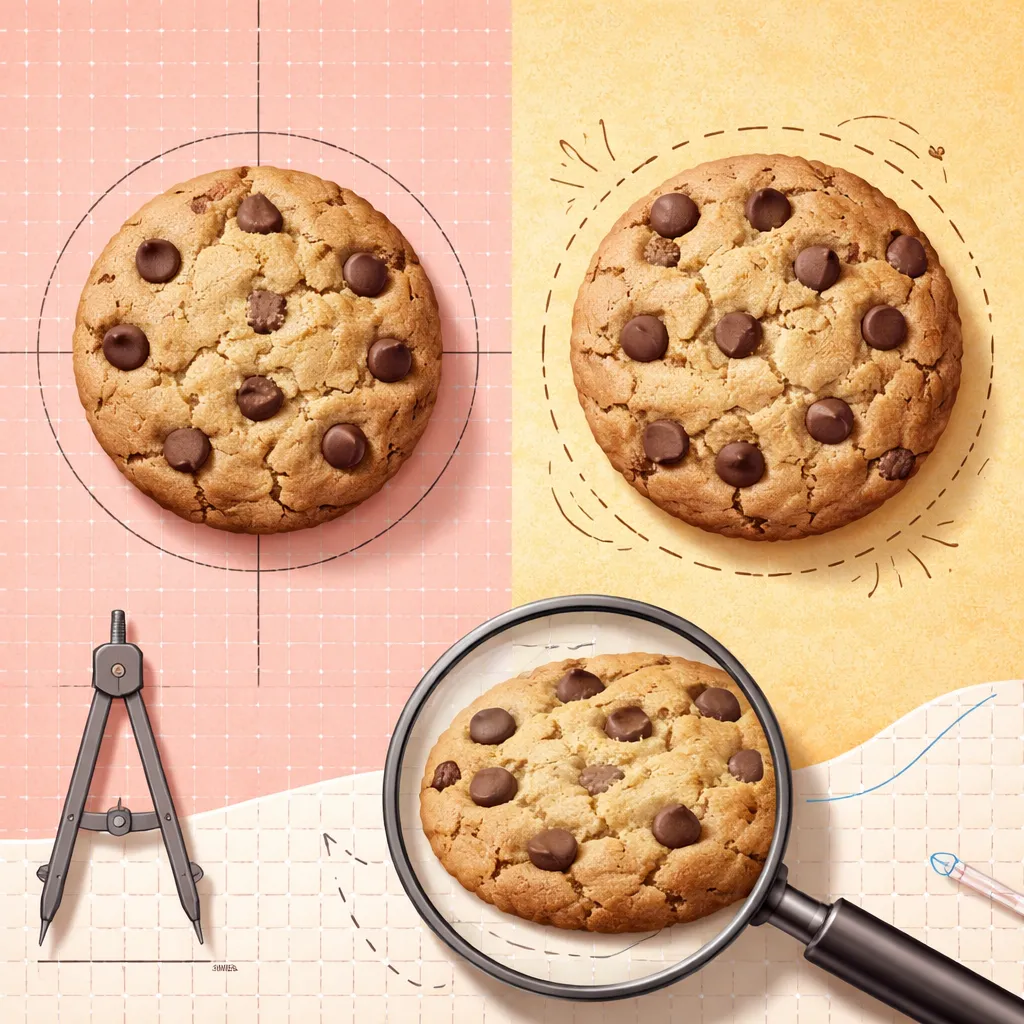

Children love cookies and clocks. They also love drawing wheels and balloons. Parents often hear kids say, “This ball is round.” Or “This plate is circular.” But are these two words the same? Can we always use one instead of the other? This article helps families explore the words “round and circular” together. We will compare them with similar words. We will see which one fits a marble and which one fits a ring. Let us help your child describe circles and spheres with more precision.
Are Similar Words Really Interchangeable? Many English shape words seem very close. But they often carry different dimensions. “Round” and “circular” both describe curved shapes without corners. Yet we use them in different situations. A round table can be circular. But a round face is not perfectly circular. You cannot always swap them. For example, a circular argument repeats itself. A round argument has no meaning. So similar words are not always interchangeable. Parents can show this with real objects. Point to a round ball. Then point to a circular coin. Ask your child: “Can I call the ball circular?” The answer is no in strict math. Balls are spherical, not circular. Teaching these small differences builds a strong vocabulary.
Set 1: Round vs Circular — Which One Is More Common? “Round” appears much more often in daily English. We say round number, round trip, round face, round of applause. “Circular” appears less frequently. People say circular shape, circular saw, circular letter, circular motion. In children’s books, “round” dominates. Think of round pancakes and round moons. “Circular” shows up more in science and math books. Look at Google Ngram. “Round” has always been far more common. For young learners, teach “round” first. Use it for three-dimensional and two-dimensional things. Save “circular” for exact geometry or formal descriptions. This order helps kids speak naturally.
Set 2: Round vs Circular — Same Meaning, Different Contexts Both words mean “shaped like a circle.” But context separates dimensions. “Round” works for spheres, cylinders, and circles. A round orange, round tube, round coin. “Circular” works only for flat, two-dimensional circles. A circular racetrack, circular logo, circular window. You can have a round ball that is not circular because it has depth. You cannot have a circular ball. A ball is spherical. So one word is for 3D and 2D. The other word is strictly 2D. Tell your child: “Round is for things you can hold like a ball. Circular is for flat things like a pizza or a ring.”
Set 3: Round vs Circular — Which Word Is “Bigger” or More Emphatic? “Round” feels more general and friendly. A round belly is soft. A round of drinks is social. “Circular” feels more technical and precise. A circular orbit is exact. Circular reasoning is a strict logical error. So “circular” carries a sense of completeness and formality. “Round” carries warmth and everyday use. For children, explain this way: “Round is what we say at home. Circular is what a math teacher might say.” A round cookie is fine to say. A circular cookie sounds like a geometry lesson. Both are correct. But one sounds more natural. This helps kids adjust their language to the situation.
Set 4: Round vs Circular — Concrete vs Abstract Both words work concretely and abstractly. Concrete “round”: a round stone, round table, round hat. Abstract “round”: round of talks, round-trip ticket, round number. Concrete “circular”: circular track, circular plate, circular saw. Abstract “circular”: circular argument, circular logic, circular reference. However, abstract “circular” almost always means “returning to the start without progress.” Abstract “round” means “complete or approximate.” A round number like 100 is easy. A circular argument like “It is true because it is true” is frustrating. For children, start with concrete meanings. Show a round orange. Show a circular plate. Later, introduce abstract uses through stories. Explain that a circular story ends where it begins without solving anything.
Set 5: Round vs Circular — Verb or Noun? First Understand the Role Both words are primarily adjectives. But “round” can be many parts of speech. As a noun: a round of golf, a round of cheese. As a verb: to round a corner, to round up numbers. As an adverb: to go round and round. “Circular” is almost always an adjective. You cannot verb “circular.” You cannot noun “circular” except as a short form for a circular letter or advertisement. For young children, focus on adjectives. “This shape is round.” “This line is circular.” Later, teach the verb “round.” Say “We round the corner.” This shows how one word has many jobs. “Circular” stays simple. That helps children see the difference in word flexibility.
Set 6: Round vs Circular — American English vs British English Both words work the same in American and British English. However, small usage differences exist. In the UK, “round” as a preposition is common. “Walk round the block.” Americans say “walk around the block.” In the US, “round” as a noun for a sandwich? No. But Britons say “round of toast” meaning a slice. “Circular” has no regional differences. For children, these differences do not matter much for shape meanings. But they matter for everyday listening. If your child watches British shows, explain “round” meaning “around.” If they watch American shows, “around” is standard. A family activity: listen for “round” and “around” in both dialects. Compare how people describe circular movement.
Set 7: Round vs Circular — Which Fits Formal Situations? “Circular” sounds more formal and scientific. Geometry textbooks say “circular region.” Physics papers say “circular motion.” “Round” sounds less formal. A chef says “round cake pan.” A carpenter says “round table.” For school projects, “circular” works better for exact descriptions. “The moon’s orbit is nearly circular” sounds precise. “The moon goes round” sounds casual. Teach your child this rule: “If you write a science report, use circular for perfect circles. If you write a story, use round for friendly shapes.” This helps kids learn register. They understand that some words belong in labs. Other words belong in kitchens. Both are correct in their places.
Set 8: Round vs Circular — Which One Is Easier for Kids to Remember? “Round” is easier for young children. Why? Because it has one syllable. It sounds like “found” or “sound.” Children hear “round” every day. Round crackers, round balls, round faces. “Circular” has three syllables. The “cir” sound is harder. The “cular” ending is unusual. A three-year-old can say “round” clearly. That same child may stumble on “circular.” So start with “round.” Use it for everything that is not a square or triangle. Introduce “circular” around age six or seven. Use drawings of flat circles. Compare a round ball (3D) and a circular coin (2D). This visual contrast works better than definitions. Let your child trace circular objects with a pencil. Say “circular” each time. Repetition builds comfort.
Mini Exercise: Can You Spot the Differences Between These Similar Words? Read each sentence with your child. Choose “round” or “circular.” Answers below.
The earth looks _______ from space. (It is a sphere.)
Please draw a _______ shape using this compass.
We sat at a _______ table for dinner.
Her argument was _______. It kept returning to the same point.
A _______ of cheese sat on the board.
Bonus question: Is this sentence correct? “The circular ball rolled down the hill.” Why or why not?
Answers: 1. round, 2. circular, 3. round (or circular, but round is more common), 4. circular, 5. round. Bonus: Not correct. A ball is three-dimensional. “Circular” describes flat circles. Say “round ball” or “spherical ball.”
Talk about each answer. Ask your child which sentences describe flat things. Which describe three-dimensional things. Which describe ideas. This discussion builds dimensional awareness. Do the exercise again with real objects from the kitchen.
Parent Tips: How to Help Kids Learn and Remember Similar Words You can teach “round and circular” during daily activities. Breakfast time: “This pancake is round. This plate is circular.” Playtime: “Roll the round ball. Trace the circular lid.” Nature time: “Find a round stone. Find a circular leaf.” Art time: “Draw a round face. Cut a circular window from paper.” Use your body. Make a round shape with your arms. Make a circular motion with your finger. Say the words as you move. Play the “Round or Circular” sorting game. Gather ten objects. A ball? Round. A coin? Both, but focus on circular. A orange? Round. A ring? Circular. A cookie? Round or circular. Ask your child to explain each choice. Do not correct mistakes harshly. Instead, ask “Is that flat like a drawing or fat like a ball?” This gentle guidance works better than rules. Read books with shapes. Dr. Seuss’s “The Shape of Me” is great. Pause on each page. Ask “Is this round or circular? Why?” Keep a shape journal. Draw one round thing and one circular thing each week. Label them. Review old entries. Praise specific observations. “You noticed that a donut is round but the hole is circular. Brilliant.” This positive feedback builds a precise eye. Your child will soon see dimensions everywhere. They will also understand the difference between everyday language and technical language. That is a sophisticated skill for a young learner. Keep exploring shapes together. The world is full of them.