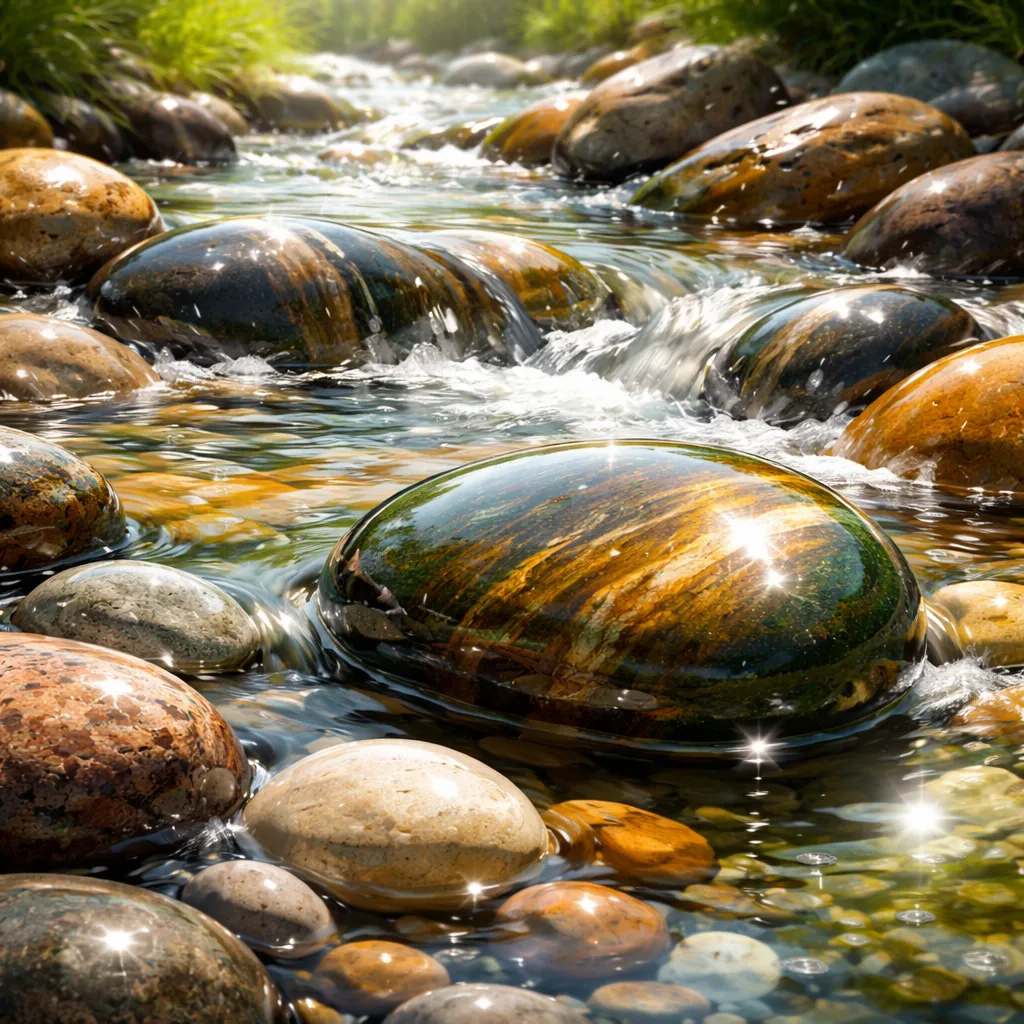

Children love touching things. They feel a smooth table and a polished stone. Parents often hear kids say, “This rock feels smooth.” Or “This floor looks polished.” But are these two words the same? Can we always use one instead of the other? This article helps families explore the words “smooth and polished” together. We will compare them with similar words. We will see which one fits a glass surface and which one fits a shiny floor. Let us help your child describe textures and finishes with more precision.
Are Similar Words Really Interchangeable? Many English words describe surfaces without bumps. But they each carry different meanings. “Smooth” and “polished” both describe even, flat surfaces. Yet we use them in different situations. A smooth road has no potholes. A polished shoe shines brightly. You cannot always swap them. For example, a smooth talker is charming. A polished talker is skilled and refined. Both work, but they feel different. So similar words are not always interchangeable. Parents can show this with real objects. Point to a smooth piece of paper. Then point to a polished marble floor. Ask your child: “Can I call the paper polished?” The answer is no, because polishing adds shine. Teaching these small differences builds a strong vocabulary.
Set 1: Smooth vs Polished — Which One Is More Common? “Smooth” appears much more often in daily English. We say smooth skin, smooth surface, smooth ride, smooth transition. “Polished” appears less frequently. People say polished shoes, polished silver, polished performance, polished manners. In children’s books, “smooth” dominates. Think of smooth pebbles and smooth ice. “Polished” shows up in stories about fancy houses or careful work. Look at Google Ngram. “Smooth” has always been far more common. For young learners, teach “smooth” first. Use it for any even texture without bumps. Save “polished” for surfaces that shine from rubbing or care. This order helps kids speak naturally.
Set 2: Smooth vs Polished — Same Meaning, Different Contexts Both words mean “even and without roughness.” But context separates them. “Smooth” focuses on texture. A smooth wall has no bumps. A smooth voice sounds pleasant. “Polished” focuses on shine and finish. A polished floor reflects light. A polished performance shows practice and skill. You can have a smooth surface that is not polished. Matte paint feels smooth but does not shine. You can have a polished surface that is not perfectly smooth if it has tiny scratches. So one word is about feel. The other word is about appearance and effort. Tell your child: “Smooth is how it feels when you touch it. Polished is how it looks when light hits it.”
Set 3: Smooth vs Polished — Which Word Is “Bigger” or More Emphatic? “Polished” often feels more impressive and deliberate. A polished diamond took work. A polished speaker practiced for years. “Smooth” feels more natural and effortless. A smooth river stone needed no human help. Smooth sailing means no problems. So “polished” carries a sense of human effort and high quality. “Smooth” carries a sense of natural ease. For children, explain this way: “Smooth means no bumps, naturally or not. Polished means someone made it shiny and perfect.” A smooth apple skin is natural. A polished apple has been waxed and rubbed. This helps kids understand that “polished” implies work. “Smooth” just describes the feeling.
Set 4: Smooth vs Polished — Concrete vs Abstract Both words work concretely and abstractly. Concrete “smooth”: smooth glass, smooth fabric, smooth wood. Abstract “smooth”: smooth transition, smooth conversation, smooth landing. Concrete “polished”: polished brass, polished floor, polished stone. Abstract “polished”: polished speech, polished writing, polished manners. However, abstract “polished” always suggests refinement through practice. Abstract “smooth” suggests absence of problems. A smooth flight has no delays. A polished performance shows skill. For children, start with concrete meanings. Show a smooth leaf. Show a polished coin. Later, introduce abstract uses through stories. Explain that a “smooth talker” says nice things easily. A “polished writer” worked hard to get good.
Set 5: Smooth vs Polished — Verb or Noun? First Understand the Role Both words are primarily adjectives. “Smooth” can be a verb. “Smooth the paper with your hand.” “Polish” is the verb. “Polish the silver until it shines.” As nouns, “smooth” is rare. “The smooth of the surface” sounds odd. “Polish” as a noun means the substance or the shine. “Shoe polish” is a product. For young children, focus on adjectives. “This surface is smooth.” “This surface is polished.” Later, teach the verbs. “Watch me smooth the clay.” “Watch me polish this rock with a cloth.” This builds grammar naturally. Also teach “polish” as a noun. “We need shoe polish.” This helps children see word families. “Smooth” as a verb is easier than “polish” as a noun. Teach step by step.
Set 6: Smooth vs Polished — American English vs British English Both words work similarly in American and British English. However, small differences exist. In the UK, “polished” can mean drunk in very old slang. That meaning is almost gone. In the US, “smooth” as slang means cool or suave. “He is smooth” means charming. Britons use this too. Also, “polished” in British schools means well-prepared for exams. Americans say “prepared” or “ready.” For children, these differences are minor. Teach the core meanings. If your child watches British shows, they may hear “polished” for performance more often. American shows use “smooth” for personalities. A family activity: watch a US talent show and a UK talent show. Listen for “smooth” and “polished.” Compare how judges use them.
Set 7: Smooth vs Polished — Which Fits Formal Situations? Both words work in formal and informal settings. “Smooth” appears in science and engineering. “Smooth surface reduces friction.” “Polished” appears in art and business. “A polished presentation impresses clients.” For school reports, both are fine. But “polished” sounds more advanced. “Smooth” sounds more basic. Teach your child this rule: “Use smooth for simple descriptions of texture. Use polished for shiny things or skilled work.” In a science report about rocks, “smooth” is perfect. In an art report about a sculpture, “polished” shows attention to detail. This helps kids learn register. They understand that word choice shows your level of observation.
Set 8: Smooth vs Polished — Which One Is Easier for Kids to Remember? “Smooth” is easier for young children. Why? Because it has one syllable. It sounds like “booth” or “tooth.” Children learn “smooth” early from touching things. “Polished” has two syllables. The “pol” sound is like “pole.” The “ished” ending is less common. A three-year-old can say “smooth” clearly. That same child may stumble on “polished.” So start with “smooth.” Use it for all even textures. Introduce “polished” around age five or six. Use real objects. A polished apple from the store. A polished stone from a rock tumbler. Let them see the shine. Then say “polished.” This sensory learning works better than definitions. Also compare side by side. A smooth rock from the beach. A polished gem from a shop. Both feel smooth. Only one shines.
Mini Exercise: Can You Spot the Differences Between These Similar Words? Read each sentence with your child. Choose “smooth” or “polished.” Answers below.
The ice on the lake looked completely _______.
Her _______ manners impressed the guests.
Please sand the wood until it feels _______.
The _______ floor reflected our faces like a mirror.
He gave a _______ performance after weeks of practice.
Bonus question: Is this sentence correct? “The polish stone felt cold.” Why or why not?
Answers: 1. smooth, 2. polished, 3. smooth, 4. polished, 5. polished. Bonus: Not correct. “Polish” as a noun or verb. You need the adjective “polished.” Say “The polished stone felt cold.”
Talk about each answer. Ask your child which sentences describe texture. Which describe shine or skill. This discussion builds precision. Do the exercise again with real objects. A clean window? Smooth. A shiny car? Polished. A soft blanket? Smooth. A newly waxed floor? Polished.
Parent Tips: How to Help Kids Learn and Remember Similar Words You can teach “smooth and polished” during daily moments. Breakfast time: “This yogurt is smooth. This table is polished.” Bath time: “The soap makes your skin smooth. The faucet looks polished.” Craft time: “Feel this smooth paper. Look at this polished bead.” Nature walk: “Find a smooth stone. Find a polished shell.” Use your body. Stroke your arm to show smooth. Make a shining motion with your hand to show polished. Say the words as you move. Play the “Smooth or Polished” sorting game. Gather ten objects. A glass marble? Smooth and polished. A cotton ball? Smooth only. A mirror? Polished. A piece of chalk? Smooth but not polished. Ask your child to explain each choice. Do not correct mistakes harshly. Instead, ask “Does it shine? If yes, it might be polished. Does it just feel flat? That is smooth.” This gentle guidance works better than rules. Read books about textures. “Pat the Bunny” has touch-and-feel pages. Pause on each page. Ask “Is this smooth or polished? Why?” Keep a texture journal. Draw one smooth thing and one polished thing each week. Label them. Review old entries. Praise specific observations. “You noticed that a polished floor is also smooth. Excellent.” This positive feedback builds a careful sense of touch and sight. Your child will soon feel and see textures everywhere. They will also understand the difference between natural evenness and human-made shine. That is a sophisticated skill for a young learner. Keep exploring words together. Every surface, every object, every material offers a new chance to learn about texture and finish.