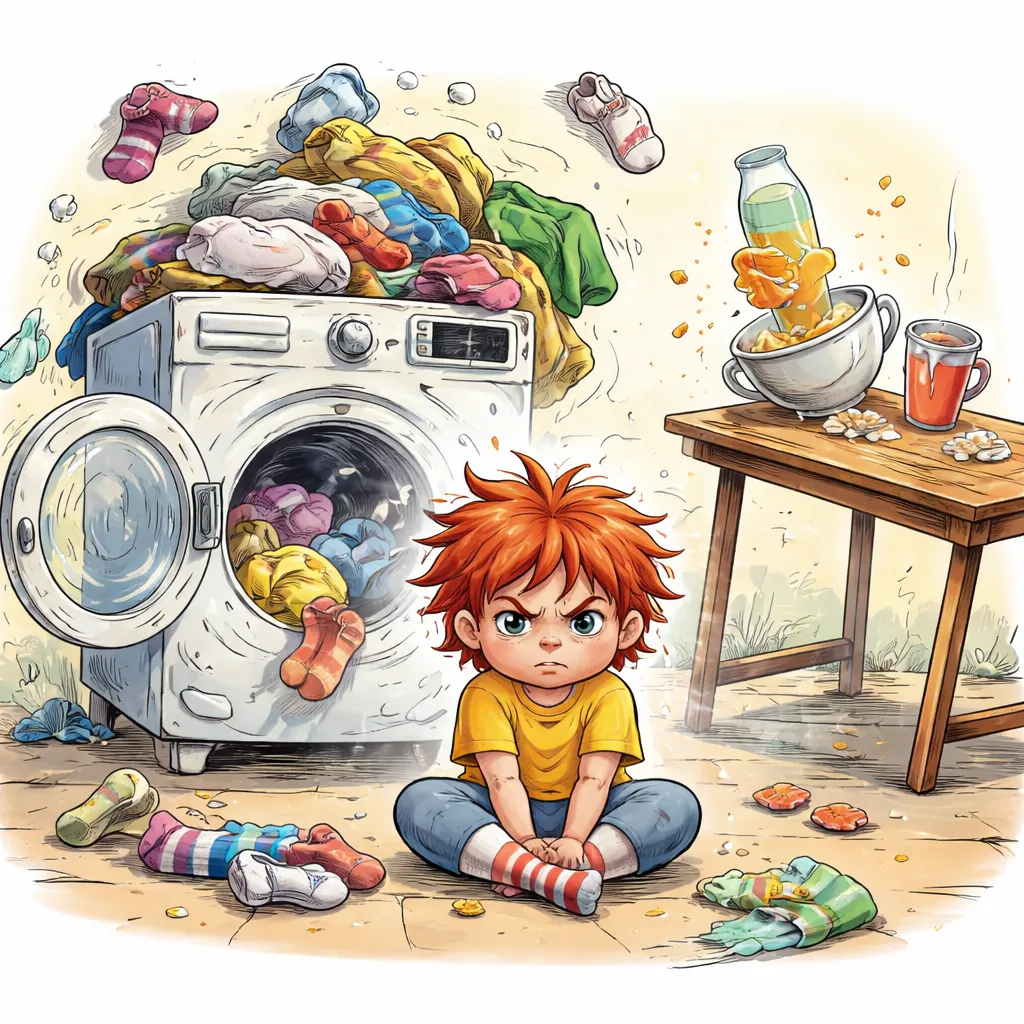

Children carry uneven backpacks. They also feel unbalanced when standing on one foot. Parents often hear kids say, “This scale is unbalanced.” Or “The floor feels uneven.” But are these two words the same? Can we always use one instead of the other? This article helps families explore the words “unbalanced and uneven” together. We will compare them with similar words. We will see which one fits a lopsided seesaw and which one fits a bumpy road. Let us help your child describe things that are not equal, flat, or steady.
Are Similar Words Really Interchangeable? Many English words describe things that are not equal or flat. But they each carry different focus. “Unbalanced” and “uneven” both mean “not equal, not level, or not steady.” Yet we use them in different situations. An unbalanced scale tips to one side. An uneven sidewalk has bumps. You can often swap them, but the meaning shifts. For example, an unbalanced person acts strangely. An uneven person has a bumpy personality? That sounds odd. So similar words are not always interchangeable. Parents can show this with real objects. Point to an unbalanced stack of books. Then point to an uneven cut of fabric. Ask your child: “Can I call the stack uneven?” Yes, but it sounds less precise. Teaching these small differences builds a strong vocabulary.
Set 1: Unbalanced vs Uneven — Which One Is More Common? “Uneven” appears more often in daily English. We say uneven floor, uneven surface, uneven distribution, uneven growth. “Unbalanced” appears frequently too. People say unbalanced diet, unbalanced scale, unbalanced person, unbalanced load. In children’s books, both are common. “Uneven” shows up for surfaces and numbers. “Unbalanced” shows up for scales and feelings. Look at Google Ngram. “Uneven” has been slightly more common. For young learners, teach “uneven” first for bumpy surfaces and unequal amounts. Teach “unbalanced” for scales, loads, and mental states. This order helps kids describe what they see and feel first.
Set 2: Unbalanced vs Uneven — Same Meaning, Different Contexts Both words mean “not equal or level.” But context separates weight from surface. “Unbalanced” describes things where two sides are not equal in weight, force, or importance. An unbalanced seesaw, unbalanced equation, unbalanced life. “Uneven” describes things that are not flat, smooth, or equal in distribution. An uneven road, uneven bars in gymnastics, uneven score. You can have an unbalanced scale that is even in surface. The pans are flat but not equal. You can have an uneven floor that is balanced in weight. So one word is about opposing forces. The other word is about flatness or regularity. Tell your child: “Unbalanced means two sides are not equal. Uneven means not flat or not the same all over.”
Set 3: Unbalanced vs Uneven — Which Word Is “Bigger” or More Emphatic? “Unbalanced” often feels more serious and internal. An unbalanced mind needs help. An unbalanced budget causes crisis. “Uneven” feels more physical and external. An uneven sidewalk trips you. Uneven paint looks bad. So “unbalanced” carries a sense of instability in systems or minds. “Uneven” carries a sense of irregularity in surfaces or patterns. For children, explain this way: “Unbalanced means something is wrong with the weight or stability. Uneven means the surface or amount is not the same everywhere.” An unbalanced person might feel very sad or angry. An uneven floor might just need a rug.
Set 4: Unbalanced vs Uneven — Concrete vs Abstract Both words work concretely and abstractly. Concrete “unbalanced”: unbalanced scale, unbalanced wheel, unbalanced load. Abstract “unbalanced”: unbalanced mind, unbalanced life, unbalanced relationship. Concrete “uneven”: uneven floor, uneven cut, uneven bars. Abstract “uneven”: uneven distribution, uneven progress, uneven growth. However, “unbalanced” in abstract contexts often suggests mental or emotional instability. “Uneven” in abstract contexts suggests lack of uniformity. An unbalanced decision favors one side unfairly. Uneven development means some parts grow faster. For children, start with concrete meanings. Show an unbalanced seesaw. Show an uneven piece of wood. Later, introduce abstract uses through stories. Explain that “unbalanced feelings” change too quickly. “Uneven sharing” means some get more than others.
Set 5: Unbalanced vs Uneven — Verb or Noun? First Understand the Role Both words are adjectives. “Unbalanced” comes from “balance.” “Uneven” comes from “even.” For young children, focus on adjectives. “This scale is unbalanced.” “This floor is uneven.” Later, teach the verbs “unbalance” and “uneven” (rare). “Do not unbalance the tower.” “Even out the surface” is more common. Teach the nouns “imbalance” and “unevenness.” “The imbalance of the scale showed a problem.” “The unevenness of the road made biking hard.” This builds grammar naturally. Keep it simple. Your child will learn these forms over time. Start with the adjectives.
Set 6: Unbalanced vs Uneven — American English vs British English Both words work similarly in American and British English. However, small differences exist. In the UK, “unbalanced” is common in finance. “Unbalanced budget.” In the US, same. “Uneven” in British English can describe a contest. “An uneven match” means one side is stronger. Americans use it the same way. In the US, “unbalanced” for mental health is common. “He seemed unbalanced.” Britons use it too but may say “unstable” more. For children, these differences are minor. Teach the core meanings. A family activity: watch a US gymnastics competition and a UK one. Listen for “uneven bars” (the event name is the same in both).
Set 7: Unbalanced vs Uneven — Which Fits Formal Situations? Both words work in formal and informal settings. “Unbalanced” appears in psychology, economics, and mechanics. “Unbalanced mental state,” “unbalanced trade,” “unbalanced rotor.” “Uneven” appears in construction, sports, and statistics. “Uneven surface,” “uneven parallel bars,” “uneven distribution.” For school reports, both are useful. “Unbalanced” sounds more serious for systems. “Uneven” sounds more descriptive for physical things. Teach your child this rule: “Use unbalanced for things where two sides should be equal but are not. Use uneven for things that are not flat or not regular.” In a science report about a scale, “unbalanced” is correct. In a report about a road, “uneven pavement” works best.
Set 8: Unbalanced vs Uneven — Which One Is Easier for Kids to Remember? “Uneven” is easier for young children. Why? Because it sounds like “even,” which children learn in preschool. “Even” means flat or equal. “Uneven” adds “un-” meaning “not.” “Unbalanced” has three syllables. “Un-bal-anced.” The “un” prefix and “balanced” together make a longer word. A three-year-old can say “uneven” after learning “even.” That same child may struggle with “unbalanced.” So start with “uneven.” Use it for bumpy floors, unequal pieces, and irregular shapes. Introduce “unbalanced” around age six or seven. Use real examples. An unbalanced seesaw tips. An unbalanced scale shows different weights. Let them see the tipping. Then say “unbalanced.” This sensory learning works better than definitions.
Mini Exercise: Can You Spot the Differences Between These Similar Words? Read each sentence with your child. Choose “unbalanced” or “uneven.” Answers below.
The seesaw was _______ because I am heavier than my friend.
The sidewalk was _______ and I tripped on a bump.
She felt _______ after staying up all night studying.
Please cut the cake into _______ pieces. Some are too big.
The gymnast performed on the _______ bars.
Bonus question: Is this sentence correct? “The unbalanced of the table made my pencil roll off.” Why or why not?
Answers: 1. unbalanced, 2. uneven, 3. unbalanced, 4. uneven, 5. uneven. Bonus: Not correct. “Unbalanced” is an adjective, not a noun. Say “The unevenness of the table made my pencil roll off” or “The unbalanced table made my pencil roll off.”
Talk about each answer. Ask your child which sentences describe weight or mental state. Which describe bumpy surfaces or unequal amounts. This discussion builds precision. Do the exercise again with real objects. A seesaw with unequal weights? Unbalanced. A bumpy road? Uneven. A tired, emotional person? Unbalanced. An unequal share of cookies? Uneven.
Parent Tips: How to Help Kids Learn and Remember Similar Words You can teach “unbalanced and uneven” during daily moments. Breakfast time: “This unbalanced cup of water might tip. These uneven toast slices are different sizes.” Playtime: “The seesaw is unbalanced with one person. The floor is uneven under this rug.” Nature time: “This unbalanced rock might fall. The uneven path has many roots.” Feeling time: “When you feel unbalanced emotionally, take deep breaths. Uneven sharing of toys makes friends upset.” Use your body. Tip to one side to show unbalanced. Walk on an imaginary bumpy road to show uneven. Say the words as you move. Play the “Unbalanced or Uneven” sorting game. Gather ten examples. A lopsided scale? Unbalanced. A bumpy sidewalk? Uneven. A tired, cranky person? Unbalanced. Cookies of different sizes? Uneven. A wobbly chair? Unbalanced (or uneven legs). A road with potholes? Uneven. Ask your child to explain each choice. Do not correct mistakes harshly. Instead, ask “Do two sides tip? That is unbalanced. Is the surface bumpy or amounts unequal? That is uneven.” This gentle guidance works better than rules. Read books about fairness and surfaces. “The Unbalanced Seesaw” or “Uneven Steven.” Pause on each page. Ask “Is this unbalanced or uneven? Why?” Keep an imbalance journal. Draw one unbalanced thing and one uneven thing each week. Label them. Review old entries. Praise specific observations. “You noticed that an unbalanced person might feel emotional, but an uneven floor is just bumpy. Very smart.” This positive feedback builds a perceptive and fair-minded child. Your child will soon see unbalanced and uneven things everywhere. They will also understand the difference between unequal forces and irregular surfaces or amounts. That is a sophisticated skill for a young learner. Keep exploring words together. Every seesaw, every sidewalk, every sharing moment offers a new chance to learn about imbalance and unevenness.