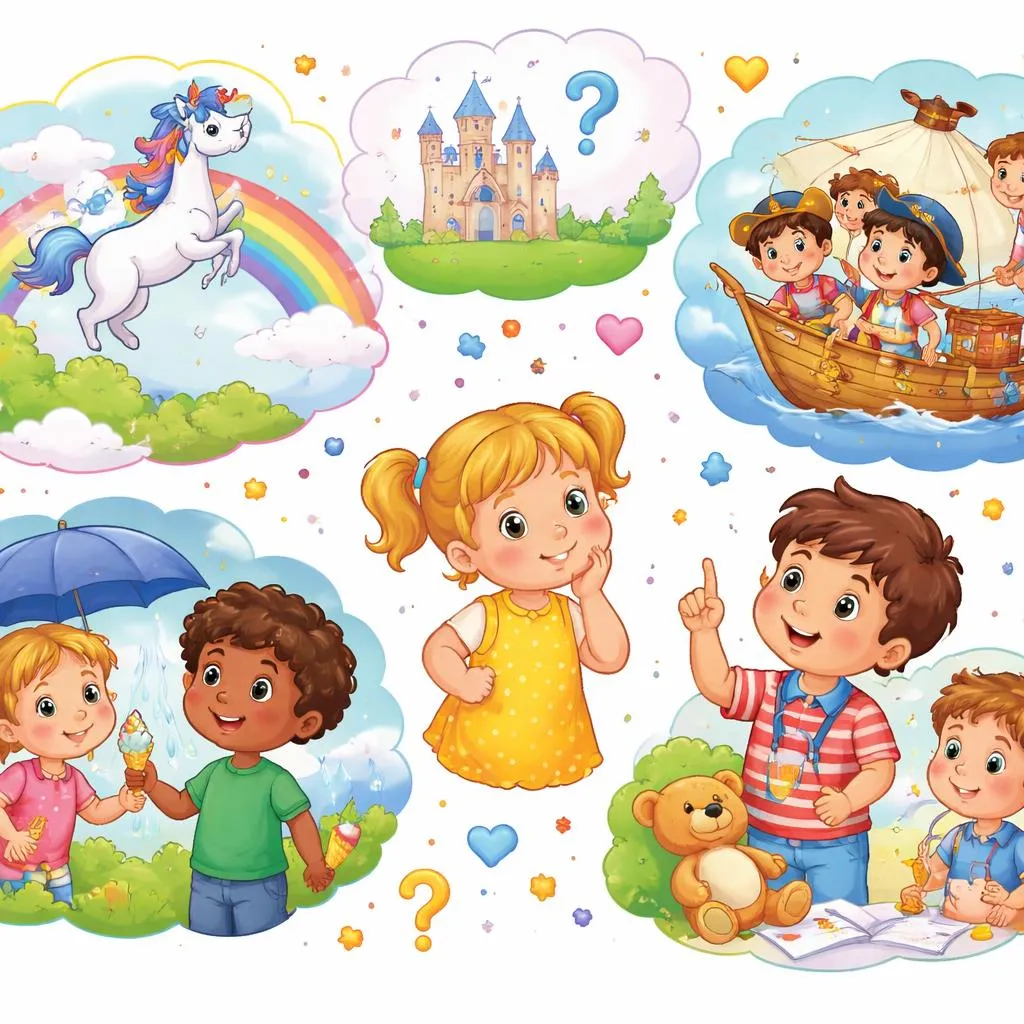

Four-year-olds have wonderful imaginations. They pretend to be princesses and superheroes. They wish for things that are not real. This is where the subjunctive mood comes in. The subjunctive mood talks about wishes, possibilities, and things that are not true. "I wish I had a pony." "If I were a bird, I would fly." These sentences are not about reality. They are about dreams and imagination. Teaching your child common subjunctive mood sentences helps them express wishes and explore imaginary worlds. This article shares the 50 most common subjunctive mood sentences for 4-year-olds. These will help your child talk about hopes, dreams, and make-believe.
What Is Subjunctive Mood for a Four-Year-Old? Subjunctive mood is the mood of imagination. It talks about things that are not real. It expresses wishes, possibilities, and hypothetical situations. "I wish it was my birthday." "If I were a dinosaur, I would be big." Four-year-olds use subjunctive mood in their pretend play. They say "Let's pretend I am the mommy." They make wishes. "I wish we had a pool." Subjunctive mood opens the door to imagination.
Meaning and Explanation of Subjunctive Mood Subjunctive mood has a special job. It talks about things that are not true or not real. It uses special verb forms. We say "I were" instead of "I was" in wishes. "If I were you, I would go." We use "would" to talk about imagined results. "I would fly if I had wings." For young children, subjunctive mood is the language of pretend. It lets them create worlds in their minds. It lets them express hopes and dreams. Learning subjunctive mood helps children separate reality from imagination.
Categories of Subjunctive Mood Sentences for Preschoolers We group these subjunctive mood sentences into categories. This helps children understand different ways to imagine. Here are the main groups:
Wish Sentences: Hoping for something different.
If Sentences (Hypothetical): Imagining different situations.
Pretend Play Sentences: Language for make-believe.
Advice Sentences: "If I were you" statements.
Desire Sentences: Wanting something that is not real.
Impossible Dreams: Fantastical wishes.
Daily Life Examples of Subjunctive Mood Sentences Subjunctive mood appears in pretend play and wishes. During play, a child says "I wish I was a fairy." When imagining, they say "If I had a magic wand, I would make cookies." When hoping, they say "I wish it would snow." Parents use subjunctive mood too. "If I were you, I would wear a coat." "I wish we could go to the beach." These sentences open doors to imagination.
Wish Sentences I wish I had a pony.
I wish it was my birthday.
I wish we had a pool.
I wish I could fly.
I wish I was bigger.
I wish I had a sister.
I wish we had a dog.
I wish it would snow.
I wish I could stay up late.
I wish I had superpowers.
I wish I was a princess.
I wish I had a castle.
I wish we had ice cream.
I wish I could see Grandma.
I wish I had a fairy friend.
I wish I could talk to animals.
I wish I was invisible.
I wish I had a million toys.
I wish the sun would shine.
I wish I could eat candy every day.
If Sentences (Hypothetical) If I were a bird, I would fly high.
If I had wings, I would soar.
If I were a fish, I would swim in the sea.
If I had a magic wand, I would make wishes.
If I were a cat, I would sleep all day.
If I had a car, I would drive fast.
If I were a giant, I would be tall.
If I had a robot, it would do my chores.
If I were a superhero, I would save people.
If I had a dragon, we would fly together.
If I were a mermaid, I would live in the ocean.
If I had a time machine, I would see dinosaurs.
If I were a king, I would live in a castle.
If I had a fairy, she would grant wishes.
If I were a monkey, I would swing in trees.
If I had a unicorn, it would be magical.
If I were a star, I would shine at night.
If I had a rainbow, I would slide on it.
If I were a cloud, I would float in the sky.
If I had a rocket, I would go to the moon.
Pretend Play Sentences Let's pretend I am the mommy.
Let's pretend you are the baby.
Let's pretend this is a castle.
Let's pretend we are princesses.
Let's pretend we have magic powers.
Let's pretend this box is a car.
Let's pretend we are flying.
Let's pretend we are animals.
Let's pretend we live in a forest.
Let's pretend we found treasure.
Let's pretend I am a teacher.
Let's pretend you are a doctor.
Let's pretend this stick is a wand.
Let's pretend we are in space.
Let's pretend the floor is lava.
Let's pretend we are superheroes.
Let's pretend we have a pet dragon.
Let's pretend we are at the beach.
Let's pretend we are camping.
Let's pretend we are explorers.
Advice Sentences (If I were you) If I were you, I would eat my vegetables.
If I were you, I would wear a coat.
If I were you, I would share my toys.
If I were you, I would go to sleep.
If I were you, I would be careful.
If I were you, I would say please.
If I were you, I would wait my turn.
If I were you, I would brush my teeth.
If I were you, I would hold my mommy's hand.
If I were you, I would try my best.
If I were you, I would not be scared.
If I were you, I would ask nicely.
If I were you, I would clean up.
If I were you, I would be kind.
If I were you, I would listen to Mommy.
If I were you, I would pick up my toys.
If I were you, I would drink my milk.
If I were you, I would take a nap.
If I were you, I would say sorry.
If I were you, I would be happy.
Desire Sentences I wish I could have a pet dinosaur.
I want to be a superhero.
I wish I could live in a candy house.
I want to meet a real fairy.
I wish I could breathe underwater.
I want to be tall like Daddy.
I wish I had a magic carpet.
I want to visit the moon.
I wish I could talk to my toys.
I want to be a famous singer.
I wish I had a thousand crayons.
I want to see a real dragon.
I wish I could run as fast as a cheetah.
I want to be strong like a bear.
I wish I had a friend who was a ghost.
I want to be a character in my book.
I wish I had a treehouse.
I want to have a birthday every day.
I wish I could stay up all night.
I want to be a grown-up.
Impossible Dreams I wish the sky was made of cotton candy.
If I could catch a star, I would keep it in my room.
I wish chocolate grew on trees.
If I had a magic crayon, I would draw a real dog.
I wish my teddy bear could talk.
If I could ride a rainbow, I would slide to the end.
I wish the moon was made of cheese.
If I had a giant, he would carry me everywhere.
I wish my bed was a cloud.
If I could swim in a sea of bubbles, I would stay all day.
I wish my shoes could make me run fast.
If I had a hat that made me invisible, I would sneak cookies.
I wish my room was a castle.
If I had a wand that made things clean, I would never clean up.
I wish my blanket was a magic flying carpet.
If I could talk to the wind, I would ask it to blow bubbles.
I wish my shadow was my friend.
If I had a pocket full of magic, I would share it with everyone.
I wish my dreams came true while I was awake.
If I were in charge of the world, every day would be play day.
Printable Flashcards for Subjunctive Mood Sentences Flashcards help children recognize imaginary language. Create cards with one subjunctive sentence on each. Use a magical color like purple or gold. On the back, draw a dreamy picture. For "I wish I had a pony," draw a pony with a star. For "If I were a bird," draw a bird flying. Show the card and read the sentence. Ask your child "Is this real or pretend?" Talk about imagination.
Another idea is to make wish cards. Have your child draw their wishes. Write the wish sentence under the picture. "I wish I had a dragon." Collect them in a wish book.
Learning Activities with Subjunctive Mood Sentences Activities help children use subjunctive mood in imaginative play. Try these at home:
Wish Time: Each day, share one wish. "I wish we could go to the beach." Your child shares a wish. Write them down.
Pretend Play Corner: Create a space for pretend play. Use props. Encourage subjunctive language. "Let's pretend we are in a castle."
If I Were... Game: Take turns completing sentences. "If I were an animal, I would be a..." "If I had magic, I would..."
Dream Drawings: Draw pictures of wishes and dreams. Talk about them using subjunctive mood. "I wish I had a pet unicorn."
Story Building: Start an imaginary story. "If I found a magic door, I would..." Your child continues the story.
Learning Activities for Specific Subjunctive Types For wish sentences, make a wish jar. Write wishes on paper and put them in a jar. Read them sometimes. For if sentences, play the "If" game. "If you had a superpower, what would it be?" For pretend play sentences, join your child's play. Use subjunctive language. "Let's pretend I am the queen." For advice sentences, model giving advice. "If I were you, I would wear your coat."
Educational Games Using Subjunctive Mood Sentences Games make learning subjunctive mood fun. Here are some favorites:
Wish Bingo: Make bingo cards with pictures of wished-for things. Call out wish sentences. "I wish I had a pony." Your child covers the pony.
If I Were... Charades: Act out an animal or thing. Your child guesses and makes an "if" sentence. "If I were a cat, I would meow."
Pretend Switch: Take turns suggesting pretend scenarios. "Let's pretend we are in space." The next person adds to it. "And we see aliens."
Wish Chain: One person makes a wish. Next person adds to it. "I wish I had a dog." "And the dog could talk." "And we would fly together."
Advice Game: Give a situation. Your child gives advice using "If I were you." "My tummy hurts." "If I were you, I would rest."
Game Ideas for Different Settings In the car, play "I Wish." Take turns making wishes about things you see. "I wish I had that big truck." "I wish we could stop at that playground." At the park, play "If I Were." "If I were a bird, I would fly to that tree." "If I were a squirrel, I would climb." At mealtime, play "Pretend Food." "Let's pretend this broccoli is a tree." "If I were a giant, this carrot would be small."
How to Teach Subjunctive Mood Naturally You are the best model. Use subjunctive mood in your speech. Share wishes. "I wish we could go to the beach." Imagine possibilities. "If I had a million dollars, I would buy you a pony." Your child hears the language of imagination.
Join your child's pretend play. Use subjunctive language. "Let's pretend I am the customer and you are the shopkeeper." This models the mood in context.
Why Subjunctive Mood Matters for Four-Year-Olds Subjunctive mood is the language of imagination. It lets children explore possibilities. It lets them express hopes and dreams. This is essential for creative thinking.
Subjunctive mood also helps children understand that not everything is real. They learn to distinguish between fact and fantasy. This is an important cognitive skill.
Tips for Parents to Support Subjunctive Mood Learning Encourage pretend play. Provide props and time for imagination. Join in and use subjunctive language.
Talk about wishes. Ask your child what they wish for. Share your own wishes. This normalizes the subjunctive mood.
Read books with imaginative elements. Fairy tales and fantasy stories use subjunctive mood. Point out the wishes and "if only" moments.
The Power of Repetition with Subjunctive Mood Children learn through repetition in pretend play. They will play the same scenarios again and again. Each time, they practice subjunctive language.
Sing songs with imaginative lyrics. "I'm wishing" songs from movies. "If you wish upon a star." These songs use subjunctive mood.
Create routines around wishes. At bedtime, share one wish for tomorrow. This builds a habit of imagining.
Connecting Subjunctive Mood to Books and Media Choose books with strong imaginative elements. "If You Give a Mouse a Cookie" uses hypothetical situations. Fairy tales are full of wishes and magic. Point these out as you read.
Educational videos can also help. Look for shows about imagination and pretend. Talk about the wishes and "what if" moments.
Making a Subjunctive Mood-Rich Environment Create a "wish wall." Post drawings of wishes. Write the wish sentences underneath. "I wish I had a pet dragon." Read them together.
Make a "pretend box" with costumes and props. Use it to inspire imaginary play and subjunctive language.
Encouraging Your Child to Use Subjunctive Mood Ask questions that invite imagination. "What would you do if you had magic?" "What do you wish for?" These questions naturally get subjunctive answers.
When your child uses subjunctive mood, celebrate their imagination. "What a wonderful wish!" "I love your pretend idea!" This encourages more imaginative language.
Celebrating Progress with Subjunctive Mood Notice when your child starts using more complex imaginary language. "You used 'if I were' today! That is such creative thinking!" Celebrate these imaginative milestones.
Remember that every child develops at their own pace. Some jump into imaginary worlds early. Others are more grounded in reality. Both are normal. Your support and encouragement make the difference.
By teaching your child these 50 most common subjunctive mood sentences, you give them the language of imagination. They can express wishes, explore possibilities, and create magical worlds. They can dream and pretend. Enjoy each new imaginary sentence together. Every "I wish" and "if I were" opens a door to creativity.