
What is the rhyme?
“The Kiboomers Miss Mary Mack” is a modern children’s song based on a classic American clapping rhyme.
Teachers use this rhyme to teach rhythm, speaking fluency, and early vocabulary. The song includes repetition, rhyme, and clear storytelling elements.
This rhyme fits early English classrooms and ESL learning environments. The rhythm supports memory and pronunciation practice.
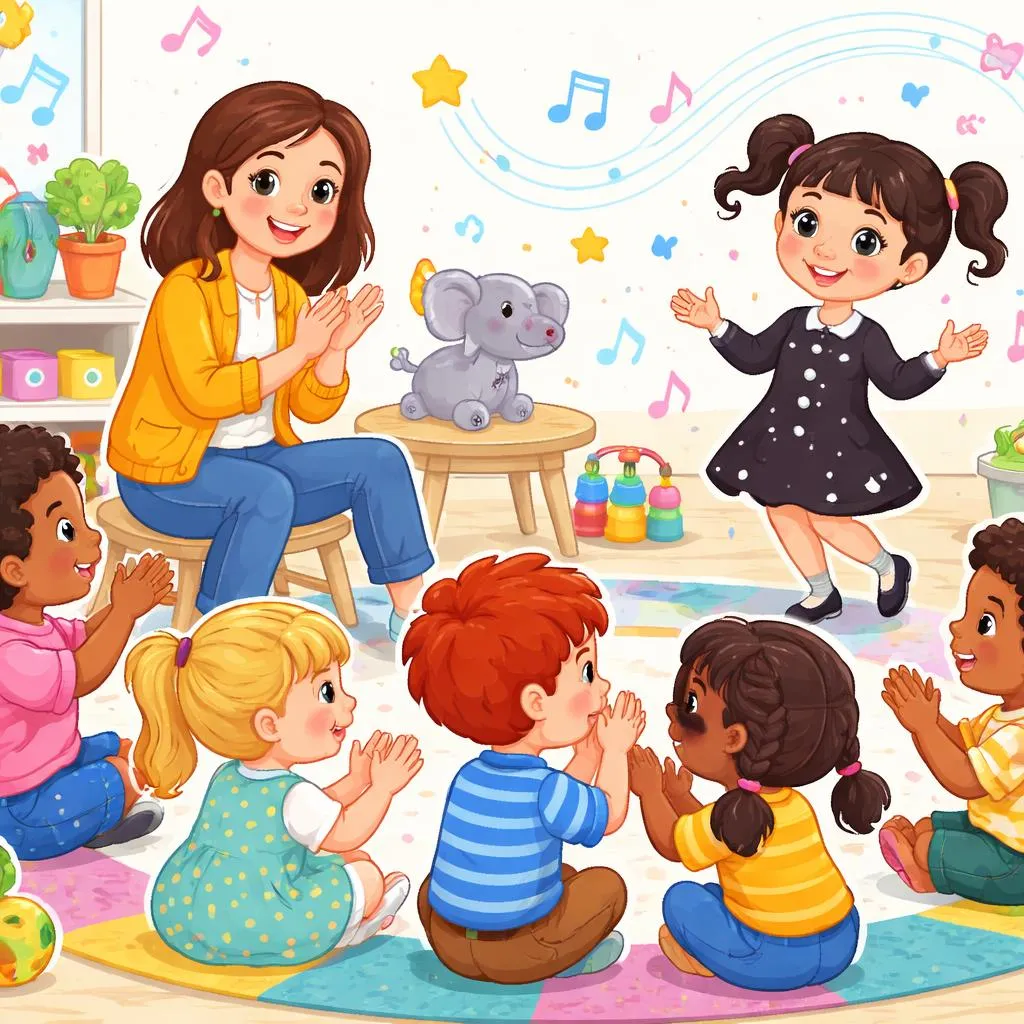
Teachers often pair the rhyme with hand-clapping games. Movement helps connect language with physical action.
The lyrics of nursery rhymes
The core story in the kiboomers miss mary mack lyrics describes a girl named Mary Mack. The song mentions her clothing, her family, and her actions.
Teachers do not need to recite full lyrics in class. Short lines help focus on language patterns.
“Miss Mary Mack, Mack, Mack.” “All dressed in black, black, black.” “She asked her mother, mother, mother.”
These lines show repetition and rhythmic structure. Repetition helps pronunciation and listening skills.
Teachers highlight rhyme patterns like Mack / black / back. This helps learners notice sound patterns in English.
Vocabulary learning
The kiboomers miss mary mack lyrics provide many beginner-friendly words.
Teachers explain clothing words like dress, black, and buttons. Family words like mother and father appear in the song.
Action words include ask, go, and bring. Teachers model simple sentences with these words.
“She wears a dress.” “She asks her mother.”
This song also introduces descriptive language. “All dressed in black” teaches color vocabulary.
Teachers connect vocabulary with pictures and gestures. Visual aids support meaning and retention.
Phonics points
This rhyme supports phonics awareness through repetition and rhyme.
The /æ/ sound appears in Mack, black, and back. Teachers guide learners to listen and repeat these sounds.
Clapping on rhyming words helps sound recognition. Teachers slow down pronunciation for clear phonics practice.
Initial sounds also help phonics instruction. M in Mary and Mack reinforces consonant sounds.
Teachers can isolate sounds and blend them. M-a-ck, b-l-a-ck, b-a-ck.
This supports early decoding and pronunciation skills.
Grammar patterns
The kiboomers miss mary mack lyrics include simple grammar structures.
Present tense sentences appear in descriptive lines. “She wears black.” “She asks her mother.”
Imperatives appear when the story suggests actions. “Bring me back.”
Teachers explain pronouns like she and me. This supports basic sentence structure awareness.
Repetition of nouns and verbs reinforces subject-verb patterns. Teachers model sentence frames based on lyrics.
“She is wearing ___.” “She is asking ___.”
This approach integrates grammar with music and rhythm.
Learning activities
Teachers use this rhyme to build interactive English lessons.
Clapping rhythm practice
Teachers teach a simple clap pattern with the song. Learners clap on rhyming words.
This improves timing, listening, and pronunciation.
Picture sequencing
Teachers provide pictures from the song story. Learners arrange pictures in order while listening.
This supports comprehension and narrative skills.
Vocabulary matching
Teachers give word cards and picture cards. Learners match dress, mother, black, and buttons with images.
This strengthens word recognition and meaning.
Sentence echo activity
Teachers say a sentence from the rhyme. Learners repeat with correct rhythm and intonation.
This builds speaking confidence and fluency.
Mini story retelling
Teachers ask learners to retell the story in simple sentences. “She wears black.” “She asks her mother.”
This supports early storytelling skills.
Printable materials
Printable materials help reinforce learning outside of singing time.
Teachers prepare lyric worksheets with missing words. Learners listen and fill in blanks like black or mother.
Flashcards with rhyme vocabulary support review. Large cards work for group instruction.
Coloring pages based on Miss Mary Mack scenes support engagement. Learners label objects with words from the song.
Sentence strips help practice grammar. “She is wearing a dress.”
Teachers can create mini books with pictures and short sentences. This integrates reading, writing, and listening.
Educational games
Games make the kiboomers miss mary mack lyrics memorable and fun.
Rhyme detective game
Teachers say a word like Mack. Learners find rhyming words like black or back.
This strengthens phonemic awareness.
Lyric gap race
Teachers place lyric cards around the room. Learners find the missing word for each line.
This adds movement and listening practice.
Role play drama
Learners act as Mary Mack and her parents. They use simple dialogue from the rhyme.
This builds speaking and confidence.
Word clap challenge
Teachers say a word. Learners clap syllables and identify sounds.
This supports phonics and rhythm.
Song memory chain
Teachers start a lyric line. Learners continue the next line in sequence.
This improves memory and listening accuracy.
The kiboomers miss mary mack lyrics offer rhythm, rhyme, and meaningful language patterns. Teachers integrate vocabulary, phonics, grammar, and speaking practice through this song. Music supports motivation, pronunciation, and memory in early English learning environments. When rhythm, movement, and language combine, learning becomes natural, joyful, and deeply effective in every classroom session.