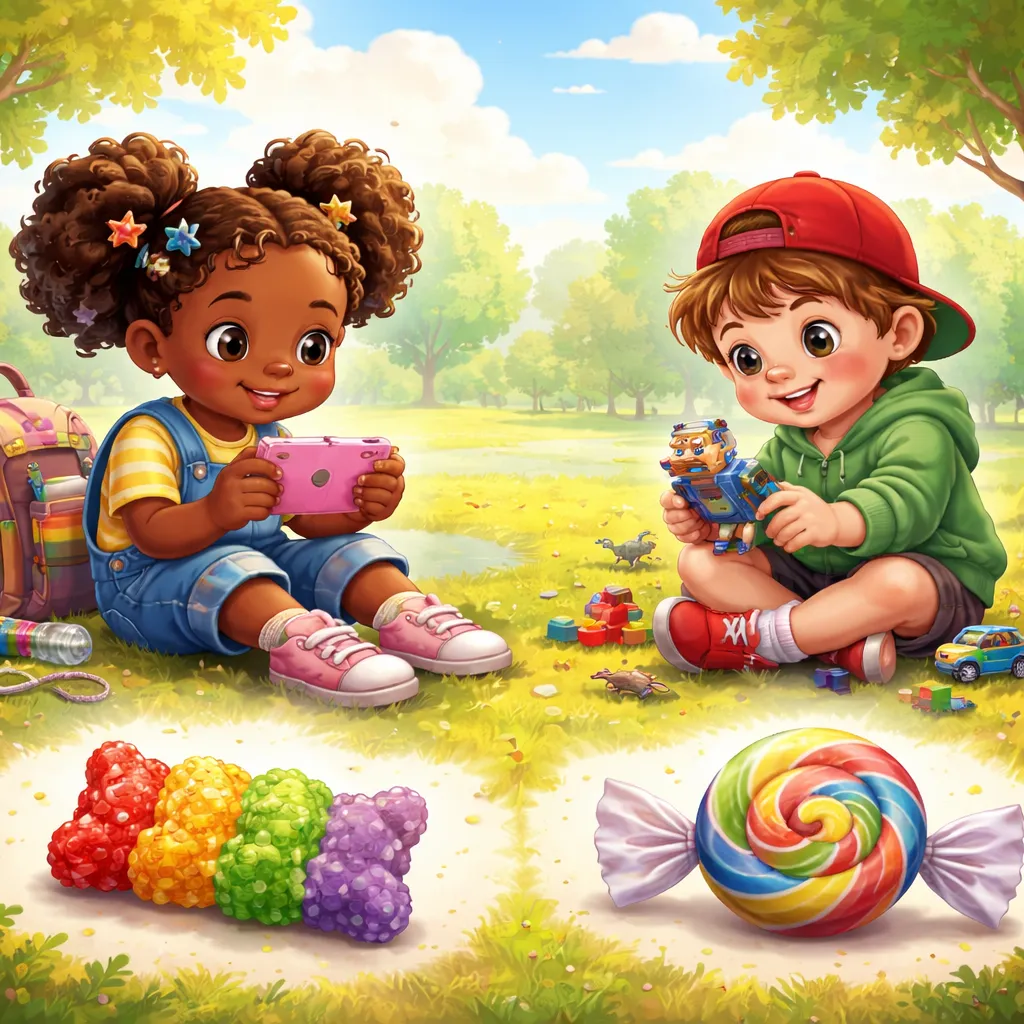

Children notice who gets more crackers. They also see that friends like different colors. Parents often hear kids say, “These pieces are unequal.” Or “My toy is different from yours.” But are these two words the same? Can we always use one instead of the other? This article helps families explore the words “unequal and different” together. We will compare them with similar words. We will see which one fits unfair sharing and which one fits unique preferences. Let us help your child describe variety and unfairness with clarity.
Are Similar Words Really Interchangeable? Many English words describe things that are not alike. But they each carry different focus. “Unequal” and “different” both mean “not the same.” Yet we use them in different situations. Unequal shares of cake are unfair. Different flavors of ice cream are just variety. You cannot always swap them. For example, unequal rights is a serious problem. Different rights could mean separate but not necessarily unfair. So similar words are not always interchangeable. Parents can show this with real objects. Point to two unequal glasses of water. Then point to two different colored crayons. Ask your child: “Are the crayons unequal?” No, they are just different. Teaching these small differences builds a strong vocabulary.
Set 1: Unequal vs Different — Which One Is More Common? “Different” appears much more often in daily English. We say different color, different size, different idea, different place. “Unequal” appears less frequently. People say unequal pay, unequal treatment, unequal distribution, unequal sides. In children’s books, “different” dominates for variety and uniqueness. “Unequal” shows up in fairness and math contexts. Look at Google Ngram. “Different” has always been far more common. For young learners, teach “different” first for variety. Save “unequal” for unfair situations and math comparisons. This order helps kids celebrate differences first.
Set 2: Unequal vs Different — Same Meaning, Different Contexts Both words mean “not the same.” But context separates value from quality. “Unequal” describes things that should be equal but are not. Unequal shares, unequal treatment, unequal sides of a shape. “Different” describes things that are simply not alike. Different colors, different animals, different ideas. You can have different pieces of candy that are still equal in number. You can have unequal amounts of the same candy. So one word carries a sense of unfairness or imbalance. The other word is neutral about value. Tell your child: “Unequal means not fair or not the same amount. Different means not the same kind or not alike.”
Set 3: Unequal vs Different — Which Word Is “Bigger” or More Emphatic? “Unequal” often feels more serious and judgmental. Unequal opportunity, unequal power, unequal pay. These are problems. “Different” feels neutral or even positive. Different cultures, different hobbies, different ideas. These are interesting. So “unequal” carries a sense of injustice or imbalance. “Different” carries a sense of variety or uniqueness. For children, explain this way: “Unequal means something is unfair. Different means something is just not the same, and that is okay.” Unequal sharing makes someone sad. Different favorite colors make the world beautiful.
Set 4: Unequal vs Different — Concrete vs Abstract Both words work concretely and abstractly. Concrete “unequal”: unequal lengths, unequal weights, unequal pieces. Abstract “unequal”: unequal rights, unequal treatment, unequal power. Concrete “different”: different shapes, different sizes, different colors. Abstract “different”: different opinions, different feelings, different ideas. However, “unequal” almost always involves comparison of measurable value or fairness. “Different” involves comparison of qualities, kinds, or characteristics. For children, start with concrete meanings. Show two unequal sticks of different lengths. Show two different colored balls. Later, introduce abstract uses through stories. Explain that “unequal treatment” means someone gets less. “Different opinions” mean people think differently.
Set 5: Unequal vs Different — Verb or Noun? First Understand the Role Both words are adjectives. “Unequal” comes from “equal.” “Different” comes from “differ.” For young children, focus on adjectives. “These pieces are unequal.” “These crayons are different.” Later, teach the verb “differ.” “My opinion differs from yours.” Teach the noun “difference.” “The difference between these two toys is the color.” Teach the noun “inequality.” “Inequality in sharing makes people sad.” This builds grammar naturally. Keep it simple. Your child will learn these forms over time. Start with the adjectives.
Set 6: Unequal vs Different — American English vs British English Both words work similarly in American and British English. However, small differences exist. In the UK, “unequal” is common in social justice discussions. “Unequal access to education.” In the US, same. “Different” in British English can mean “unusual” in a positive way. “That’s different!” Americans use it the same way. In the US, “different than” is common. In the UK, “different from” is preferred. For children, these differences are minor. Teach the core meanings. A family activity: compare a US fairness book and a UK one. Look for “unequal” and “different.” You will see “unequal” in both for injustice.
Set 7: Unequal vs Different — Which Fits Formal Situations? Both words work in formal and informal settings. “Unequal” appears in law, economics, and social sciences. “Unequal distribution,” “unequal treatment under the law.” “Different” appears everywhere, formal or casual. For school reports, “unequal” is more specific for fairness and measurement. “Different” is more general. Teach your child this rule: “Use unequal when something is unfair or not balanced in amount. Use different when things are simply not alike.” In a social studies report about fairness, “unequal pay” is correct. In a science report about animals, “different species” works best.
Set 8: Unequal vs Different — Which One Is Easier for Kids to Remember? “Different” is easier for young children. Why? Because it has three syllables but a clear pattern. “Dif-fer-ent.” Children hear “different” every day. “That’s different!” “Unequal” has three syllables too. “Un-e-qual.” The “un” prefix means “not.” A three-year-old can say “different” clearly. That same child may say “unequal” as “un-ee-kwal.” So start with “different.” Use it for colors, sizes, shapes, and preferences. Introduce “unequal” around age six or seven. Use fairness examples. “Unequal sharing means someone gets less.” “Unequal sides of a triangle are not the same length.” This fairness and math connection helps children remember.
Mini Exercise: Can You Spot the Differences Between These Similar Words? Read each sentence with your child. Choose “unequal” or “different.” Answers below.
My sister and I have _______ hair colors. Hers is brown, mine is blonde.
The teacher noticed _______ amounts of paint on the two brushes.
We have _______ opinions about which movie to watch.
The two sides of the scale were _______, so it tipped.
It is okay to be _______ from your friends.
Bonus question: Is this sentence correct? “The unequal of the two paths made me choose the shorter one.” Why or why not?
Answers: 1. different, 2. unequal, 3. different, 4. unequal, 5. different. Bonus: Not correct. “Unequal” is an adjective, not a noun. Say “The unequal lengths of the two paths made me choose the shorter one” or “The difference between the two paths made me choose the shorter one.”
Talk about each answer. Ask your child which sentences describe unfairness or imbalance. Which describe simple variety or uniqueness. This discussion builds precision. Do the exercise again with real objects. Two cups with different amounts of water? Unequal. Two different colored cups? Different. Two unequal slices of cake? Unequal. Two different flavors of ice cream? Different.
Parent Tips: How to Help Kids Learn and Remember Similar Words You can teach “unequal and different” during daily moments. Breakfast time: “These are unequal amounts of cereal. You have more. These are different types of fruit on our plates.” Playtime: “Unequal turns in a game are not fair. Different toys are fun for different reasons.” Sharing time: “Unequal sharing makes someone sad. Different preferences are okay. You like blue, I like red.” Nature time: “These unequal branches have different lengths. These different flowers have different colors.” Use your body. Hold one hand higher to show unequal. Wiggle all fingers to show different. Say the words as you move. Play the “Unequal or Different” sorting game. Gather ten examples. Two cups with different water amounts? Unequal. Two different colored shirts? Different. Unequal pay for same work? Unequal. Different favorite animals? Different. Two unequal sides of a square? Unequal. Two different shapes? Different. Ask your child to explain each choice. Do not correct mistakes harshly. Instead, ask “Is this about unfairness or imbalance? That is unequal. Is this about just being not alike? That is different.” This gentle guidance works better than rules. Read books about fairness and uniqueness. “Unequal Friends” or “Different Just Like Me.” Pause on each page. Ask “Is this unequal or different? Why?” Keep a fairness and variety journal. Draw one unequal thing and one different thing each week. Label them. Review old entries. Praise specific observations. “You noticed that unequal sharing makes people feel bad, but different favorite colors make the world beautiful. Perfect.” This positive feedback builds a fair and open-minded child. Your child will soon see unequal and different things everywhere. They will also understand the difference between unfair imbalance and harmless variety. That is a sophisticated skill for a young learner. Keep exploring words together. Every snack, every game, every friendship offers a new chance to learn about equality and difference.