
What is the rhyme?
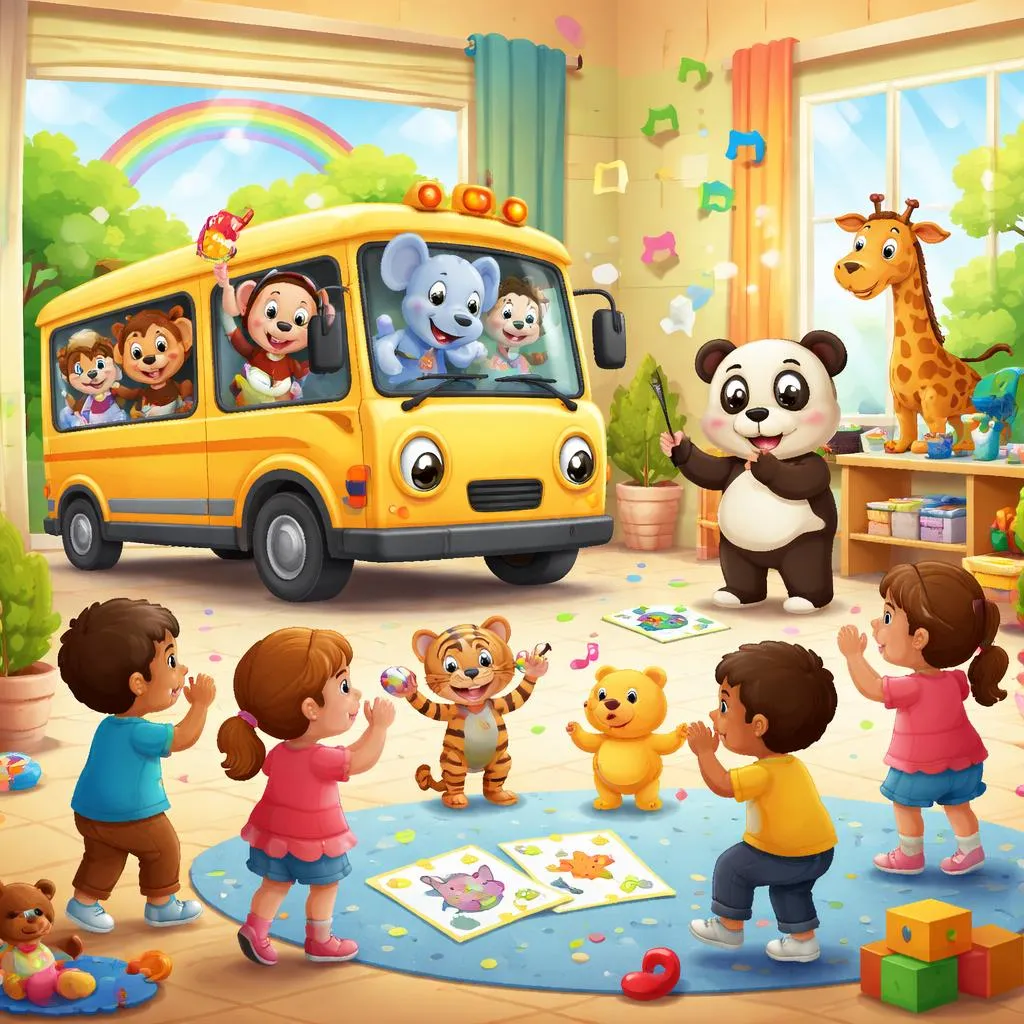
“Wheels on the Bus” is a classic nursery rhyme. Teachers often adapt it with creative verses. The theme “wheels on the bus animals” adds animal characters to the song.
This variation keeps attention high. It also connects music with animal vocabulary and actions. Songs like this support listening skills and speaking practice in early education.
In a classroom setting, this rhyme works as a multi-sensory learning tool. It links rhythm, movement, and language in one activity.
The lyrics of nursery rhymes
The original song includes verses about wheels, doors, and people. The animal version replaces passengers with animals. For example, “The dog on the bus goes woof, woof, woof.”
Teachers can create multiple animal verses. “The cat on the bus goes meow, meow, meow.” “The cow on the bus goes moo, moo, moo.”
This flexible structure allows endless customization. It also encourages creative language production in class.
Short repetitive lyrics support memory and pronunciation practice. Repetition builds confidence and fluency in young learners.
Vocabulary learning
This song introduces animal names in a meaningful context. Learners hear words linked with sounds and actions.
Common animal vocabulary includes dog, cat, cow, duck, pig, and bird. Each verse pairs the animal with an onomatopoeic sound. This pairing helps build semantic associations.
Teachers can model simple sentences such as: “The dog is on the bus.” “The cow makes a sound.”
These sentences demonstrate subject–verb patterns. They also support early sentence comprehension.
Phonics points
Animal sounds in the song highlight phonics patterns. “Woof” demonstrates the long vowel sound /uː/. “Meow” highlights the diphthong /aʊ/. “Moo” reinforces the long vowel /uː/.
Teachers can focus on initial consonants. Dog starts with /d/. Cat starts with /k/. Cow starts with /k/ even though spelled with “c.”
This contrast helps introduce phonics rules. Sound awareness improves early reading readiness.
Clapping syllables in animal names also helps phonological awareness. “Dog” has one beat. “Ele-phant” has three beats.
Grammar patterns
The song naturally demonstrates present tense structures. “The dog on the bus goes woof, woof, woof.” This line shows subject + prepositional phrase + verb.
Teachers can expand grammar practice with simple patterns. “The cat is on the bus.” “The duck is in the bus.”
Prepositions like “on” and “in” become clear through visuals and gestures. This contextual grammar instruction supports implicit learning.
The repetitive structure also introduces third person singular verbs. “Goes” shows the -s ending. This pattern can be highlighted gently in guided instruction.
Learning activities
Singing with gestures improves comprehension. Learners can act like animals while singing.
A teacher can pause the song and ask questions. “What animal is on the bus?” “What sound does a cow make?”
Picture cards can support comprehension. Show an animal card and cue the verse. This creates a listening-to-speaking pathway.
Role play also works well. One learner becomes the animal. Others sing the verse and identify the character.
This activity supports oral language and social interaction.
Printable materials
Printable animal flashcards help reinforce vocabulary. Cards can include animal pictures and words.
Sentence strips can show patterns such as: “The ___ on the bus goes ___.” Learners can match animals and sounds.
Teachers can provide simple worksheets. Matching tasks connect animals with sounds. Coloring pages integrate art with language learning.
These materials help connect auditory input with visual recognition.
Educational games
Games increase engagement and retention. A guessing game works well with this song. Play an animal sound and ask for the animal name.
A bus board game can integrate movement and language. Learners move tokens and sing a verse when landing on an animal square.
A memory game with animal cards also supports vocabulary recall. Pair picture cards with sound cards. This trains auditory and visual memory together.
Teachers can use a “song leader” role. The leader chooses the next animal verse. This promotes autonomy and speaking confidence.
The theme “wheels on the bus animals” provides a structured yet flexible framework for preschool English instruction. Songs connect language with rhythm, movement, and emotion. When animals join the bus, imagination and linguistic input meet in a playful learning environment.