
Opening Introduction
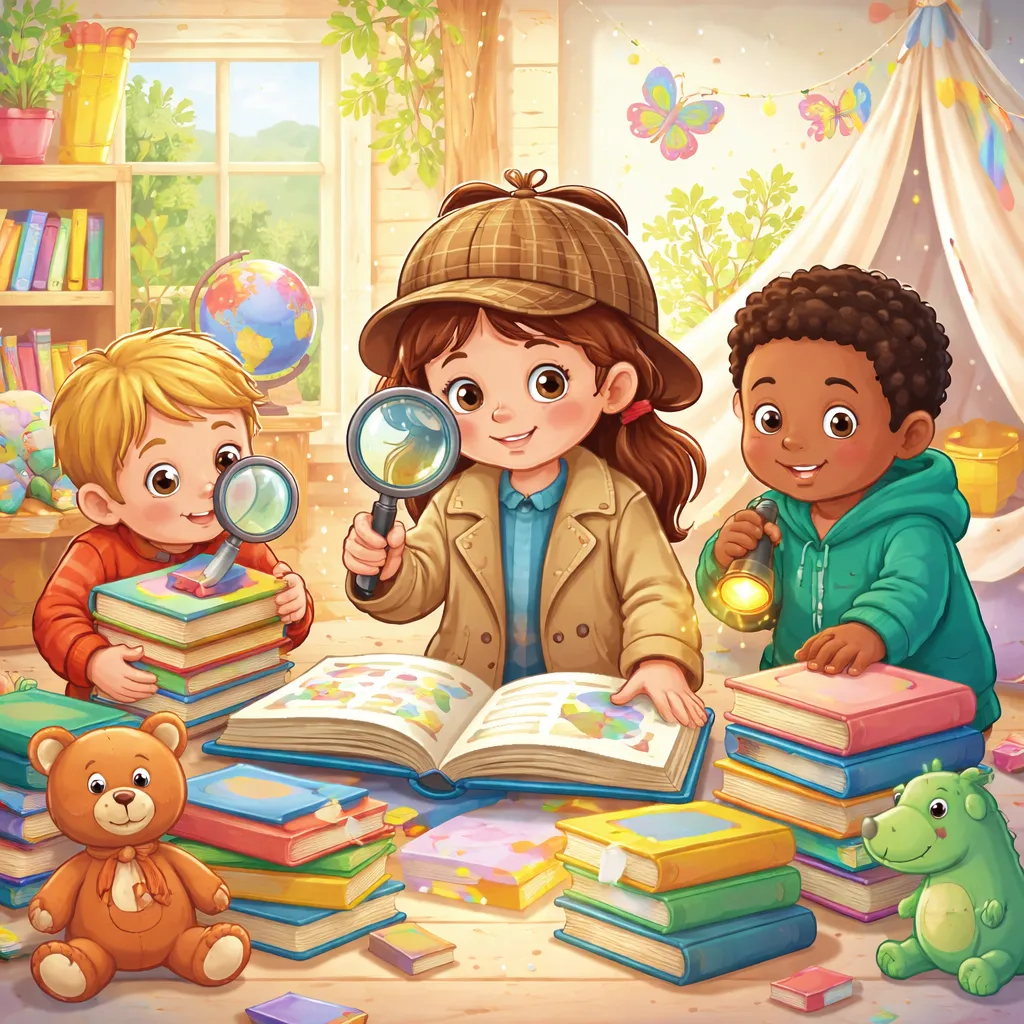
Sam is at the library. He sees a big shelf of picture books. They are all so colorful. One book has one word on each page. Another book has long paragraphs. Sam picks the one with long paragraphs. He tries to read it. The words are hard. He feels frustrated. His sister, Mia, sees him. "That book is for older kids," she says. "Let me show you how to find a book that is just right for you. It is like being a detective. We need to know how to choose English picture books by age. It is a special skill." Sam is curious. How can you tell which book is for which age? Let's learn this detective skill together.
Core Knowledge Explanation
Picture books are wonderful. They have stories and pictures. But not every picture book is for every child. A book for a two-year-old is different from a book for an eight-year-old. Why? Because children grow. Their brains grow. Their understanding grows. Their interests grow. So, we must choose books that match their growth. This is the key to how to choose English picture books by age.
Let's look at different ages. For babies and toddlers (0-3 years old), choose board books. Board books are made of thick cardboard. They are hard to tear. They have simple, bright pictures. They have one word or one short sentence per page. Words like "dog", "ball", "sun". The stories are very simple. They are about familiar things: family, animals, bedtime. These books are for touching, looking, and hearing the sound of words.
For preschoolers (3-5 years old), choose books with simple stories. The sentences are a bit longer. The pictures help tell the story. The stories are about everyday life, friends, or simple adventures. The books might have repetition. Repetition means saying the same thing again. "Brown bear, brown bear, what do you see?" This helps children remember and join in. The books might teach colors, numbers, or letters. They are fun and interactive.
For early readers (5-7 years old), choose books that help with learning to read. These books have more words, but the sentences are still short. The words are often simple and repeated. The stories are a bit longer, but not too long. The pictures are still important. They help the child understand the words. Look for "I Can Read" books or "Level 1" books. These are made for this age. The themes are about school, friends, and family.
For fluent young readers (7-10 years old), picture books can have more complex stories. The sentences are longer. The vocabulary is richer. The stories might have a clear beginning, middle, and end. They might teach a lesson or be about history or science. The pictures are beautiful, but the story is the main part. These books are for children who are comfortable reading alone. They are for children who love a good story.
When you are how to choose English picture books by age, also think about the child's interests. A five-year-old who loves dinosaurs will love a simple dinosaur book. An eight-year-old who loves space will love a picture book about the planets. The right book is the one that matches the child's age and the child's heart. It is a book that is not too easy and not too hard. It is a book that makes them say, "Read it again!"
Fun Interactive Learning
Let's practice being book detectives. Go to your bookshelf or the library. Pick three picture books. Look at the cover. Look at the pictures inside. Look at the words. Now, ask these detective questions. Question 1: How many words are on a page? A few words? Many words? Question 2: Are the sentences short or long? Question 3: Are the pictures simple or detailed? Question 4: What is the story about? Is it a simple idea or a complex idea?
Now, guess the age. If the book has one word per page and a bright picture, it might be for 0-3. If it has a few lines per page and a simple story, it might be for 3-5. If it has a paragraph per page and a clear story, it might be for 5-7. If it has long paragraphs and a complex story, it might be for 7-10. This is the detective work of how to choose English picture books by age.
You can also play the "Book Match" game with a friend. Write different ages on cards: 2, 4, 6, 8. Then, describe a book or show a cover. Your friend must pick the age card that matches. "This book has one word per page. It is about a red ball." Your friend holds up the "2" card. Correct. This game sharpens your detective skills.
Another fun activity is to make your own "age sticker" labels. Draw a smiley face for toddler books. Draw a star for preschool books. Draw a book with a light bulb for early reader books. Draw a trophy for fluent reader books. Then, go through your books and put the stickers on them. Now, you have organized your library by age. You are an expert in how to choose English picture books by age.
Expanded Learning
Picture books have a long history. The first picture books were made to teach letters and morals. In the 1900s, artists and writers started making beautiful picture books for fun. Today, we have thousands of picture books from all over the world. In Japan, picture books are called "ehon". In France, they are called "albums". The idea is the same: to tell a story with pictures and words.
Publishers work hard to make books for different ages. They have experts who study child development. They know what children can understand at each age. They use this knowledge to create books. When you are how to choose English picture books by age, you are using the same knowledge. You are thinking like a publisher. You are thinking like a teacher. You are thinking like a parent who wants the best for a child.
Let's sing a song about choosing books. Sing this to the tune of "The Wheels on the Bus".
Choosing books by age is fun, age is fun, age is fun! Choosing books by age is fun, for everyone! For the tiny ones we see, board books are the key! For the preschoolers, stories with repetition, yes indeed! For the early readers, simple words they love to read! For the fluent readers, longer tales are what they need! Choosing books by age is fun, for everyone!
What You Will Learn
You are learning about books and child development. You are learning new words: board books, repetition, interactive, complex, vocabulary, themes, detective, publisher. You are learning about reading levels and interests.
You are learning smart sentences. You can say, "This book is appropriate for a five-year-old." You can explain, "Board books are good for toddlers because they are durable." You can ask, "What age is this picture book for?" You are using English to talk about literature and learning. This is a sophisticated skill.
You are building important abilities. You are building analytical skills. You look at a book and break it down. You are building empathy. You think about what another child would enjoy. You are building organizational skills. You can sort and categorize books. You are building communication skills. You can recommend books to others.
You are forming a valuable habit. The habit of thoughtful selection. You do not just grab any book. You think, "Is this the right book for me or for my friend?" This habit will make you a lifelong reader and a helpful guide for others. Understanding how to choose English picture books by age makes you a reading ambassador.
Using What You Learned in Life
Use this knowledge to help your family. If you have a younger brother or sister, you can help pick books for them. You can read the book to them. You will know it is the right level because you are a detective. At the library, you can help the librarian by putting books back in the right sections. You know which books are for little kids and which are for big kids.
When you get a gift card for a bookstore, you can choose a book for yourself wisely. You can look at the words and pictures and decide if it is a good match for your age and reading level. You are in charge of your own reading journey. You can also start a book club with friends. Each month, choose a book that is right for your group's age. Talk about why you chose it. Share the fun.
Remember, the goal is to love reading. The right book at the right age creates that love. When you know how to choose English picture books by age, you are spreading the joy of reading. You are helping every child find a book that feels like a friend.
Closing Encouragement
You are an amazing book detective. You are a thoughtful reader. You are a kind helper. I am so proud of you. Learning how to choose books by age shows you care about making reading a happy experience for everyone.
Keep using your detective skills. Explore libraries and bookstores. Share your knowledge with friends and family. Every book you choose wisely is a gift to a reader.
Remember, inside every book is a world waiting to be discovered. You now have the map to find the right door for every explorer. Keep reading, keep choosing, keep sharing the magic. Great work, my wonderful book detective.