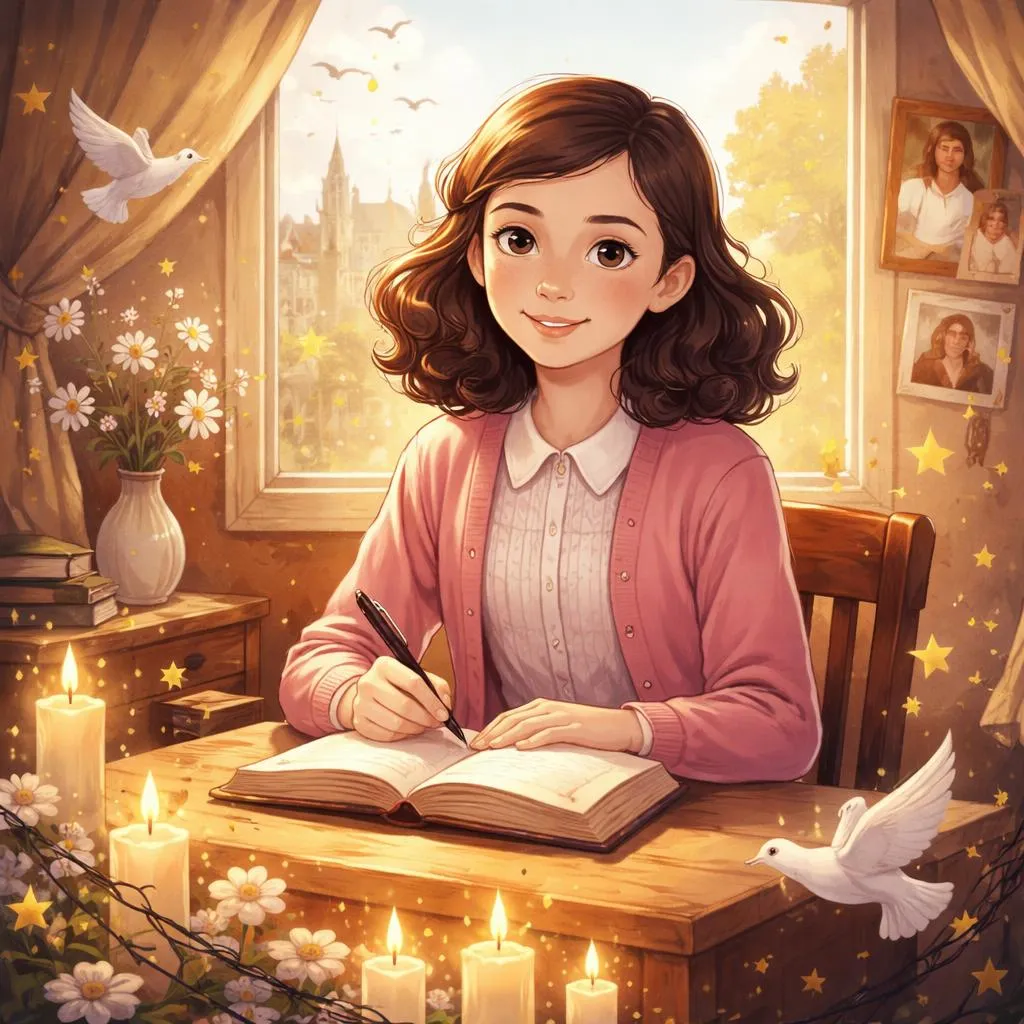

Introduction to Anne Frank
Anne Frank was a young Jewish girl from Germany. She became famous for writing a diary during World War Two. This celebrity story: Anne Frank shows how a ordinary child faced terrible times. She hid from the Nazis with her family for over two years. Her diary tells us about fear, hope, and growing up in secret. Children can learn that even small voices matter. Parents can use her story to teach kindness and history. This article helps families read and talk about Anne Frank together. Her story is not just sad. It is also brave and full of life.
Early Life and Background
Anne Frank was born on June 12, 1929, in Frankfurt, Germany. Her father, Otto Frank, worked as a businessman. Her mother, Edith Frank, took care of Anne and her older sister, Margot. The family was Jewish and lived a normal life. Anne loved reading, writing, and playing with friends. She was talkative and full of energy. In 1933, the Nazis came to power in Germany. The Frank family moved to Amsterdam, Netherlands, to stay safe. Anne went to school and made new friends. She still loved writing stories and keeping a diary. But in 1940, the Nazis invaded the Netherlands. Life became very hard for Jewish people. Anne could no longer go to school with non-Jewish children. She had to wear a yellow star on her clothes. These rules made Anne feel scared and angry.
Career Highlights and Achievements
Anne Frank did not have a career like a doctor or teacher. She was a child writer. Her main work was her diary. She started writing in a red-checkered notebook on her 13th birthday. During hiding, she wrote about her dreams, fears, and daily life. She even rewrote her diary after hearing a radio speech. The speech said people should collect war diaries. Anne wanted to publish a book after the war. She edited her own writing carefully. This shows her serious wish to be a writer. Her achievement is not awards or money. Her achievement is telling the truth about war through a child’s eyes. Millions of people have read her words. That makes her one of the most famous young writers in history.
Famous Works or Performances
Anne Frank’s only famous work is The Diary of a Young Girl. People also call it The Diary of Anne Frank. The diary starts on June 12, 1942, and ends on August 1, 1944. She wrote about living in the “Secret Annex.” That was a hidden room behind her father’s office. She described arguments, hunger, boredom, and small joys. She wrote about falling in love with Peter, a boy also in hiding. She dreamed of becoming a journalist. The diary has many versions. The first version is her original writing. The second version is her edited copy. After the war, her father published the diary. Today, the book is in over 70 languages. There are also plays and movies based on it. Families can read the diary aloud together. Older children can read parts alone. The book helps young readers understand history personally.
Personal Life and Fun Facts
Anne Frank loved movies and Hollywood stars. She pasted pictures of film stars on her bedroom wall. She also enjoyed studying royal family trees. Anne gave nicknames to everyone in the Secret Annex. She called her father “Pim.” She called the hiding place the “Secret Annex.” Anne wrote two versions of her diary. One was private. The other was for future readers. She even wrote short stories and copied her favorite sentences. Anne dreamed of going to Paris and London after the war. She wanted to eat ice cream again and ride a tram. Another fun fact: Anne’s diary was saved by Miep Gies, a helper. Miep found the diary after the family was arrested. She kept it in her desk drawer. Otto Frank received it when he returned. Anne did not know her diary would change the world. That makes her story even more touching.
Legacy and Influence
Anne Frank’s diary has sold over 30 million copies. It is one of the most read books in history. Schools around the world teach her story. The Secret Annex in Amsterdam is now a museum. More than one million people visit it each year. Anne’s writing helps young people understand racism and war. It also shows the power of keeping a diary. Many children start writing journals because of Anne. Her legacy is hope, not just sadness. She believed people were good at heart. That famous line appears in her diary. Her influence reaches beyond books. There are Anne Frank trees, exhibitions, and educational programs. Parents can use her story to talk about fairness and courage. Anne shows that one voice can speak for millions.
Quotes or Famous Sayings
Anne Frank wrote many beautiful sentences. One famous quote is, “How wonderful it is that nobody need wait a single moment before starting to improve the world.” Another powerful line is, “In spite of everything, I still believe that people are really good at heart.” She also wrote, “Paper has more patience than people.” These quotes help children think about kindness and hope. Parents can ask, “What does this quote mean to you?” Reading Anne’s own words brings her story to life. It also helps young readers feel connected to her. You can write these quotes on paper and put them on a wall. Let children choose their favorite one.
How to Learn from Anne Frank
Children can learn many things from Anne Frank. First, they can keep a diary. Writing feelings down helps process fear and joy. Second, they can practice empathy. Anne lived in a tiny space with seven other people. She still tried to understand them. Third, children can learn to speak against unfairness. Anne did not stay silent. She wrote the truth. Parents can encourage children to share their thoughts. Ask them, “What would you write about if you hid for two years?” Another lesson is creativity under stress. Anne made up stories and studied languages. She did not stop learning. Families can start a “diary time” once a week. Read a short part of Anne’s diary. Then write or draw feelings together. This builds emotional skills and historical understanding. Anne Frank’s life was short, but her courage lasts forever. Every child can find a little bit of Anne inside themselves.