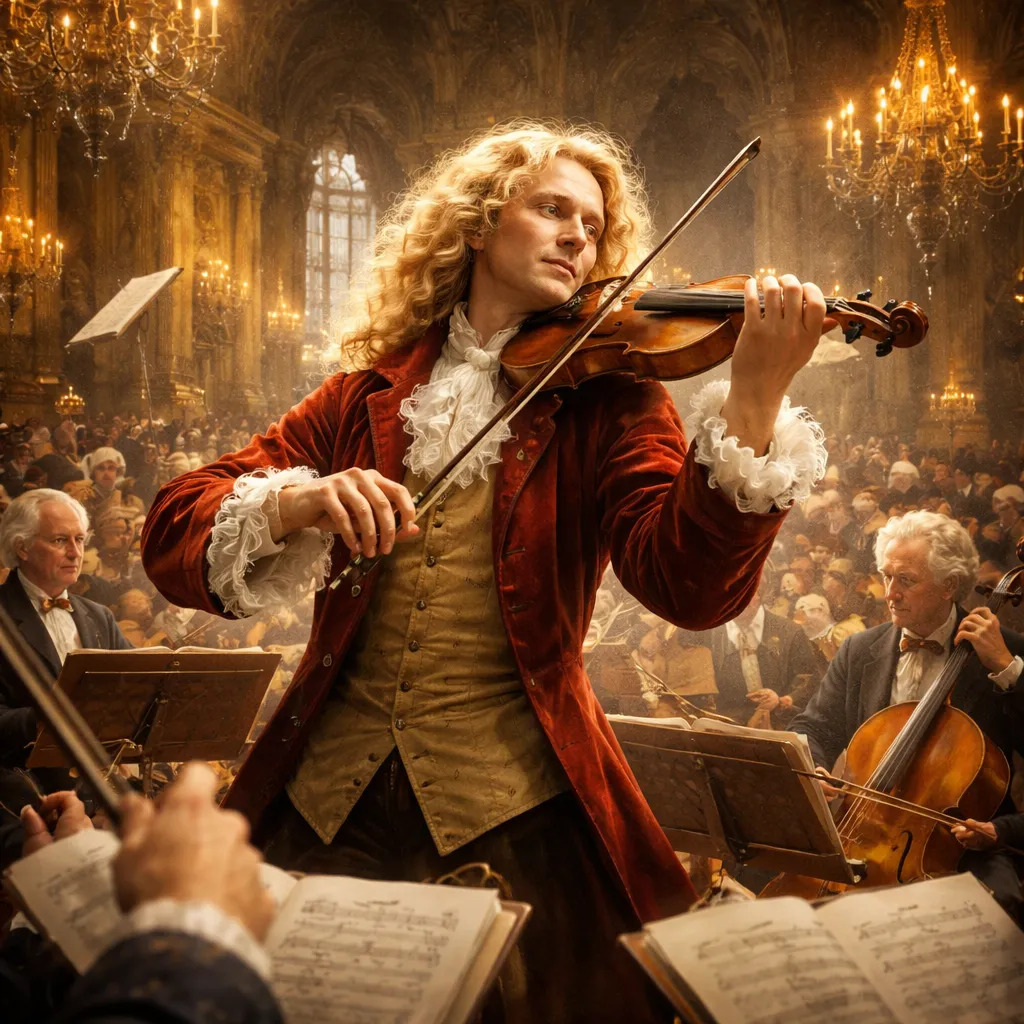

Introduction to Antonio Vivaldi
Antonio Vivaldi, born on March 4, 1678, in Venice, Italy, was a renowned composer and virtuoso violinist, famous for his contributions to Baroque music. Known especially for his iconic violin concertos, Vivaldi was a prolific composer whose works have become fundamental in the classical music repertoire. His music was energetic, expressive, and innovative, making him one of the most influential composers in music history.
Vivaldi is perhaps best known for The Four Seasons, a set of violin concertos that vividly depict scenes of nature through music. His compositions often featured bright, rhythmic passages and bold melodies, capturing the essence of the Baroque era. Today, Vivaldi's works continue to inspire musicians and listeners, offering a blend of technical brilliance and emotional depth.
Early Life and Background
Antonio Vivaldi was born in Venice, a city renowned for its rich artistic and musical culture. His father, Giovanni Battista Vivaldi, was a violinist and worked in the famous orchestra of St. Mark’s Basilica. Vivaldi’s early exposure to music came from his father, who encouraged him to pursue violin playing. Antonio showed remarkable musical talent from a young age, quickly learning to play the violin and composing his first works during his teenage years.
Vivaldi's family background had a profound influence on his career. His father’s role in the orchestra helped him make early connections in Venice's musical community. However, Vivaldi's life was not without challenges. At the age of 15, he entered the seminary to become a priest, and in 1703, he was ordained as a Catholic priest. Despite this, Vivaldi’s passion for music ultimately overshadowed his religious duties, and he spent most of his life composing and performing music.
Vivaldi’s health was delicate throughout his life, and he suffered from asthma, which affected his ability to serve as a priest. This health condition led him to focus more on music rather than religious duties. His unique combination of a priestly background and deep passion for music helped shape his career, allowing him to balance both aspects of his life.
Career Highlights and Achievements
Vivaldi’s career as a composer flourished during his time in Venice, where he worked in various musical positions. One of his most significant roles was at the Ospedale della Pietà, a charitable institution for orphaned girls. Here, he composed numerous works, including a vast collection of violin concertos, many of which were performed by the young women at the institution. His association with the Ospedale gave him the opportunity to compose music that was both highly technical and deeply expressive.
By the early 1710s, Vivaldi was already well-known in Europe. His violin concertos, particularly The Four Seasons, gained widespread popularity. Throughout his career, Vivaldi composed over 500 violin concertos, as well as numerous operas, sacred choral works, and chamber music. His compositions are known for their energetic rhythms, bright melodies, and innovative use of harmony.
Despite his success, Vivaldi faced financial difficulties later in life, as his works began to fall out of favor. In his later years, he moved to Vienna in an attempt to revive his career, but he died in relative obscurity in 1741. Although Vivaldi's music was largely forgotten after his death, his work was rediscovered in the 20th century, and today, he is recognized as one of the great composers of the Baroque period.
Famous Works or Performances
Among Vivaldi’s many works, The Four Seasons stands as his most famous and influential composition. Composed in 1723, The Four Seasons consists of four violin concertos, each representing a different season of the year. Each concerto is accompanied by a sonnet that Vivaldi wrote himself, which describes the scenes of nature depicted in the music. These pieces are known for their vivid musical portrayal of nature, from the chirping of birds in the spring to the biting cold of winter.
Vivaldi’s concertos were groundbreaking for their time. He introduced new techniques, including the use of contrasting dynamics and the exploration of virtuosic violin playing. His concertos often feature fast-paced, lively sections followed by slower, more lyrical moments, which create a sense of drama and excitement.
Other famous works by Vivaldi include:
Gloria in D Major: A choral work, Gloria is one of Vivaldi’s most enduring and beloved sacred compositions. The music’s energetic rhythms and dramatic contrasts reflect the grandeur of the religious text. Concerto for Two Violins in D minor: This piece highlights Vivaldi's skill in creating intricate violin duets, blending the two instruments in a dialogue that is both engaging and technically impressive. Violin Concerto in E Major, RV 269 ("Spring"): Part of The Four Seasons, this concerto is perhaps the most well-known of the four, with its lively rhythms and bright melodies evoking the warmth and vitality of springtime. Opera works: Vivaldi composed more than 40 operas, although many have been lost over time. His operas, such as Orlando Furioso and Griselda, were popular in his day and were known for their rich orchestration and dramatic intensity.
Vivaldi’s contributions to violin music were revolutionary, and his compositions continue to be performed by orchestras and soloists around the world. His works remain staples in both the classical and contemporary repertoires, appreciated for their energy, innovation, and emotional power.
Personal Life and Fun Facts
While much of Vivaldi’s personal life remains a mystery, some fun facts offer a glimpse into his character and lifestyle. For instance, Vivaldi was known for his striking red hair, which earned him the nickname “Il Prete Rosso” (The Red Priest). This nickname reflected both his red hair and his status as a Catholic priest, though his career as a composer far outshone his religious duties.
Vivaldi’s health struggles also shaped his personal life. He suffered from asthma and other ailments throughout his life, which may have influenced his often dramatic and vivid compositions. Despite his challenges, Vivaldi’s passion for music remained unwavering. His compositions, which were often bold and energetic, reflect his vibrant personality and his determination to express emotion through his music.
Interestingly, Vivaldi’s works were not widely celebrated during his lifetime. After his death, his music fell into relative obscurity for nearly two centuries. However, in the early 20th century, musicologists rediscovered his compositions, and Vivaldi’s music gained worldwide recognition. Today, he is regarded as one of the most important composers of the Baroque period.
Legacy and Influence
Vivaldi’s music left an indelible mark on the development of classical music. His innovative use of the violin as a solo instrument, as well as his ability to create vivid emotional landscapes through music, set him apart from his contemporaries. His concertos helped to define the Baroque concerto form, influencing composers such as Johann Sebastian Bach and George Frideric Handel.
Vivaldi’s work also had a lasting impact on the violin as an instrument. His concertos expanded the technical capabilities of the violin, pushing performers to explore new virtuoso techniques. His compositions continue to be central to the violin repertoire, and his influence can be heard in the works of later composers, including Mozart and Beethoven.
Today, Vivaldi’s music is enjoyed by audiences around the world. The Four Seasons is frequently performed by orchestras, and its seasonal themes make it a favorite for concertgoers of all ages. Vivaldi’s legacy as a composer of both emotional depth and technical brilliance ensures that his music will continue to inspire future generations.
How to Learn from Antonio Vivaldi
There are many lessons to be learned from Antonio Vivaldi’s life and work. First and foremost, his dedication to his craft is a powerful example of perseverance. Despite his health problems and financial difficulties, Vivaldi never gave up on music. His passion for creating music was so strong that he continued to compose and perform until the end of his life.
Additionally, Vivaldi’s innovative approach to music teaches us the value of experimentation. He was unafraid to push boundaries, creating compositions that were fresh, expressive, and technically advanced. Aspiring musicians can learn from his willingness to explore new musical ideas and techniques, shaping their own unique voices as composers and performers.
Finally, Vivaldi’s ability to express emotion through music offers a valuable lesson for all artists. His compositions are full of energy, drama, and beauty, proving that music can be a powerful tool for communication and expression. Whether composing, performing, or simply appreciating music, we can all learn to connect with our emotions and share them through the universal language of music.
Antonio Vivaldi’s influence on classical music remains profound, and his works continue to inspire musicians and listeners alike. His creativity, perseverance, and dedication to his art ensure that his legacy will live on for generations to come.