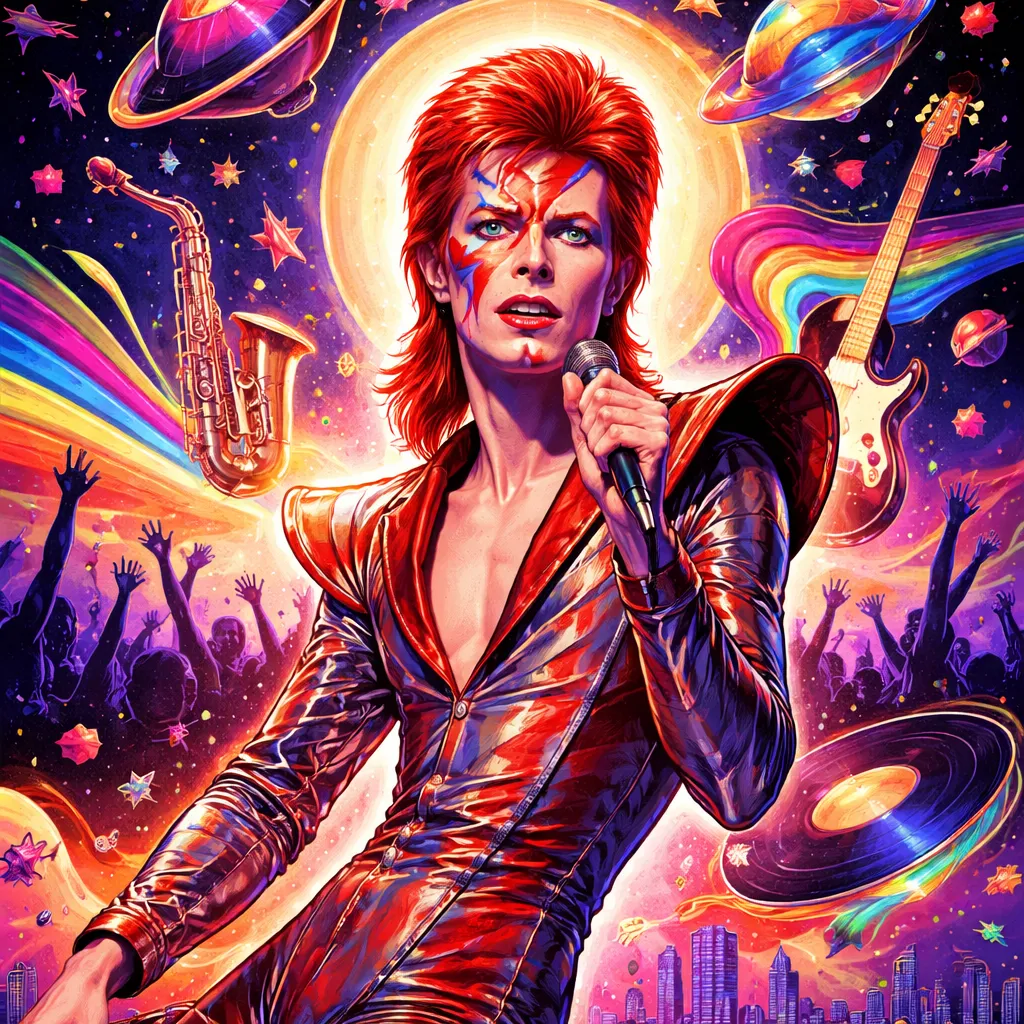

Introduction to David Bowie
David Bowie was a British musician, singer, songwriter, and actor, widely regarded as one of the most influential cultural figures of the 20th century. His impact on the world of music, fashion, and art is unparalleled, as he constantly reinvented himself throughout his career. Bowie's ability to cross musical genres and explore new creative realms helped him remain relevant for decades.
Why is David Bowie worth knowing about? He was not only a musician but also an innovator, constantly breaking boundaries and challenging social norms. With his iconic alter-ego Ziggy Stardust and his groundbreaking albums, Bowie pushed the limits of what music could represent. His work spoke to those who felt different, offering them a sense of identity and belonging. By learning about David Bowie, children and families can understand the power of self-expression, creativity, and the courage to be unique.
Early Life and Background
David Bowie was born David Robert Jones on January 8, 1947, in Brixton, London, England. He was the son of Margaret Mary, a waitress, and Haywood Stenton Jones, a promotions officer. From a young age, Bowie showed an interest in music, especially after taking up the saxophone at age 13. His early exposure to the music of artists like Little Richard, Elvis Presley, and The Beatles shaped his early taste in music.
Bowie was not always the confident, world-famous star that he later became. As a teenager, he struggled with his identity and faced challenges in school, particularly due to his passion for music. His first band, The Konrads, was formed when he was just 15 years old, and although they didn’t gain much attention, they marked the beginning of his musical journey.
Bowie’s teenage years were also marked by a growing interest in art and theater. After attending various art schools in London, he was deeply influenced by the avant-garde and surrealist movements. These interests would later shape his musical style and his ability to craft striking, imaginative characters like Ziggy Stardust.
In the mid-1960s, Bowie started to find his way in the music industry. His first single, "Liza Jane," was released in 1964, but it didn’t find much success. However, as he began to experiment with different musical styles and image changes, Bowie’s path became clearer. In 1969, he released the song "Space Oddity," which became his first hit in the UK, marking the beginning of his rise to fame.
Career Highlights and Achievements
David Bowie's career spanned more than five decades, and during that time, he created an extensive and diverse body of work. He reinvented himself numerous times, from his early days as a folk singer to his foray into glam rock, electronic music, and even jazz. Here are some key milestones in his remarkable career:
Ziggy Stardust Era (1972-1973): The release of The Rise and Fall of Ziggy Stardust and the Spiders from Mars marked one of the most significant moments in Bowie's career. The album introduced his alter-ego, Ziggy Stardust, a flamboyant rock star from outer space. This concept album blended glam rock, theatrical performance, and thought-provoking lyrics, earning Bowie international recognition. Transition to Soul and Funk (1975-1977): In the mid-1970s, Bowie shifted musical styles once again, this time to soul, funk, and R&B, as seen in albums like Young Americans (1975) and Station to Station (1976). The hit single "Fame" from Young Americans became Bowie’s first chart-topping single in the U.S. Berlin Trilogy (1977-1979): After struggling with personal issues, including a period of heavy drug use, Bowie moved to Berlin in the late 1970s. During this time, he created the Berlin Trilogy, a series of experimental albums that combined electronic music with a minimalist, ambient style. Albums like Low (1977), Heroes (1977), and Lodger (1979) are considered some of his most innovative work. Mainstream Success (1980s): Bowie achieved mainstream success in the 1980s with albums like Let's Dance (1983). The title track became one of his biggest hits, and the album introduced him to a whole new audience. During this period, Bowie embraced a more commercial sound while still maintaining his unique artistic vision. Later Career and Legacy (1990s-2010s): Even in his later years, Bowie continued to push musical boundaries. His 1993 album Black Tie White Noise and the 2000s releases like Reality (2003) and The Next Day (2013) were well-received by both fans and critics. In 2016, shortly before his passing, Bowie released Blackstar, an album that explored jazz and avant-garde influences, showcasing his ability to innovate right until the end of his career.
Bowie’s influence extended beyond his music. His fashion choices and flamboyant stage presence helped define the visual aesthetics of rock and pop. He constantly challenged conventional ideas of masculinity and femininity, encouraging fans to embrace their individuality.
Famous Works or Performances
David Bowie’s career was defined by numerous iconic songs, albums, and performances that continue to influence artists today. Some of his most famous works include:
"Space Oddity" (1969): The song tells the story of Major Tom, a fictional astronaut, and became one of Bowie’s most well-known songs. Its haunting melody and futuristic themes captured the imagination of listeners and became an anthem for the space age. "Starman" (1972): Another song from the Ziggy Stardust album, "Starman" introduced Ziggy Stardust to the world. It showcased Bowie’s ability to tell stories through music, blending science fiction with human emotion. "Heroes" (1977): One of Bowie’s most enduring songs, "Heroes" is an anthem of love and resilience. It was recorded at a time when Bowie was overcoming personal struggles, and the song became a symbol of hope and defiance. "Let’s Dance" (1983): A major commercial hit, "Let’s Dance" marked a shift in Bowie’s style to a more mainstream, danceable sound. The song was accompanied by a memorable music video that became a cultural touchstone. Personal Life and Fun Facts
David Bowie’s personal life was as colorful and eccentric as his music. He was known for his intellectual curiosity, artistic collaborations, and close relationships with fellow musicians, actors, and artists.
The 1970s in Berlin: During his time in Berlin, Bowie was deeply influenced by the city’s avant-garde art scene. His collaborations with producer Brian Eno led to the creation of the Berlin Trilogy, which pushed the boundaries of electronic music and rock. His Marriage to Iman: Bowie’s marriage to Somali-American supermodel Iman was one of his most publicized relationships. The couple married in 1992 and had one daughter, Alexandria Zahra Jones. Their partnership was a model of love and respect, and Iman has spoken frequently about the deep bond they shared. Chameleon-like Persona: Bowie was known for his ever-changing personas and identities. From Ziggy Stardust to the Thin White Duke, he constantly reinvented himself to stay ahead of the curve. His ability to adapt to different musical styles and social climates is one of the reasons he remains so influential. Legacy and Influence
David Bowie’s influence on music, fashion, and culture cannot be overstated. His groundbreaking work in the 1960s and 1970s changed the way artists approach music and self-expression. He inspired generations of musicians and artists to push boundaries and embrace their unique identities.
Bowie’s legacy is carried on through his vast catalog of music, which continues to resonate with new audiences. Artists like Lady Gaga, Beck, and Kanye West have cited Bowie as a major influence. His ability to challenge societal norms and create art that spoke to marginalized communities makes his work as relevant today as it was during his lifetime.
Beyond his music, Bowie’s fashion and style helped define the glam rock era and encouraged fans to embrace individuality. His message of self-expression, acceptance, and the freedom to be yourself continues to inspire people around the world.
Quotes or Famous Sayings
David Bowie was known for his thoughtful and philosophical quotes that reflected his creative vision. Some of his most memorable sayings include:
“I don’t know where I’m going from here, but I promise it won’t be boring.” “We can be heroes, just for one day.” “The greatest thing you’ll ever learn is just to love and be loved in return.”
These quotes offer insight into his philosophy of life—one of constant reinvention, self-acceptance, and love.
How to Learn from David Bowie
David Bowie’s life and career offer valuable lessons for young readers and aspiring artists. His ability to reinvent himself, stay true to his artistic vision, and embrace new ideas shows the importance of creativity, resilience, and fearlessness in the face of challenges.
Bowie’s message encourages young people to explore their unique talents and to not be afraid of standing out. His life is a testament to the power of artistic expression and the importance of remaining open to new possibilities. By embracing change and thinking outside the box, anyone can achieve greatness.
David Bowie's legacy as an artist and cultural icon continues to inspire millions of people worldwide. His commitment to authenticity, innovation, and individuality teaches us that music and art are powerful tools for self-expression and societal change. Through his groundbreaking work, Bowie showed us that creativity has no limits.