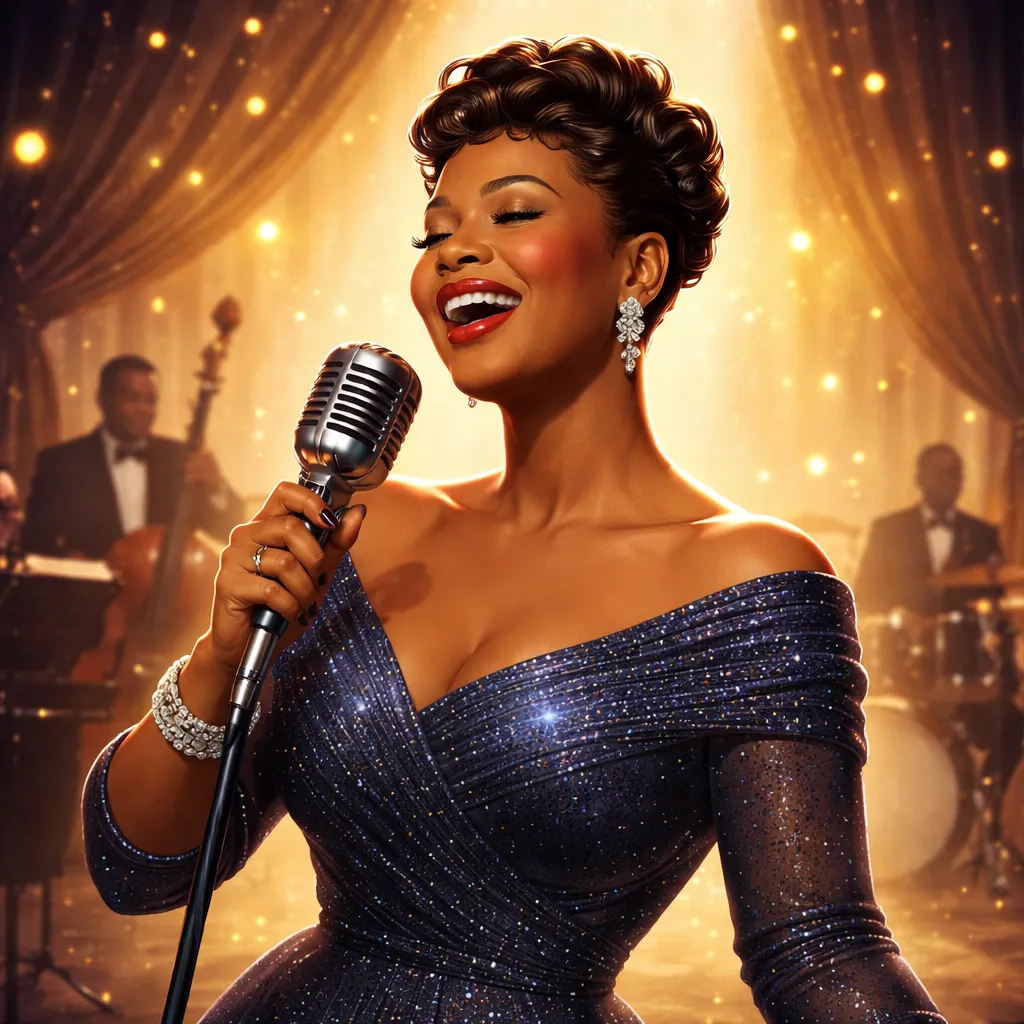

Introduction to Ella Fitzgerald
Ella Fitzgerald, born on April 25, 1917, in Newport News, Virginia, was an American jazz singer often referred to as the "First Lady of Song." Renowned for her pure tone, impeccable vocal technique, and remarkable range, Fitzgerald is considered one of the greatest jazz vocalists of all time. She rose from humble beginnings to become a global icon, leaving behind a legacy that continues to influence musicians around the world today.
Fitzgerald’s unique ability to combine improvisation, scat singing, and technical mastery made her stand out in the world of jazz. Her smooth, clear voice and effortless vocal runs made her a favorite among fans and critics alike. Ella’s contributions to jazz and American music helped define an era, and her influence is still felt in music today.
Early Life and Background
Ella Jane Fitzgerald was born to William Fitzgerald and Temperance "Tempie" Fitzgerald in a poor neighborhood in Newport News. When Ella was young, her father left the family, and her mother struggled to support Ella and her older brother. The family moved to Yonkers, New York, where Ella’s life took a difficult turn. After her mother passed away, Ella became a ward of the state and spent time in foster care.
Ella’s love for music started early, and she dreamed of becoming a dancer. However, her life took another turn when she began singing at church and school events. At the age of 17, she entered an amateur singing competition at the Apollo Theater in Harlem, New York. She was initially nervous and planned to dance but decided to sing instead. Her performance was so captivating that she won the competition. This victory marked the beginning of her career.
Despite facing many hardships growing up, Fitzgerald’s passion for music and her natural talent guided her toward her future. She soon began performing with jazz bands, eventually landing a spot with the famous Chick Webb Orchestra.
Career Highlights and Achievements
Ella Fitzgerald’s career spanned over six decades, and her journey from an unknown teenager to a world-renowned artist is an inspiring one. She signed her first recording contract in 1935 with Decca Records, which led to her first big hit, “A-Tisket, A-Tasket,” in 1938. This song, a playful and catchy tune, propelled Fitzgerald to stardom and became one of her signature pieces.
In the 1940s and 1950s, Fitzgerald continued to rise in popularity. She became known for her innovative approach to jazz singing, especially her scat singing, an improvised vocal style where the singer mimics the sounds of instruments. Her ability to improvise in a complex jazz setting set her apart from other vocalists.
Ella’s achievements include over 40 million albums sold, 14 Grammy Awards, and countless accolades from both the music industry and her fans. She was also awarded the Presidential Medal of Freedom in 2010, in recognition of her significant contributions to American music.
Throughout her career, Fitzgerald worked with many of the greatest jazz musicians of the 20th century, including Duke Ellington, Count Basie, and Louis Armstrong. She also became known for her “Songbook” series, which involved her recording interpretations of the works of famous American songwriters, such as Cole Porter, George Gershwin, and Irving Berlin.
Famous Works or Performances
Ella Fitzgerald's music is filled with timeless classics. Here are some of her most famous works that continue to be celebrated today:
"A-Tisket, A-Tasket" (1938): This playful and energetic song is one of Fitzgerald's earliest hits. The catchy melody and her enthusiastic performance made it an instant favorite and a turning point in her career. "Summertime" (1959): A song from George Gershwin's opera Porgy and Bess, Fitzgerald’s version of “Summertime” is one of the most revered jazz interpretations of all time. Her soft, yet powerful delivery of the song captures the essence of the lullaby's simplicity and beauty. "Misty" (1960): Ella Fitzgerald’s version of the classic jazz standard "Misty" showcases her ability to express deep emotion through her voice. Her smooth, effortless phrasing and vocal phrasing give the song a new depth and meaning. "How High the Moon" (1940s): This is a perfect example of Fitzgerald's scat singing. The song's rapid tempo and her improvisational style demonstrate her remarkable vocal skill and versatility. "Cheek to Cheek" (1956): Fitzgerald’s collaboration with Louis Armstrong on this Irving Berlin song is a classic example of the magic that happens when two jazz legends come together. Their chemistry, both in vocals and personality, made this recording a hit.
Fitzgerald’s recordings with other jazz greats, as well as her solo performances, remain a key part of her legacy. She was a master of phrasing, timing, and delivering songs with unmatched emotional depth.
Personal Life and Fun Facts
Ella Fitzgerald's personal life was marked by challenges, but her love for music and dedication to her craft were constants throughout her life. She married twice: first to bass player Ray Brown, with whom she had one son, and later to hotelier and businessman, Andre Previn. Both marriages ended in divorce, but Fitzgerald remained focused on her career and the music she loved.
Beyond her professional success, Ella Fitzgerald was known for her warm personality, generosity, and humor. She had a deep love for animals and often spoke of how her pet cats brought her comfort during difficult times. Fitzgerald was also very involved in charity work and used her fame to help raise money for various causes.
One of the most endearing facts about Fitzgerald is her dedication to her fans. She loved meeting and performing for people, and her tours often included performances for young people and underserved communities. Even at the height of her fame, she remained grounded and humble.
Legacy and Influence
Ella Fitzgerald’s influence on the world of jazz and popular music is immeasurable. She is often considered one of the greatest jazz vocalists of all time, and her approach to jazz singing helped to shape the genre in the 20th century. Many modern singers, including Beyoncé, Alicia Keys, and Diana Krall, cite Fitzgerald as a major influence on their vocal styles.
Fitzgerald's impact was not only in her music but also in how she helped to break down racial barriers. As an African-American woman, she faced challenges in an industry that was often discriminatory, yet she rose above these obstacles with grace and professionalism. She became an icon for all musicians, proving that talent and perseverance could overcome societal limitations.
Her "Songbook" series remains one of her most significant contributions to music, as it helped bring the works of great American composers into the jazz idiom. Fitzgerald’s ability to interpret songs in her own way without losing the essence of the original work was a skill that set her apart from other vocalists.
Quotes or Famous Sayings
Ella Fitzgerald was known for her humility, but she also had a few memorable quotes about music and life:
"The only thing better than singing is more singing." "I sing like I feel, and when I feel something, I sing with my heart."
These quotes embody the passion that Fitzgerald brought to her music, and they remind us that music is not just a technical skill but an emotional experience that connects deeply with the listener.
How to Learn from Ella Fitzgerald
Ella Fitzgerald’s life and work offer many valuable lessons for young people and aspiring musicians. First and foremost, her story teaches us the power of perseverance. Despite facing early adversity, she never gave up on her dream of becoming a singer. Her dedication to her craft, her humility, and her love for music can inspire anyone who seeks to achieve greatness.
Fitzgerald’s ability to continuously evolve as an artist is another important lesson. Throughout her career, she was always willing to experiment with new styles and techniques, never resting on her laurels. Her openness to growth and change is something young artists can emulate.
Finally, Ella Fitzgerald’s love for performing and connecting with her audience is something that can inspire anyone in the music world and beyond. Her legacy reminds us that music has the power to bring people together, inspire joy, and create lasting memories.
Ella Fitzgerald's contributions to jazz music and the arts at large remain unmatched. Her powerful voice, unparalleled technique, and emotional depth have left an indelible mark on the music world, and her influence continues to inspire generations of artists and music lovers alike. Her legacy is one of passion, resilience, and the universal power of music.