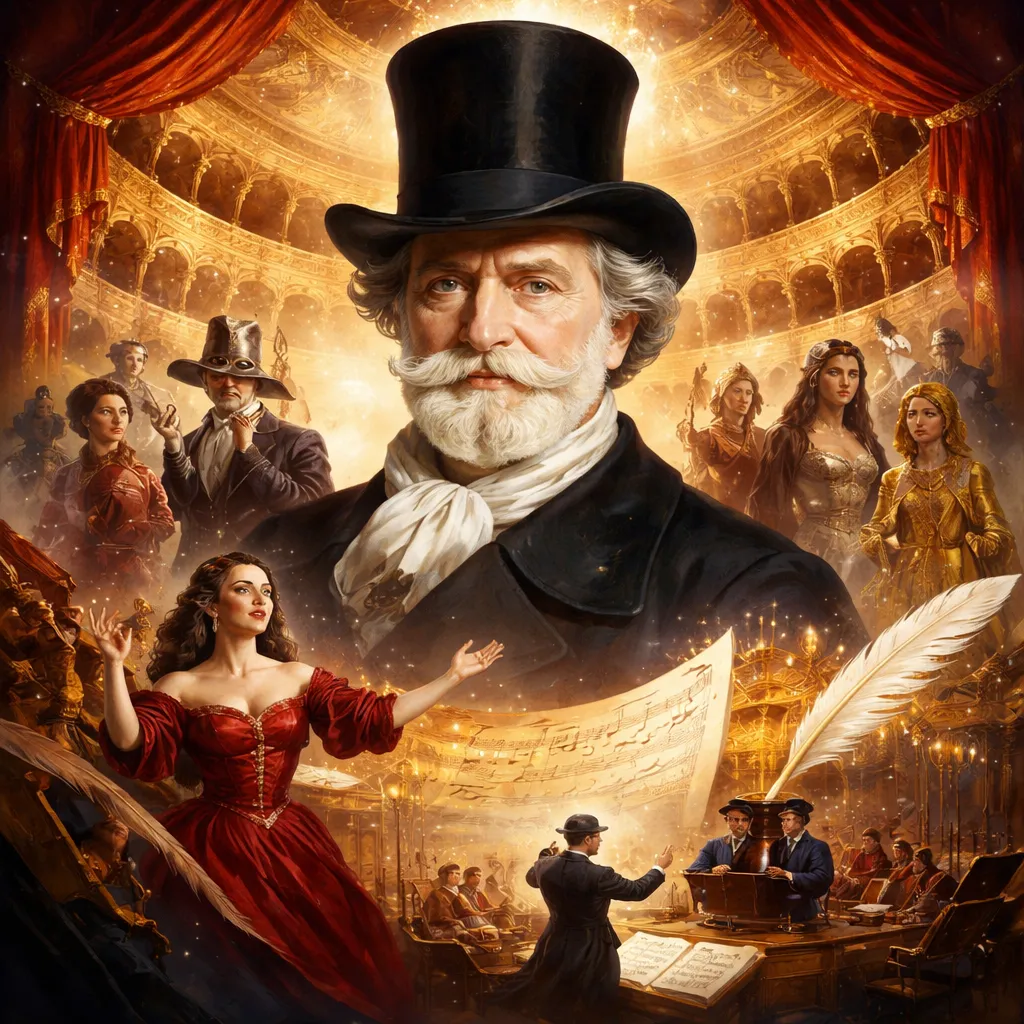

Introduction to Giuseppe Verdi
Giuseppe Verdi, born on October 9, 1813, in Le Roncole, Italy, was one of the most influential composers in the history of opera. Known for his dramatic and emotional music, Verdi's operas have had a lasting impact on the world of classical music. His ability to convey deep emotions through music, combined with his understanding of human drama, made him a master of the operatic stage.
Verdi’s compositions are celebrated for their powerful melodies, innovative orchestration, and dramatic intensity. His work not only shaped the Italian opera tradition but also influenced the development of opera worldwide. His long and successful career continues to inspire both musicians and audiences. Verdi's legacy is felt today in opera houses across the globe, where his works are regularly performed.
Early Life and Background
Giuseppe Verdi was born in a small Italian village called Le Roncole, located in the Emilia-Romagna region. His family was poor, but his parents supported his early musical education. Verdi’s first musical lessons came from a local priest who recognized his musical talents. At the age of seven, Verdi began formal music training, and by the age of 14, he was already studying at the conservatory in Milan.
Growing up, Verdi was passionate about music, but he faced many hardships early in life. His first experiences with music were shaped by his love for the local folk music and the opera performances that he attended. His early exposure to the music of famous composers such as Mozart and Rossini would later influence his own works.
Verdi’s education was not easy, and he faced many challenges at the Milan Conservatory. He struggled with financial difficulties and rejection. His first compositions, while showing promise, were not initially well-received. But Verdi’s perseverance and his unwavering commitment to his art would eventually lead him to become one of the greatest opera composers of all time.
Career Highlights and Achievements
Verdi’s career took off in the 1840s with the success of his opera Nabucco. This work, which tells the story of the Hebrews’ exile in Babylon, resonated deeply with Italian audiences who were struggling for independence from foreign rule. Nabucco marked a turning point in Verdi’s career and helped establish him as a composer of note in the world of Italian opera.
Throughout the 1840s and 1850s, Verdi composed a series of successful operas, including Rigoletto (1851), Il Trovatore (1853), and La Traviata (1853). These works are still considered masterpieces of the operatic canon, and they showcase Verdi’s ability to blend beautiful melodies with intense drama. In these operas, Verdi perfected his use of the orchestra to heighten the emotional impact of the music.
One of the most significant milestones in Verdi’s career came in 1871 with the opera Aida. Commissioned for the opening of the Khedivial Opera House in Cairo, Aida tells the story of an Egyptian princess and her forbidden love. The opera’s grand scale, exotic setting, and powerful music made it an instant success, and it remains one of Verdi’s most beloved works.
Verdi continued to compose well into his later years. In 1874, he wrote Requiem, a powerful and emotional mass for the dead, which is considered one of his finest works. His final opera, Falstaff (1893), was a comic masterpiece that demonstrated Verdi’s versatility as a composer. It marked the end of his career as a composer of opera, but it also solidified his place as one of the greatest musical dramatists in history.
Famous Works or Performances
Giuseppe Verdi’s operas are known for their melodic beauty, dramatic intensity, and unforgettable characters. Here are a few of his most famous works:
Nabucco (1842): This opera tells the story of the Israelites’ exile in Babylon. It became a symbol of Italian nationalism, and its famous chorus, “Va, pensiero” (The Chorus of the Hebrew Slaves), remains one of the most iconic pieces in the opera world. The opera's themes of freedom and oppression resonated deeply with audiences during Verdi’s time.
Rigoletto (1851): Based on a play by Victor Hugo, Rigoletto is a tragic opera that centers on the court jester Rigoletto, his daughter Gilda, and the Duke of Mantua. The opera contains one of Verdi’s most famous arias, “La donna è mobile,” which became an instant hit. Rigoletto is a powerful exploration of love, revenge, and fate.
Il Trovatore (1853): Known for its dramatic intensity and complex characters, Il Trovatore tells the story of a love triangle, a gypsy curse, and the search for vengeance. The opera’s music is powerful and emotionally charged, with several famous arias and duets.
La Traviata (1853): Perhaps Verdi’s most beloved opera, La Traviata is the story of Violetta, a Parisian courtesan who falls in love with the young nobleman Alfredo. The opera is known for its beautiful melodies, particularly the famous aria “Sempre libera,” and its portrayal of the themes of love, sacrifice, and social expectations.
Aida (1871): Aida tells the story of an Ethiopian princess who is in love with an Egyptian general. The opera is famous for its grand scale, beautiful music, and the emotional conflict of its characters. The iconic “Triumphal March” is one of the most memorable pieces in the opera.
Requiem (1874): Verdi’s Requiem is a large-scale choral work that expresses both the fear and hope associated with death. The piece is known for its emotional depth and dramatic contrasts, making it one of the most powerful works in the choral repertoire.
Personal Life and Fun Facts
Verdi’s personal life was marked by both triumph and tragedy. He married Margherita Barezzi, the daughter of a wealthy music patron, in 1836. Tragically, she died young, leaving Verdi heartbroken. Later, Verdi formed a close relationship with the soprano Giuseppina Strepponi, whom he eventually married in 1859. Their partnership was both personal and professional, as Strepponi sang many of the roles in Verdi’s operas.
Verdi was known for his passionate commitment to his art. He was also deeply patriotic and believed in the power of music to bring about social change. In addition to composing, he was involved in politics and supported the unification of Italy. His operas often reflect his interest in themes of freedom, justice, and human dignity.
Despite his fame, Verdi lived a relatively private life and was known for his modesty and humility. He was deeply devoted to his music and spent many years refining and perfecting his compositions.
Legacy and Influence
Giuseppe Verdi’s influence on the world of opera and classical music is immeasurable. His operas continue to be performed in opera houses around the world, and his music has had a lasting impact on composers who came after him. Verdi's ability to combine powerful melodies with intense dramatic situations set the standard for future operatic composers.
Verdi’s works remain a cornerstone of the operatic repertoire. His music transcends national boundaries and speaks to universal themes of love, loss, and redemption. He is often considered the last great composer of the Italian operatic tradition, and his work laid the foundation for the opera composers of the 20th century, including Puccini and others.
Verdi’s dedication to creating emotional and dramatic music for the stage has inspired countless generations of musicians, singers, and composers. His music continues to be celebrated and appreciated for its beauty, depth, and timeless appeal.
How to Learn from Giuseppe Verdi
Giuseppe Verdi’s life and work offer many valuable lessons, especially for young people pursuing their dreams. His perseverance in the face of personal and professional challenges shows the importance of dedication and hard work. Verdi faced numerous obstacles, but he never gave up on his passion for music.
Verdi’s ability to express deep emotions through music teaches us that art can be a powerful way to communicate and connect with others. His work also encourages us to stay true to our artistic vision and to continually strive for excellence.
By studying Verdi’s life and music, young musicians and artists can learn the importance of resilience, creativity, and commitment to one’s craft. Verdi’s legacy is a testament to the power of music and the enduring impact that one individual can have on the world.
Giuseppe Verdi’s contributions to the world of music are nothing short of extraordinary. His operas, filled with powerful melodies and unforgettable stories, continue to captivate audiences today. Through his music, Verdi has shown us that opera is more than just entertainment; it is a profound form of artistic expression that can inspire, move, and transform.