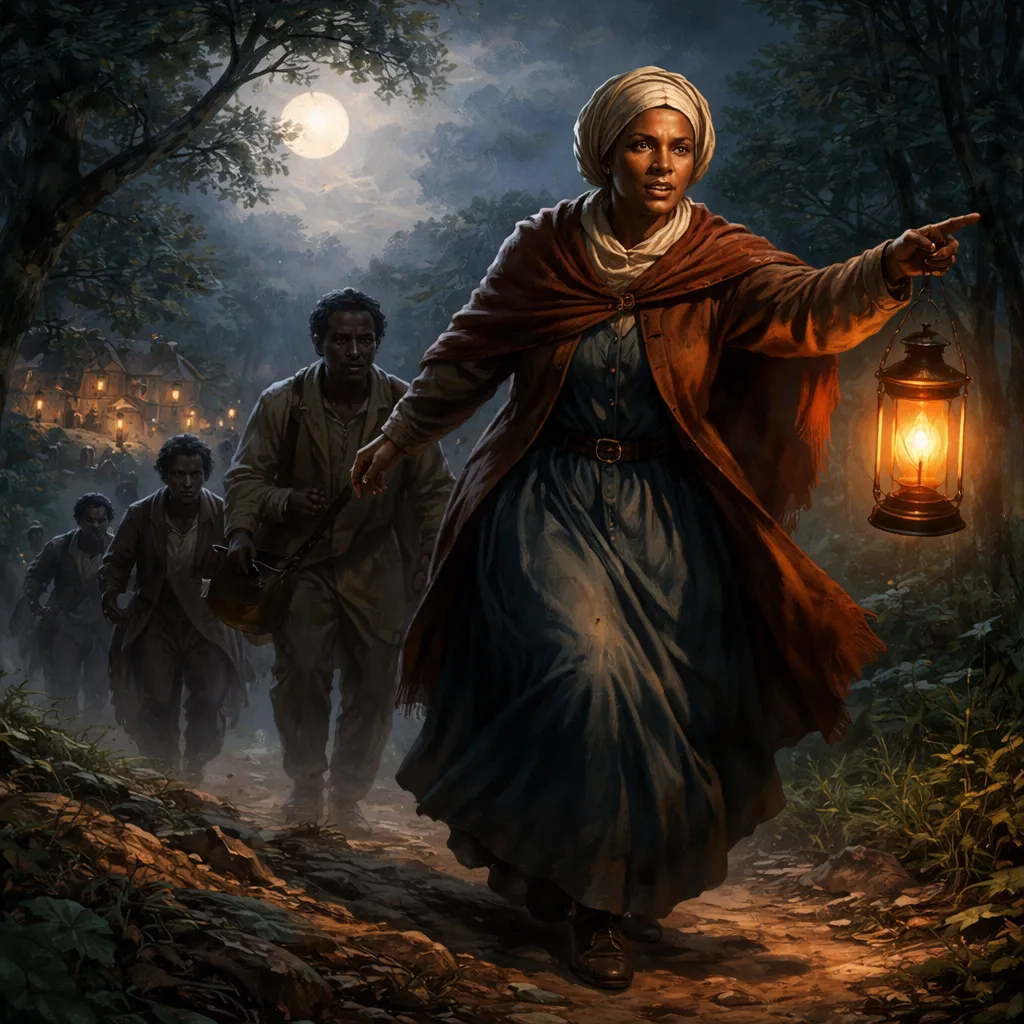

Introduction to Harriet Tubman
Harriet Tubman was an extraordinary woman who made a significant impact in American history. Born into slavery in 1822 in Maryland, Harriet Tubman became one of the most famous figures in the fight for freedom. She is best known for her courageous efforts in helping slaves escape to freedom via the Underground Railroad.
Her bravery and determination made her an enduring symbol of resistance and a true American hero. Harriet Tubman didn't just fight for her own freedom; she risked her life to help many others escape slavery, helping to change the course of history. Her story is one of unwavering strength, selflessness, and leadership, making her a figure worth knowing and celebrating.
Harriet’s remarkable journey shows how one person’s courage can inspire others and spark significant change. Her actions led to the freedom of hundreds of enslaved individuals, making her an icon in the fight for civil rights.
Early Life and Background
Harriet Tubman was born Araminta Ross in Dorchester County, Maryland, around 1822. She was born into slavery, the daughter of Harriet Green and Ben Ross. From an early age, Harriet experienced the hardships of slavery, witnessing the separation of families and enduring physical abuse.
Growing up as a slave, Harriet faced unimaginable hardships. She was put to work at the age of five, performing tasks like looking after her siblings and working in the fields. The early part of her life was shaped by these struggles, and she often felt the pain of injustice and oppression.
At the age of 13, Harriet was hit on the head by an overseer, leaving her with a permanent injury that caused her to have frequent headaches and seizures for the rest of her life. Despite these challenges, she never let them stop her from dreaming of freedom.
Harriet Tubman’s early life was marked by both hardship and resilience. Even as a child, she had an inner strength that would shape her future role in history. In her teenage years, she married a free man named John Tubman, but she eventually decided to escape to freedom. She changed her name to Harriet, in honor of her mother, and began her journey toward a new life.
Career Highlights and Achievements
Harriet Tubman’s most famous achievement was her work as a conductor on the Underground Railroad. The Underground Railroad was a secret network of routes and safe houses that helped enslaved African Americans escape to free states and Canada. Harriet made a total of 13 trips back to the South, guiding over 70 enslaved people to freedom.
Each of these trips was incredibly dangerous, but Harriet Tubman was not deterred. She often risked her life to help others, despite the many dangers she faced. In one of her most famous escapes, she led her own family to freedom. Harriet’s courage and ability to navigate dangerous territory helped many people escape the horrors of slavery.
In addition to her work on the Underground Railroad, Harriet Tubman served as a spy, nurse, and scout during the Civil War. She worked with the Union Army, providing intelligence and helping to free slaves in Confederate states. Harriet Tubman played a significant role in the war effort, proving herself as a skilled leader and strategist.
After the war, she continued her activism for civil rights and women’s suffrage. She worked tirelessly to improve the lives of former slaves, fighting for better education and equal rights for all Americans. Throughout her life, Harriet Tubman received numerous honors for her contributions to freedom and equality.
Famous Works or Performances
Harriet Tubman’s “work” was not a traditional form of art or performance, but rather her life’s dedication to securing freedom for others. The most important “works” she is remembered for include:
Underground Railroad Conductor: Tubman’s leadership on the Underground Railroad saved hundreds of enslaved people. She made 13 missions and successfully led many people to freedom, earning her the nickname "Moses." Her ability to navigate through dangerous areas, evade capture, and find safe routes was remarkable. Civil War Efforts: During the Civil War, Harriet Tubman worked for the Union Army as a spy, scout, and nurse. She led a raid on the Combahee River, where over 700 enslaved people were freed. Her knowledge of the South and its geography made her an invaluable asset to the Union. Civil Rights and Women’s Suffrage: After the Civil War, Harriet continued her advocacy for equal rights. She spoke at women’s suffrage meetings and fought for the rights of former slaves. Her speeches inspired many to join the movement for equality.
Her life's work and actions, rather than any traditional performance, make her a hero of history. Harriet Tubman’s contributions continue to inspire people fighting for freedom and equality today.
Personal Life and Fun Facts
Despite her remarkable contributions to the fight for freedom, Harriet Tubman was known for being a humble, quiet, and dedicated person. She was deeply religious, and her faith guided her throughout her life. Harriet believed that God had called her to help free enslaved people, and she often prayed for strength and guidance before embarking on her dangerous missions.
Harriet Tubman was married twice. Her first husband, John Tubman, was a free man, but they were separated when she escaped from slavery. Later, she married a man named Nelson Davis, a former soldier. Together, they adopted a child, and Harriet became a mother to a new generation.
Despite facing numerous challenges, Harriet Tubman remained determined to help others. Her sense of humor and generosity were part of her charm, and she inspired countless people with her selfless attitude and dedication to justice.
Harriet also loved to garden and spent much of her time growing food and herbs. Her home in Auburn, New York, became a place of refuge for many, where she cared for those in need, especially elderly people and former slaves.
Legacy and Influence
Harriet Tubman’s legacy is vast and deeply ingrained in American history. She became one of the most influential figures in the abolitionist movement, and her actions played a crucial role in ending slavery in the United States. Through her work on the Underground Railroad, she helped thousands escape to freedom, showing the world the power of bravery and compassion.
Her legacy also lives on through the work she did in the Civil War and her continued activism for equal rights. Tubman is remembered not only for her heroism but also for her lasting impact on civil rights movements that followed.
Harriet Tubman’s influence extends far beyond her lifetime. She inspired countless activists and leaders, including Martin Luther King Jr., who cited her as a source of inspiration. Tubman remains a symbol of resilience, leadership, and courage in the face of adversity.
Her name and story continue to be celebrated today. Statues and memorials have been erected in her honor, and schools and streets have been named after her. Harriet Tubman’s story reminds us all of the power of one individual to change the world.
Quotes or Famous Sayings
Harriet Tubman was known for her powerful words and conviction. Some of her most famous sayings include:
"I never ran my train off the track, and I never lost a passenger." "Every great dream begins with a dreamer." "There was one of two things I had a right to, liberty or death; if I could not have one, I would have the other."
These words reflect Harriet’s unshakable belief in freedom and her courage to take risks in the pursuit of justice. They continue to inspire those who fight for equality and freedom.
How to Learn from Harriet Tubman
Harriet Tubman’s life teaches us many valuable lessons. She demonstrated the importance of standing up for what is right, even in the face of danger. Her courage, determination, and compassion for others are qualities we can all strive to emulate.
Tubman’s story also shows us the power of resilience. She faced many challenges, but she never gave up. Her ability to overcome adversity and help others along the way is an example of true leadership.
For young people today, Harriet’s example offers lessons in bravery, compassion, and perseverance. Her life reminds us that even in the darkest times, we can make a difference if we have the courage to stand up for what’s right. Through her work, Harriet Tubman continues to inspire us to fight for justice and equality in our own lives and communities.