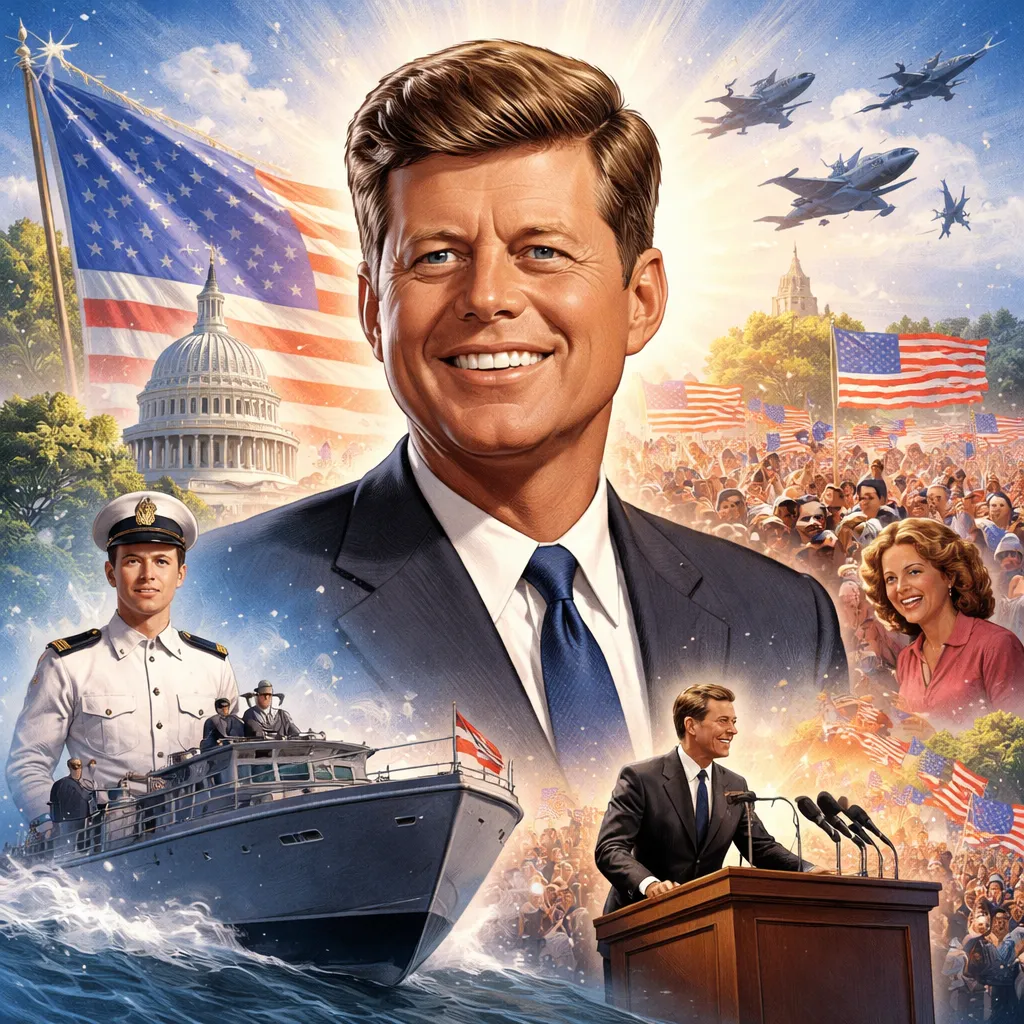

Introduction to John F. Kennedy
John Fitzgerald Kennedy, commonly known as JFK, was the 35th President of the United States. Born on May 29, 1917, in Brookline, Massachusetts, Kennedy came from a prominent political family and was destined for greatness. His presidency was marked by significant moments in history, including the Cuban Missile Crisis, the Space Race, and the Civil Rights Movement.
Kennedy's leadership style, vision, and charisma made him a beloved figure, both in the United States and around the world. His famous call to action, “Ask not what your country can do for you—ask what you can do for your country,” inspired a generation of Americans to serve their nation. Kennedy’s untimely death in 1963 shocked the world, but his legacy lives on, making him one of the most memorable figures in American history.
The story of John F. Kennedy is a powerful example of youthful leadership, vision, and determination. His presidency changed the course of American history, and his personal values continue to inspire leaders to this day.
Early Life and Background
John F. Kennedy was born into the influential Kennedy family, which had long been involved in politics and public service. His father, Joseph P. Kennedy, was a wealthy businessman and diplomat, while his mother, Rose Kennedy, was a philanthropist and socialite. JFK was the second of nine children, and the Kennedy family instilled in him the importance of public service, education, and ambition.
Kennedy’s early years were marked by both privilege and health struggles. He was often sick as a child and spent a lot of time in bed due to various illnesses, including Addison’s disease, a disorder of the adrenal glands. Despite these challenges, Kennedy was an avid reader and showed an early interest in history, politics, and international relations. His family was supportive of his education, sending him to prestigious schools such as the Choate School and later Harvard University.
At Harvard, Kennedy studied government and international relations, where he developed a keen interest in world affairs. He graduated in 1940 with a degree in government, and his senior thesis, which focused on Britain’s decision to go to war with Nazi Germany, was later published as a book titled Why England Slept. The book was well-received and marked Kennedy’s first foray into public life.
Kennedy’s early life was also marked by personal challenges. He lost his older brother, Joseph Jr., in World War II, which deeply affected him. This loss motivated Kennedy to continue his path in public service and to honor his brother’s memory through his own leadership.
Career Highlights and Achievements
John F. Kennedy’s career in politics began in 1946 when he was elected to the U.S. House of Representatives. His platform focused on supporting the working class and improving American foreign relations. Kennedy quickly gained recognition for his eloquent speeches and his ability to connect with people from all walks of life.
In 1952, Kennedy moved up the political ladder and was elected to the U.S. Senate. His work in the Senate focused on international affairs, especially the tensions between the U.S. and the Soviet Union during the Cold War. He was a strong advocate for the containment of communism and promoted policies aimed at strengthening the U.S. military and economy. He also supported civil rights and worked on legislation to protect the rights of African Americans.
In 1960, at the age of 43, Kennedy made a historic run for the presidency against then-Vice President Richard Nixon. The election was a hard-fought battle, but Kennedy’s charisma, eloquence, and ability to inspire young people helped him win the presidency. His inaugural speech, with the famous line “Ask not what your country can do for you—ask what you can do for your country,” marked the beginning of a new era in American politics.
As president, Kennedy’s administration was known for tackling some of the most pressing issues of the time, including the Cold War, the Civil Rights Movement, and the Space Race. One of his most significant accomplishments was his handling of the Cuban Missile Crisis in 1962. During this 13-day standoff with the Soviet Union, Kennedy’s calm and decisive leadership prevented a nuclear war and brought the world back from the brink of catastrophe.
Kennedy also championed the Space Race, setting the goal of landing a man on the Moon by the end of the 1960s. His famous speech, in which he declared, “We choose to go to the Moon,” inspired a generation of scientists, engineers, and young people to pursue careers in science and technology. Kennedy’s vision for space exploration ultimately led to the successful Apollo 11 mission in 1969, which saw humans land on the Moon for the first time.
Famous Works or Performances
While John F. Kennedy was not a painter, musician, or actor, his leadership and vision produced monumental works that continue to shape the world today. His presidency was defined by several key actions and policies that continue to resonate:
The New Frontier: This was Kennedy’s platform for domestic policy, which focused on tackling issues such as poverty, civil rights, and education. His proposed reforms laid the groundwork for future legislation in these areas. Civil Rights: Kennedy took a bold stance on civil rights, advocating for equal treatment of African Americans. While his presidency was cut short, his efforts led to the Civil Rights Act of 1964, which prohibited discrimination based on race, color, religion, or national origin. The Space Race: Kennedy’s vision for American space exploration inspired the creation of NASA’s Apollo program. His goal of landing a man on the Moon was realized in 1969, cementing his legacy in the field of science and technology. The Peace Corps: Kennedy established the Peace Corps in 1961, a volunteer program that sent Americans abroad to help with education, health, and community development. The program has since become one of the most successful international initiatives. Personal Life and Fun Facts
John F. Kennedy’s personal life was marked by his deep connection to his family and his love for adventure. He was married to Jacqueline Bouvier in 1953, and they had two children, Caroline and John Jr. The Kennedys were one of America’s most beloved families, known for their charm, intelligence, and social grace.
JFK had a passion for sailing and often spent time on his boat, the Victura, off the coast of Cape Cod. He was also a prolific reader and enjoyed books on history, politics, and international relations. Despite his busy schedule, Kennedy made time for physical fitness, even though his health issues often caused him pain and discomfort.
One of the most famous anecdotes about Kennedy’s personal life involves his sense of humor. Despite the pressures of the presidency, Kennedy was known for his wit and charm, often making light of difficult situations. His famous quote, “I am the man who accompanied Jacqueline Kennedy to Paris, and I have enjoyed it,” highlights his self-deprecating humor.
Legacy and Influence
John F. Kennedy’s legacy is one of leadership, vision, and service. His presidency changed the course of American history, particularly in areas like civil rights, space exploration, and foreign policy. His bold leadership during the Cuban Missile Crisis and his commitment to fighting for justice and equality have left an indelible mark on the world.
Kennedy’s influence can still be seen today, particularly in the fields of space exploration and social justice. The Space Race that he initiated led to technological advancements that have shaped modern life, from satellite communications to space tourism. His commitment to civil rights paved the way for future legislation that continues to fight for equality and justice.
Kennedy’s personal style and approach to leadership have inspired generations of politicians and leaders around the world. His ability to connect with people, his vision for a better future, and his unwavering dedication to public service continue to serve as a model for those in positions of power.
Quotes or Famous Sayings
John F. Kennedy was known for his eloquent speeches and inspiring words. Some of his most memorable quotes include:
“Ask not what your country can do for you—ask what you can do for your country.” “Let us never negotiate out of fear. But let us never fear to negotiate.” “The only thing we have to fear is fear itself.”
These words continue to inspire people worldwide, encouraging them to serve others and work towards a better, more peaceful world.
How to Learn from John F. Kennedy
John F. Kennedy’s life teaches us many valuable lessons. His dedication to public service, his vision for a better future, and his resilience in the face of adversity are qualities that we can all learn from. His leadership demonstrated the importance of perseverance, empathy, and communication.
For young people, Kennedy’s life shows the power of idealism and action. His belief in the potential of individuals to make a difference is a message that can motivate today’s youth to strive for greatness. Kennedy also teaches us the importance of remaining calm under pressure and making decisions that benefit the greater good.
In a world filled with challenges, John F. Kennedy’s example continues to guide those who seek to make a positive impact on society. By learning from his leadership, vision, and service, we can continue his legacy and work towards a better, more just world.