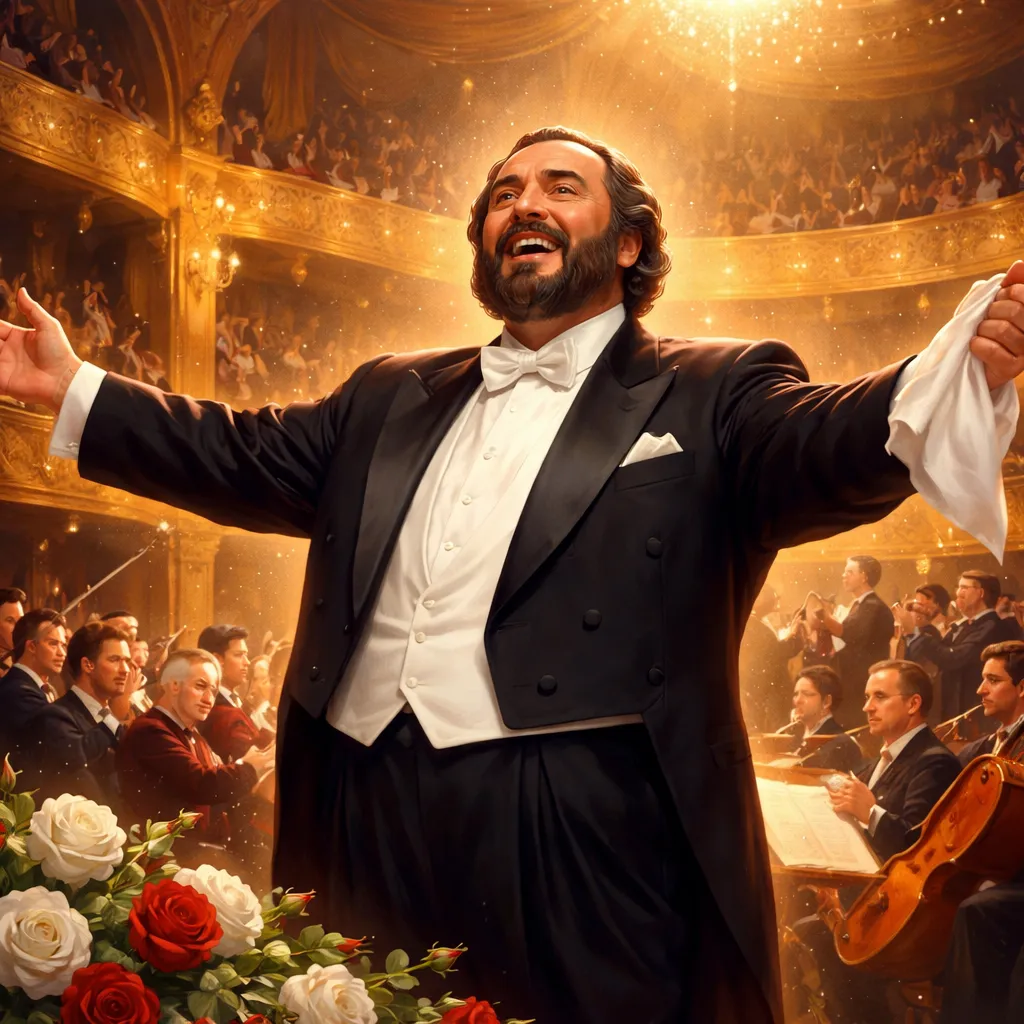

Introduction to Luciano Pavarotti
Luciano Pavarotti was born on October 12, 1935, in Modena, Italy. He was one of the most celebrated tenors in the history of opera and is often regarded as the greatest operatic tenor of his generation. His powerful, clear, and expressive voice captivated audiences around the world for decades. Pavarotti’s ability to hit high notes with ease and grace, combined with his vibrant stage presence, made him a global icon in the world of classical music.
While many opera singers are known for their technical skill, Pavarotti’s charisma and charm on stage helped him to bridge the gap between classical music and popular culture. His performances not only enchanted opera lovers but also brought classical music to new and broader audiences. His legacy continues to inspire aspiring opera singers, and his voice remains a symbol of excellence in the world of music.
Early Life and Background
Luciano Pavarotti was born to a humble family in Modena, Italy. His father, a baker, loved music and was an amateur singer. Pavarotti’s mother, on the other hand, was a school teacher who shared a deep appreciation for the arts. Growing up in such a musically enriched environment, Pavarotti was exposed to music from a very young age.
As a child, Pavarotti had an interest in both sports and music, but his love for singing grew stronger as he got older. His early music education began at the local music conservatory in Modena, where he started to study voice and operatic technique. Pavarotti initially studied to become a teacher, but his passion for singing was so strong that he decided to pursue a career in opera.
His journey into the world of professional music wasn’t easy. Pavarotti initially struggled to find his place in the competitive world of opera. He faced numerous setbacks, but his determination kept him going. At the age of 19, Pavarotti made his debut performance, which marked the start of his path to becoming an international opera star.
Career Highlights and Achievements
Luciano Pavarotti’s career spanned over four decades, during which he became a household name. His breakthrough came in 1961 when he sang the role of Rodolfo in Puccini’s La Bohème at the Teatro Regio in Modena. His performance was so remarkable that it opened the doors to further opportunities, and soon, he was performing on some of the most prestigious opera stages in the world.
In the 1960s and 1970s, Pavarotti's popularity soared, and he became a regular at major opera houses such as La Scala in Milan, the Metropolitan Opera in New York, and the Royal Opera House in London. His extraordinary vocal range, technical precision, and expressive delivery captivated audiences worldwide.
Throughout his career, Pavarotti received numerous awards, including Grammy Awards, the Légion d'Honneur, and the title of Honorary Doctor of Music from the University of Modena. He also became known for his contributions to charitable causes, such as his involvement in the famous Pavarotti and Friends concert series, which raised millions of dollars for various humanitarian efforts.
Pavarotti’s concerts, including his highly successful performances in stadiums and arenas, brought opera to the masses. His ability to perform in large venues demonstrated that classical music could transcend its traditional settings and reach people from all walks of life.
Famous Works or Performances
Luciano Pavarotti’s career was marked by some of the most iconic performances in the history of opera. His voice, known for its extraordinary power and clarity, made his renditions of famous arias unforgettable. Here are some of his most famous works:
Nessun Dorma: Perhaps Pavarotti’s most iconic aria, Nessun Dorma from Puccini’s Turandot became synonymous with his name. His performance of this piece at the 1990 FIFA World Cup made it an international anthem, bringing classical music to new audiences. La Bohème: As one of Pavarotti’s breakthrough roles, La Bohème remains one of the most memorable operatic performances of his career. His portrayal of Rodolfo, the passionate poet, showcased his ability to convey both vocal beauty and emotional depth. Madama Butterfly: Pavarotti’s performance as Pinkerton in Puccini’s Madama Butterfly is another standout moment in his career. His voice, with its rich tenor tones, fit perfectly with the character’s emotional journey. Rigoletto: As the Duke of Mantua in Rigoletto by Verdi, Pavarotti's performance captured the essence of the character’s charm and tragic flaws. The aria “La donna è mobile” is still considered one of the most recognizable moments in opera. Aida: Pavarotti's role as Radamès in Aida by Verdi showcased his deep understanding of the emotional nuances of the character, and his vocal delivery was equally powerful and beautiful.
These performances, among many others, demonstrated Pavarotti’s incredible vocal talent and his ability to bring characters to life with emotional depth and clarity.
Personal Life and Fun Facts
Luciano Pavarotti’s personal life was marked by his love for family, his passion for tennis, and his commitment to charity. He was married twice and had four daughters. Pavarotti was known for his warm personality and sense of humor, which made him beloved not only by fans but also by fellow musicians.
Aside from his operatic career, Pavarotti was passionate about sports, particularly tennis. He enjoyed playing the game during his free time, and he even took part in charity tennis events. His interest in sports often provided him with a balance to the intense demands of his music career.
Pavarotti was also an avid collector of fine art and enjoyed surrounding himself with beautiful things. His love for music and beauty extended beyond the opera stage and into his private life.
One of the most fun facts about Pavarotti is that despite his immense fame, he was known for being down-to-earth and approachable. He would often spend time with his fans and always took time to chat with people after his performances, making him a beloved figure in the world of classical music.
Legacy and Influence
Luciano Pavarotti’s legacy as one of the world’s greatest tenors lives on today. His contributions to opera, both musically and socially, have had a lasting impact on the industry. His influence can be seen in the work of current tenors, who continue to study and emulate his vocal techniques.
Pavarotti’s efforts to bring opera to a broader audience helped to make classical music more accessible to people of all ages and backgrounds. His performances at large arenas and his collaborations with pop and rock musicians, such as his famous duets with artists like Sting and Bono, proved that opera could be enjoyed by everyone.
Even after his death in 2007, Luciano Pavarotti's recordings and performances continue to inspire and entertain. His ability to touch hearts with his voice and to bring a deeper meaning to his performances remains unmatched. Pavarotti’s dedication to excellence in both his vocal technique and his dramatic expression continues to set the standard for aspiring opera singers around the world.
Quotes or Famous Sayings
Luciano Pavarotti often spoke about the importance of passion, hard work, and the love of music. His famous quotes continue to inspire musicians and aspiring performers:
“If you can sing, you can sing for a lifetime.” “I always think that I am only beginning. The voice is an instrument you never really master.” “The main thing in life is to have a passion.”
These quotes highlight Pavarotti’s unwavering dedication to his art and his belief in the power of passion to drive success.
How to Learn from Luciano Pavarotti
Luciano Pavarotti’s life offers many lessons that can inspire young people. His unwavering dedication to his craft, his passion for performance, and his ability to connect with audiences on a deep emotional level are qualities that anyone can learn from.
For aspiring musicians, Pavarotti’s approach to vocal training and his commitment to his art serve as reminders of the importance of hard work and perseverance. Pavarotti never stopped learning and evolving as an artist, even after achieving worldwide fame.
Moreover, his warm personality and generous spirit toward others highlight the importance of humility and kindness, no matter how successful one becomes. Luciano Pavarotti’s life story is a testament to the power of music, hard work, and a genuine love for sharing one’s talent with the world.
Luciano Pavarotti’s extraordinary career, both on and off the stage, solidified his place as one of the most influential figures in the history of opera. His legacy continues to inspire generations of artists and music lovers, reminding us all of the transcendent power of music and the importance of passion and dedication in achieving greatness.