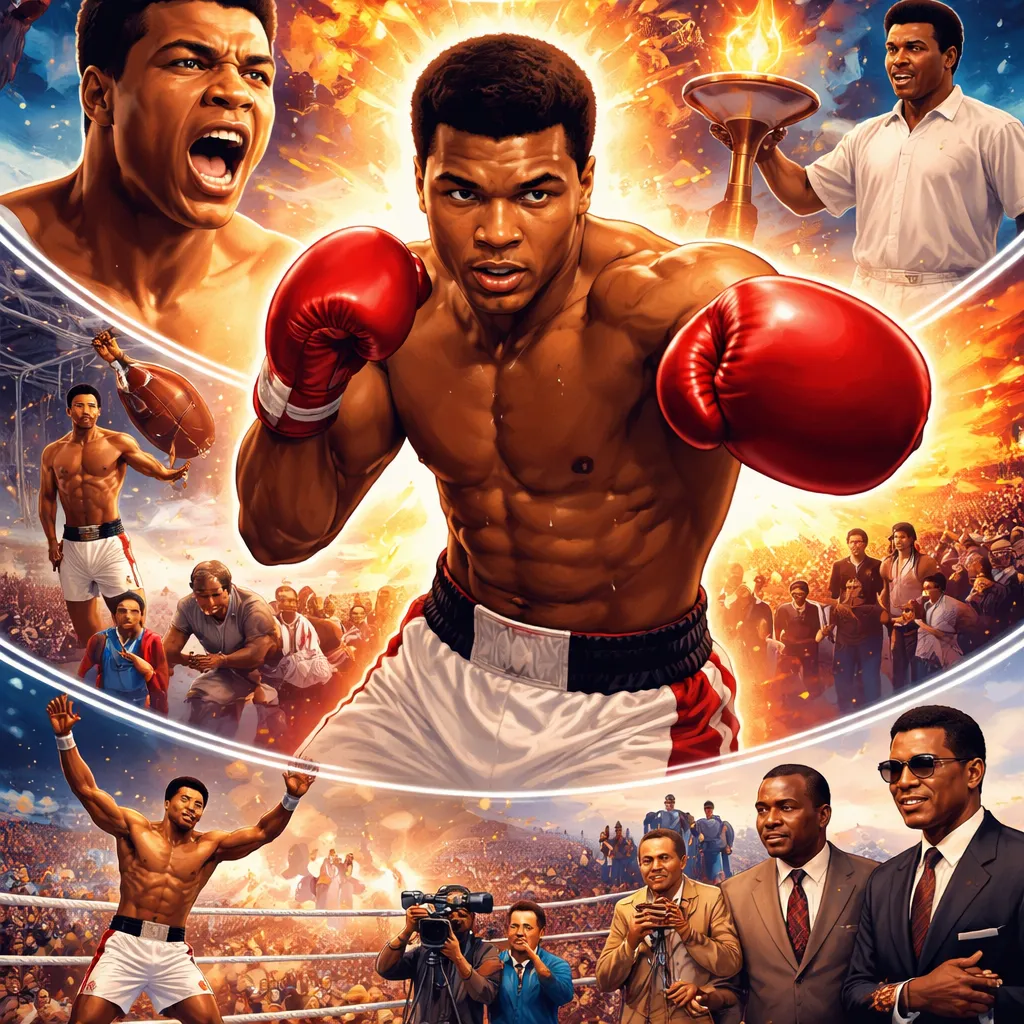

Introduction to Muhammad Ali
Muhammad Ali was more than just a boxing champion. He was a global icon who transcended the sport and became a symbol of strength, courage, and resilience. Born Cassius Marcellus Clay Jr. on January 17, 1942, in Louisville, Kentucky, Ali’s story is one of overcoming adversity, fighting for justice, and changing the world both inside and outside the boxing ring. He became known as "The Greatest" because of his incredible skill in boxing and his bold, confident personality that challenged societal norms.
Ali’s rise to fame began in his teenage years when he started boxing. However, his influence was not limited to his athletic ability. His courage to stand up for his beliefs, especially during the Civil Rights Movement, made him a role model for millions of people worldwide. Whether you admire him for his achievements in sports, his activism, or his infectious charisma, Muhammad Ali’s legacy remains a shining example of what it means to fight for something bigger than yourself.
Early Life and Background
Muhammad Ali was born in Louisville, Kentucky, to parents Odessa and Cassius Clay Sr. He grew up in a segregated society, where racial discrimination was a common part of everyday life. As a young boy, Ali was quick to show his talent and his determination. At the age of 12, he began boxing after his bicycle was stolen. A local police officer named Joe Martin encouraged Ali to learn how to defend himself through the sport of boxing.
Ali’s early years in the boxing gym were marked by his unrelenting work ethic. He trained tirelessly and quickly developed into a promising young fighter. By the time he was 18, he had won the national Golden Gloves tournament and the Light Heavyweight title. Ali’s rise in the boxing world was swift, and in 1960, he won a gold medal in the Rome Olympics, further cementing his future in the sport.
Despite his athletic talent, Ali faced many challenges early on. Growing up in a time of racial tension, he often faced discrimination because of his race. However, his self-confidence and determination made him stand out in a world that was not always kind to people like him. His early experiences shaped the man he would become — a boxer who not only fought in the ring but also fought for the rights and dignity of African Americans.
Career Highlights and Achievements
Muhammad Ali’s boxing career is filled with remarkable achievements and historic moments. His incredible skill in the ring, combined with his bold and often controversial personality, made him one of the most beloved and talked-about athletes of all time. Here are some key milestones in Ali’s career:
1964: The Fight that Changed Everything
In 1964, at the age of 22, Ali faced Sonny Liston for the World Heavyweight title. Few gave the young boxer a chance to win, but Ali shocked the world by defeating Liston in a stunning upset. After the fight, Ali famously declared, "I am the greatest," a phrase that would become synonymous with his name. This victory marked the beginning of his reign as a boxing legend.
1967: Refusal to Fight in the Vietnam War
One of the defining moments of Ali’s career came in 1967 when he refused to be drafted into the Vietnam War. Ali cited his religious beliefs and opposition to the war as reasons for his refusal to serve. He said, "I ain't got no quarrel with them Viet Cong." This bold stance cost him dearly, as he was stripped of his boxing titles and banned from the sport for several years. However, Ali’s decision to stand up for his beliefs made him a hero to many, particularly in the civil rights community.
1971: The "Fight of the Century"
In 1971, Ali faced Joe Frazier in what was dubbed "The Fight of the Century." Both men were undefeated, and the fight was billed as one of the greatest boxing matches in history. After 15 intense rounds, Frazier won the fight by decision. Though Ali lost, the fight marked the beginning of a fierce rivalry between the two men, which would continue for years.
1974: The Rumble in the Jungle
One of the most iconic moments in Ali’s career came in 1974 when he faced George Foreman in what was called "The Rumble in the Jungle" in Kinshasa, Zaire. Ali, who was seen as the underdog, used a strategy he called "rope-a-dope," where he allowed Foreman to tire himself out by leaning against the ropes while absorbing punches. In the eighth round, Ali knocked out Foreman, regaining the World Heavyweight title and cementing his place in boxing history.
1975: The Thrilla in Manila
The rivalry between Ali and Frazier reached its peak in 1975 with the "Thrilla in Manila," a brutal and unforgettable bout that went the full 15 rounds. Ali won the fight, but both men were severely battered by the end. The fight is often remembered as one of the greatest boxing matches of all time.
Famous Works or Performances
Muhammad Ali’s greatest "works" were his fights in the boxing ring. Here are some of his most memorable performances:
1964 Fight against Sonny Liston: Ali’s upset victory over Sonny Liston remains one of the greatest moments in boxing history. His speed, agility, and confidence were on full display as he won the World Heavyweight title. 1971 Fight against Joe Frazier: Known as "The Fight of the Century," Ali’s fight with Frazier was a dramatic, back-and-forth battle that captivated audiences around the world. 1974 Fight against George Foreman (Rumble in the Jungle): Ali’s win over the undefeated Foreman was a masterclass in strategy and mental toughness, as he used the "rope-a-dope" technique to wear Foreman down and claim victory. 1975 Fight against Joe Frazier (Thriller in Manila): One of the most physically demanding bouts of all time, Ali’s victory over Frazier was a testament to his incredible resilience. Personal Life and Fun Facts
Muhammad Ali was not just a fighter in the ring, but also a passionate individual who had a deep love for his family, faith, and social causes. Here are a few fun facts about his personal life:
Religious Conversion: Ali converted to Islam in 1964 and changed his name from Cassius Clay to Muhammad Ali. His faith played a significant role in his life and his decision to refuse military service during the Vietnam War. Philanthropy: Outside of boxing, Ali was a generous philanthropist. He supported various charitable causes, including those focused on education, humanitarian efforts, and the welfare of children. Family: Ali was married four times and had nine children. He was very close to his family and often spoke about the importance of being a good father and role model. Greatest Quote: One of Ali’s most famous quotes is, "Float like a butterfly, sting like a bee." This saying encapsulated his style in the ring: graceful, quick, and devastatingly powerful. Legacy and Influence
Muhammad Ali’s legacy extends far beyond the boxing ring. He changed the sport of boxing, but he also had a profound impact on society. His refusal to fight in the Vietnam War made him a symbol of resistance to injustice, and his bold stance on civil rights and social issues made him a hero to millions.
Ali’s influence continues to be felt today. He inspired countless athletes and individuals to stand up for their beliefs, to fight for justice, and to never back down from a challenge. His courage, determination, and unwavering self-belief are qualities that continue to inspire people around the world.
Quotes or Famous Sayings "I am the greatest, I said that even before I knew I was." "Don’t count the days, make the days count." "It’s not bragging if you can back it up." How to Learn from Muhammad Ali
Muhammad Ali’s life is a powerful lesson in the importance of self-belief, resilience, and standing up for what is right. Here are some key lessons that children and young people can learn from his life:
Believe in Yourself: Ali's confidence was key to his success. He never doubted his abilities, even when others did. Stand Up for What You Believe In: Ali’s refusal to fight in the Vietnam War and his support for civil rights show the power of standing firm for your convictions. Work Hard: Ali’s success didn’t come without hard work. His relentless training and preparation are a reminder that success requires effort and discipline. Be Resilient: Ali faced many setbacks in his life, but he always bounced back. His ability to persevere through adversity is a key lesson for anyone facing challenges.
Muhammad Ali’s life story is a reminder that greatness is not just about winning, but about the courage to fight for what is right.