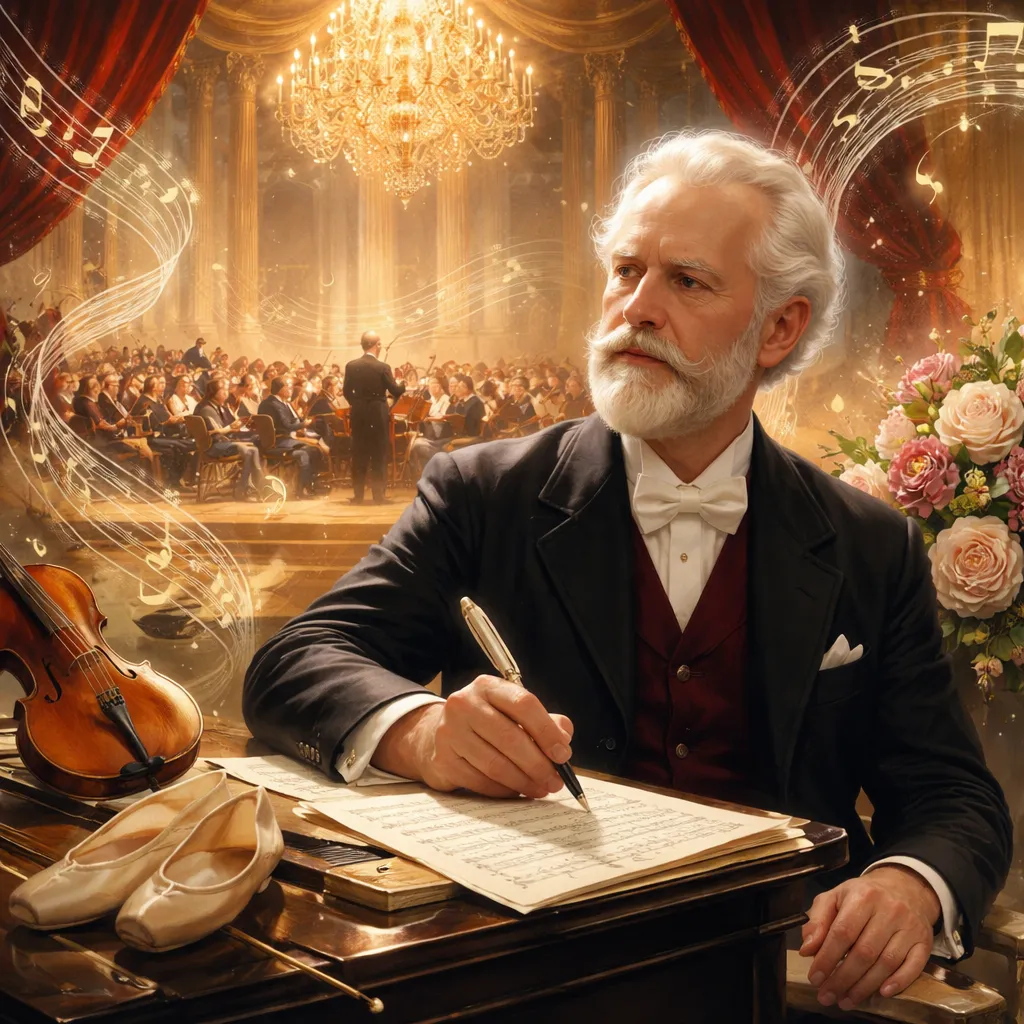

Introduction to Pyotr Ilyich Tchaikovsky
Pyotr Ilyich Tchaikovsky, born on May 7, 1840, in Votkinsk, Russia, was one of the most famous and influential composers of the 19th century. His works continue to inspire and captivate audiences worldwide with their emotional depth and musical richness. Tchaikovsky was a master of melody and orchestration, known for his beautiful compositions in ballet, opera, and symphonic music.
Tchaikovsky’s music stands out for its dramatic contrasts, lyrical beauty, and expressive emotional range. His works, including The Nutcracker, Swan Lake, and 1812 Overture, are staples of the classical music repertoire and have had a profound influence on the music world. Tchaikovsky’s ability to combine traditional Russian musical elements with Western European influences made him a key figure in the development of Russian classical music.
Early Life and Background
Tchaikovsky was born into a middle-class family. His father, Ilya Tchaikovsky, was a well-educated man who worked as an engineer and a military officer. His mother, Alexandra, was deeply devoted to music and played the piano. Tchaikovsky was the second of six children. His early years were marked by a strict upbringing, and music was a significant part of his life from an early age.
Tchaikovsky’s musical talent was evident early on. At the age of five, he began taking piano lessons from his mother, and by the age of ten, he was already showing a strong interest in music. He was sent to a boarding school for children of the Russian elite, where he studied music and other subjects. In 1859, Tchaikovsky enrolled at the Saint Petersburg Conservatory, where he was trained in Western classical music traditions.
Although Tchaikovsky’s early education was focused on music, his path to becoming a composer was not without challenges. His family wanted him to pursue a more practical career, so Tchaikovsky initially worked as a civil servant at the Ministry of Justice. However, his passion for music eventually led him to abandon this career and focus solely on composition.
Career Highlights and Achievements
Tchaikovsky’s career took off after his graduation from the Saint Petersburg Conservatory. In 1866, he was appointed as a professor of music theory at the Moscow Conservatory, which helped him establish connections in the Russian music world. His teaching career, however, was short-lived, as he focused more on composing than on teaching.
Tchaikovsky’s first major breakthrough came in 1873 with the composition of his Symphony No. 1 in G minor, also known as Winter Daydreams. While not as well received as some of his later works, it marked the beginning of his rise to fame. In 1877, he composed his famous Piano Concerto No. 1, which became a hallmark of his career and is still one of the most popular piano concertos in the world.
In 1880, Tchaikovsky composed the 1812 Overture, a patriotic and bombastic work commemorating Russia's victory over Napoleon. This piece would become one of Tchaikovsky’s most famous works and is still frequently performed at major celebrations and events.
Despite his success, Tchaikovsky struggled with personal and emotional turmoil throughout his life. His relationships, particularly with women, were complicated, and his sexuality was often a source of inner conflict. However, these personal struggles also deeply influenced his music, which is known for its emotional intensity and depth.
Famous Works or Performances
Tchaikovsky composed numerous works that became iconic in classical music. Some of his most famous pieces include:
The Nutcracker Suite: This ballet is one of Tchaikovsky’s most beloved works, particularly famous for its Dance of the Sugar Plum Fairy. The music evokes the magic and fantasy of the holiday season, and it has become a holiday tradition performed by orchestras and ballet companies worldwide.
Swan Lake: Another of Tchaikovsky’s best-known ballets, Swan Lake is a haunting and beautiful work that tells the story of love, betrayal, and transformation. The ballet’s music is rich with emotional depth, and its most famous pieces, like the Swan Theme, remain staples in the ballet world.
Sleeping Beauty: This ballet, based on Charles Perrault’s fairy tale, is known for its majestic and sweeping melodies. It remains one of the most performed ballets to this day.
Symphony No. 6 “Pathétique”: One of Tchaikovsky’s most personal works, this symphony reflects his inner struggles and emotional turmoil. The piece is known for its deep emotional content and tragic final movement.
Piano Concerto No. 1 in B-flat minor: This concerto remains one of the most famous and technically demanding works for piano. Its powerful opening and sweeping melodies have made it a favorite among pianists and audiences alike.
1812 Overture: This work, composed to celebrate Russia’s victory over Napoleon, is famous for its dramatic orchestration and the inclusion of cannon fire. It is often performed at major national celebrations, particularly in Russia and the United States.
These works showcase Tchaikovsky’s exceptional ability to create music that blends grandeur with emotion, combining intricate orchestration with deep personal expression.
Personal Life and Fun Facts
Tchaikovsky’s personal life was filled with challenges and contradictions. He was deeply lonely and struggled with his own identity, particularly his homosexuality, which was a source of inner conflict during a time when it was not accepted in society. His personal life often influenced his music, leading to works that expressed a sense of melancholy, longing, and heartache.
Tchaikovsky never married, though he had several intense and complicated relationships with women. In 1877, he briefly became engaged to a young woman named Antonia Miliukova. However, their marriage was short-lived, and Tchaikovsky’s unhappiness during this time is reflected in some of his most poignant compositions.
Despite his personal struggles, Tchaikovsky was an avid traveler and enjoyed spending time in Western Europe. He was also known to have a deep appreciation for art and literature, often drawing inspiration from the works of writers like Pushkin and Shakespeare.
Legacy and Influence
Tchaikovsky’s influence on the world of classical music is immense. His works continue to be celebrated by orchestras, ballet companies, and pianists around the world. His ability to create music that is both technically challenging and emotionally powerful has made him a key figure in the development of late Romantic music.
Tchaikovsky’s influence extended beyond his own compositions. His work inspired many composers who came after him, including Sergei Rachmaninoff, Dmitri Shostakovich, and Gustav Mahler. His emotional depth and ability to convey personal struggles through music paved the way for future composers to explore similar themes in their own works.
Tchaikovsky’s music has also had a profound impact on popular culture. His ballets, in particular, have been adapted into films, television shows, and even commercials. The Nutcracker Suite, in particular, is frequently performed during the holiday season, and its music has become synonymous with Christmas.
How to Learn from Pyotr Ilyich Tchaikovsky
Tchaikovsky’s life and music offer valuable lessons for young people and aspiring musicians. One key lesson is the importance of emotional expression in art. Tchaikovsky’s ability to pour his emotions into his music made his works deeply relatable and enduring. Musicians can learn to infuse their own passion and personal experiences into their performances, just as Tchaikovsky did.
Another important lesson from Tchaikovsky’s life is resilience. Despite the many challenges he faced, both personally and professionally, Tchaikovsky never gave up on his music. He continued to compose and perform, even during the most difficult times of his life, showing that persistence and dedication are key to success.
Finally, Tchaikovsky’s music teaches the value of creativity and experimentation. He was not afraid to push the boundaries of traditional forms and explore new ways of expressing emotion through music. Aspiring musicians can learn to embrace their own unique style and find new ways to connect with their audiences.
Pyotr Ilyich Tchaikovsky’s legacy as one of the greatest composers in history remains secure. His music continues to move listeners with its depth, beauty, and emotional resonance, making Tchaikovsky an enduring figure in the world of classical music.