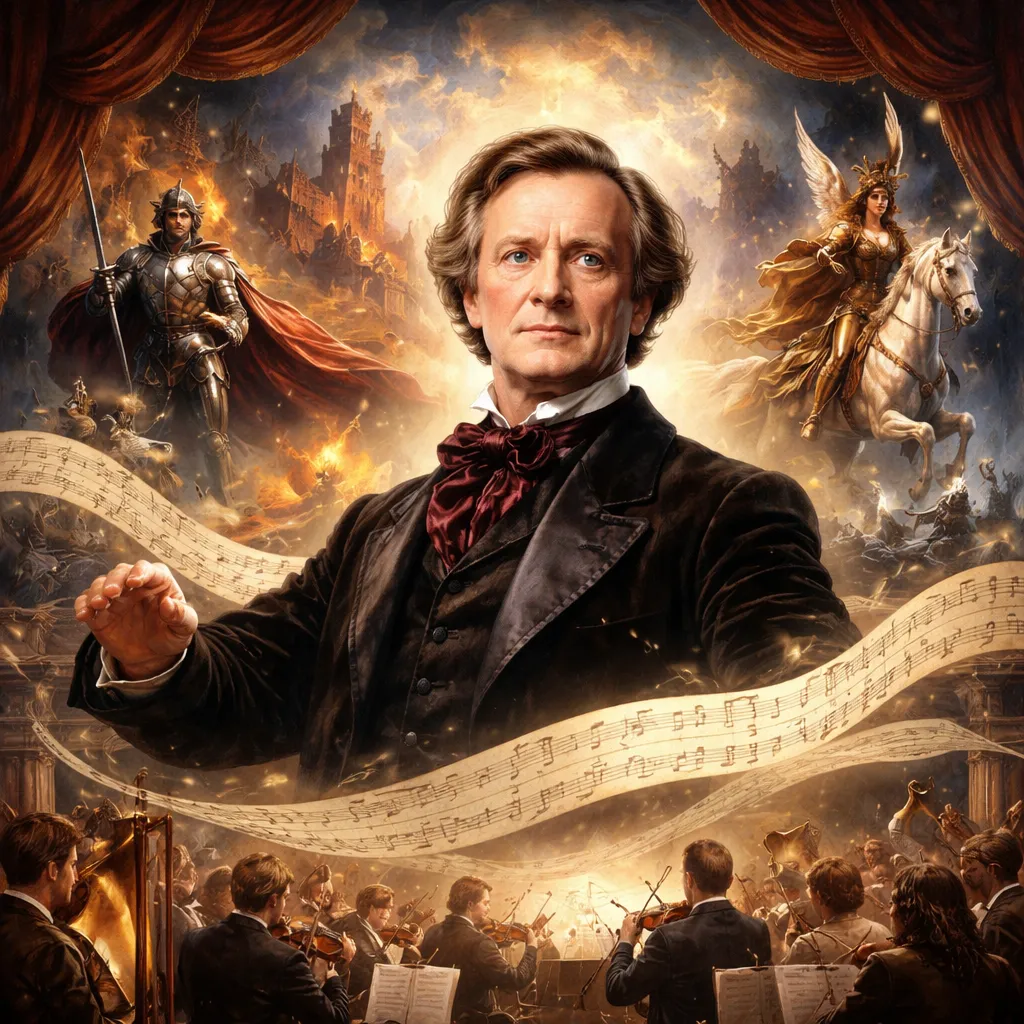

Introduction to Richard Wagner
Richard Wagner, born on May 22, 1813, in Leipzig, Germany, is one of the most revolutionary composers in the history of Western music. Known for his operas, Wagner's contributions to classical music have left an indelible mark on the world of art. His works are deeply embedded in the Romantic era and are famous for their unique style, combining complex harmonies, rich orchestrations, and groundbreaking use of leitmotifs (musical themes tied to characters or ideas).
Wagner was a visionary artist whose works, although controversial in their time, are still considered monumental achievements. He broke away from the traditional structure of opera and aimed to create a "total work of art," where music, drama, and visual elements would be inseparably fused. Wagner's influence is still felt today in both classical music and popular culture.
Early Life and Background
Richard Wagner’s early life was marked by hardship and instability. He was born to a family with strong musical ties. His father, Carl Friedrich Wagner, was a civil servant, and his mother, Johanna, was a talented singer. However, his father died when Richard was just six months old, and his stepfather, who was an actor, had little influence on him. Growing up, Wagner struggled with financial difficulties, but his mother ensured that he received a good education.
As a young boy, Wagner developed an early interest in music and began composing at the age of seven. He studied at the University of Leipzig, where he first encountered the works of composers like Beethoven and Mozart. Wagner's early musical education was informal, as he was mostly self-taught, relying on his passion for music and his ability to learn from the works of great masters.
Wagner’s formative years were shaped by a love for literature, theater, and mythology. He was particularly inspired by the stories of ancient Germanic mythology and began incorporating these themes into his early compositions. His fascination with myth and drama would go on to become a hallmark of his later works.
Career Highlights and Achievements
Wagner’s career began with a series of opera compositions that were not immediately successful, but over time, he built a reputation as a talented and innovative composer. His early operas, such as Die Feen (The Fairies) and Das Liebesverbot (The Ban on Love), were written in the style of German Romanticism. However, it was his later works that truly set him apart.
One of the most significant milestones in Wagner’s career was the completion of Der Fliegende Holl?nder (The Flying Dutchman) in 1843. This opera introduced many of the musical themes and ideas that Wagner would continue to develop throughout his career. The Flying Dutchman became an immediate success and helped establish Wagner as a major figure in German opera.
In the 1850s and 1860s, Wagner composed some of his most famous and groundbreaking works, including Tannh?user (1845), Lohengrin (1850), and the epic four-opera cycle, Der Ring des Nibelungen (The Ring of the Nibelung). The Ring Cycle is considered one of the greatest achievements in Western music, consisting of four operas: Das Rhinegold (The Rhine Gold), Die Walküre (The Valkyrie), Siegfried, and G?tterd?mmerung (Twilight of the Gods). This massive project, based on Norse mythology, was Wagner’s lifelong obsession and required more than 25 years to complete.
Another key moment in Wagner’s career came in 1876 with the opening of the Bayreuth Festspielhaus, a theater he designed specifically for his operas. This venue, located in the Bavarian town of Bayreuth, was designed to provide the perfect acoustics for his music dramas, and it became the home of the Bayreuth Festival, which continues to celebrate Wagner’s operas every year.
Wagner's works challenged the traditional conventions of opera, pushing the boundaries of harmony, orchestration, and storytelling. He revolutionized opera by moving away from the recitative-aria structure and introducing continuous musical drama. Wagner's operas were more than just performances; they were complete works of art, designed to engage the audience on multiple sensory levels.
Famous Works or Performances
Some of Wagner’s most famous works have had an enduring impact on the world of opera and classical music. Here are a few of his most notable pieces:
The Ring of the Nibelung (Der Ring des Nibelungen): This monumental four-opera cycle, based on Norse mythology, is Wagner’s crowning achievement. The operas are known for their massive orchestral forces, intricate leitmotifs, and dramatic storytelling. The Ring Cycle is one of the most ambitious projects in the history of music and remains a centerpiece of opera repertoires.
Tristan und Isolde: One of Wagner’s most influential operas, Tristan und Isolde is famous for its use of chromaticism and unresolved harmonic progressions, which had a profound influence on later composers such as Richard Strauss and Gustav Mahler. The opera tells the tragic love story of Tristan and Isolde and is considered one of the cornerstones of the Romantic opera tradition.
Die Meistersinger von Nürnberg: Unlike many of Wagner’s other works, Die Meistersinger von Nürnberg is lighthearted and comedic. It explores themes of art, love, and society and is often seen as a reflection of Wagner’s own views on art and the role of the artist in society.
Lohengrin: Known for its beautiful and haunting melodies, Lohengrin is a fairy-tale opera that centers on the mysterious knight Lohengrin and his quest to defend the honor of Elsa of Brabant. The opera contains one of Wagner’s most famous bridal choruses, which is frequently performed at weddings today.
Tannh?user: Another of Wagner’s early masterpieces, Tannh?user blends the medieval legend of the singer Tannh?user with themes of redemption, love, and spiritual longing. The opera explores the struggle between worldly pleasures and the search for divine grace.
Wagner’s works are known for their use of leitmotifs, musical themes associated with particular characters or ideas. These motifs help to weave the narrative together and create a rich, immersive experience for the audience.
Personal Life and Fun Facts
Wagner’s personal life was marked by controversy, both for his romantic entanglements and his political beliefs. He had numerous relationships, including a famous affair with Cosima von Bülow, the wife of the conductor Hans von Bülow. Cosima later became Wagner’s second wife, and together they had several children.
Wagner’s political views were also a source of controversy. He was a strong nationalist and was involved in political activism during his early years. His writings, especially his essay Judaism in Music, have been criticized for their anti-Semitic views, which have continued to provoke debate in the years following his death.
Despite these controversies, Wagner’s personal life was filled with intense passions for music and theater. He was a visionary who saw opera as a powerful form of artistic expression and was determined to reshape it to suit his vision.
Legacy and Influence
Richard Wagner’s legacy as a composer and thinker is immense. His works have had a profound influence on the development of opera and classical music, with composers like Claude Debussy, Gustav Mahler, and even film composers like John Williams drawing inspiration from his music. Wagner’s contributions to the development of music theory and orchestration are still studied by musicians and composers today.
The Bayreuth Festival, founded by Wagner, remains a major event in the world of opera, attracting opera lovers and musicians from all over the world. The festival continues to perform Wagner’s works, and the Bayreuth Festspielhaus remains a symbol of his musical achievements.
Wagner’s idea of the “Gesamtkunstwerk,” or “total work of art,” where music, drama, and visual art are fused together, revolutionized the way operas were staged and experienced. His works have remained relevant and influential, and his operas continue to be performed at major opera houses worldwide.
How to Learn from Richard Wagner
Wagner’s life and work offer valuable lessons in creativity, perseverance, and vision. His dedication to reshaping opera and his relentless pursuit of artistic expression demonstrate the importance of staying true to one’s vision, even in the face of criticism and adversity.
Wagner’s music teaches us that art is a powerful tool for exploring deep human emotions and complex themes. His use of leitmotifs, his mastery of orchestration, and his commitment to creating a unified artistic experience provide valuable insights into the art of composition.
By studying Wagner’s life, young musicians and artists can learn the importance of ambition, innovation, and staying true to one’s artistic ideals. His work serves as a reminder that art is not just about following tradition but about challenging it and making it your own.
Richard Wagner’s contributions to music have left an enduring mark on the world of classical music and opera. His operas, filled with rich melodies and powerful storytelling, continue to inspire audiences and musicians alike. Through his music, Wagner has demonstrated that art can be transformative, helping to shape the future of music and leaving a lasting legacy that endures to this day.