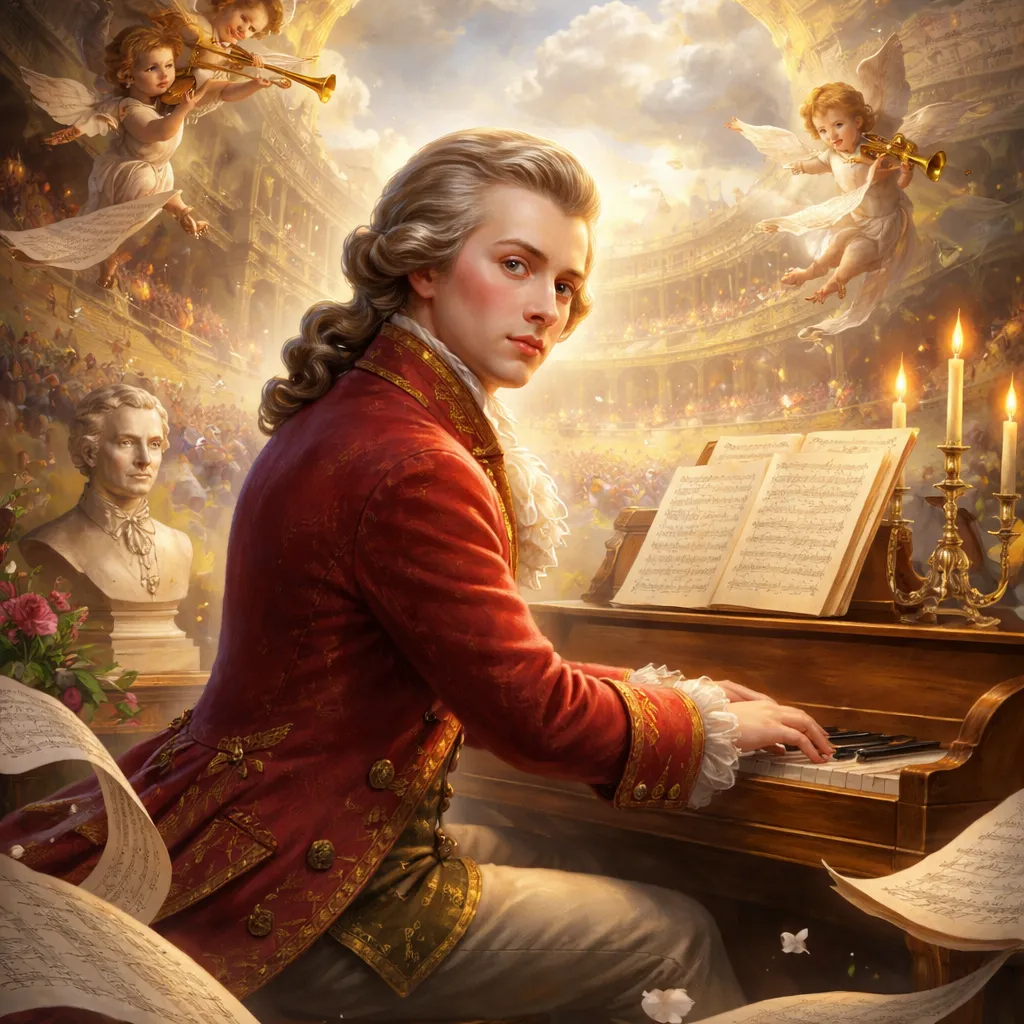

Introduction to Wolfgang Amadeus Mozart
Wolfgang Amadeus Mozart, born on January 27, 1756, in Salzburg, Austria, is one of the most famous and influential composers in history. Known for his extraordinary talent and prolific output, Mozart’s music continues to inspire and entertain people of all ages. His compositions span many genres, from symphonies and operas to chamber music and concertos.
Mozart’s ability to create music that blends complexity with beauty is why he remains an iconic figure in classical music. His genius was recognized early, and throughout his life, he produced an impressive array of works that pushed the boundaries of classical music. He is celebrated not only for his musical achievements but also for his contributions to the development of classical music itself.
Early Life and Background
Mozart was born to Leopold and Anna Maria Mozart in the city of Salzburg, which was part of the Holy Roman Empire at the time. His father, Leopold, was a musician and a composer himself, and he recognized his son's talent at an incredibly early age. By the age of three, Mozart could already play the piano, and by five, he had composed his first pieces of music.
Growing up in a musical family, Mozart was surrounded by music from the moment he was born. His father gave him rigorous musical training, and the young composer quickly gained recognition for his skill. At just six years old, Mozart began performing for royalty and aristocrats across Europe. He toured through countries like Germany, France, England, and Italy, astonishing audiences with his musical talent.
Mozart’s childhood was filled with both wonder and hardship. Although his early years were marked by incredible success, his family faced financial struggles. Nonetheless, his passion for music only grew, and his works began to gain the admiration of other musicians and composers. It was clear that he was destined for greatness from a young age.
Career Highlights and Achievements
Mozart’s career spanned only a short 35 years, yet his contribution to the world of music was immense. He composed over 600 works, many of which are considered masterpieces today. Some of his most important achievements include the development of the symphony, concerto, and opera genres.
In his early twenties, Mozart moved to Vienna, where he established himself as a freelance composer and musician. It was here that he composed many of his most famous works, including his operas The Magic Flute and Don Giovanni, his piano concertos, and the famous Requiem Mass in D Minor. He was known for his ability to blend emotional depth with technical precision, creating music that resonated deeply with audiences.
Mozart's works were not always appreciated during his lifetime. Despite his immense talent, he struggled financially, often relying on commissions and patronage to support his family. However, he never stopped composing. His works, such as the Eine kleine Nachtmusik and The Marriage of Figaro, exemplified his ability to innovate while still adhering to the classical traditions of the time.
One of Mozart's most significant achievements was his role in the development of opera. His operas were revolutionary, combining music with drama in a way that had never been done before. Through his operatic works, Mozart introduced deeper emotional complexity and stronger character development, setting a new standard for opera composers to follow.
Famous Works or Performances
Mozart's compositions are among the most performed and admired works in classical music. Some of his most famous pieces include:
Eine kleine Nachtmusik (A Little Night Music) (1787): This iconic serenade is one of Mozart's most beloved works. Its lively and charming melodies have made it a staple in classical music repertoires.
The Magic Flute (1791): This opera is a masterpiece of both musicality and drama. Combining elements of both lighthearted humor and deep symbolism, The Magic Flute is considered one of Mozart’s most profound and enduring works.
Don Giovanni (1787): A dark, dramatic opera that blends comedy and tragedy, Don Giovanni tells the story of the legendary seducer Don Juan. Its complex characters and beautiful arias make it one of Mozart's greatest operas.
Requiem Mass in D Minor (1791): This powerful piece was left unfinished at Mozart’s death, but it remains one of his most haunting and profound works. The Requiem is often performed at memorial services, and its emotional depth continues to captivate audiences.
Symphony No. 40 in G Minor (1788): One of Mozart’s most famous symphonies, it is known for its expressive melodies and intense emotional power. It is a perfect example of Mozart's ability to convey complex emotions through music.
Mozart’s works are characterized by their elegance, inventiveness, and emotional depth. His music is often noted for its perfect balance of form and expression. His ability to craft beautiful, memorable melodies while adhering to complex structural elements is one of the reasons his music is still so widely loved and performed.
Personal Life and Fun Facts
Mozart’s personal life was as complex and intriguing as his music. He married Constanze Weber in 1782, and together they had six children, though only two survived to adulthood. Despite his professional success, Mozart often faced financial difficulties and was in debt for much of his life. His health was fragile, and he passed away on December 5, 1791, at the young age of 35, leaving behind a legacy of unmatched musical genius.
Fun facts about Mozart reveal his playful nature and eccentric personality. He had a great sense of humor and was known for writing playful and often humorous letters. He also had a habit of composing music at an extraordinary pace—sometimes completing entire symphonies or operas in just a few weeks. He was incredibly prolific, producing over 600 works in his lifetime, many of which were created in his final years.
One lesser-known fact about Mozart is his love for the piano. He composed numerous piano concertos, and his ability to play the instrument was exceptional. He was also known for his ability to improvise and play complex pieces without prior rehearsal, a skill that left many of his contemporaries in awe.
Legacy and Influence
Mozart’s legacy is immeasurable. His works have shaped the development of Western classical music, and his influence can still be seen in music across many genres today. Mozart’s ability to combine technical precision with emotional depth set a standard that has influenced countless composers and musicians.
Mozart's impact on opera cannot be overstated. He revolutionized the genre by introducing more complex characters and a deeper emotional range. His operas are considered some of the greatest achievements in the history of music, and they continue to be performed around the world.
Beyond classical music, Mozart’s influence can also be seen in the broader cultural landscape. His music has been used in films, commercials, and even video games, making his works accessible to new generations of listeners.
How to Learn from Wolfgang Amadeus Mozart
There is much to learn from Mozart’s life and work. One of the key lessons from Mozart’s story is the importance of passion and dedication to one’s craft. Despite facing financial struggles and personal difficulties, Mozart never stopped creating music. His life teaches us the value of perseverance and the pursuit of excellence, no matter the obstacles.
Mozart’s ability to push the boundaries of classical music while staying true to its traditions shows us that innovation and respect for tradition can go hand in hand. He was not afraid to experiment with new forms and ideas, and this willingness to take risks contributed to his lasting impact on music.
For young learners, Mozart’s life serves as a reminder that creativity can flourish at any age. His early accomplishments show us that talent and dedication can lead to greatness, even in childhood. Whether it’s through music, art, or any other field, Mozart’s life encourages us to pursue our passions and never stop learning.
Wolfgang Amadeus Mozart’s remarkable talent and enduring legacy continue to inspire musicians, composers, and listeners around the world. His ability to blend technical mastery with emotional depth revolutionized classical music, and his work has left an indelible mark on the world of music. By studying his life and works, we can learn valuable lessons about creativity, perseverance, and the importance of following one’s passion.