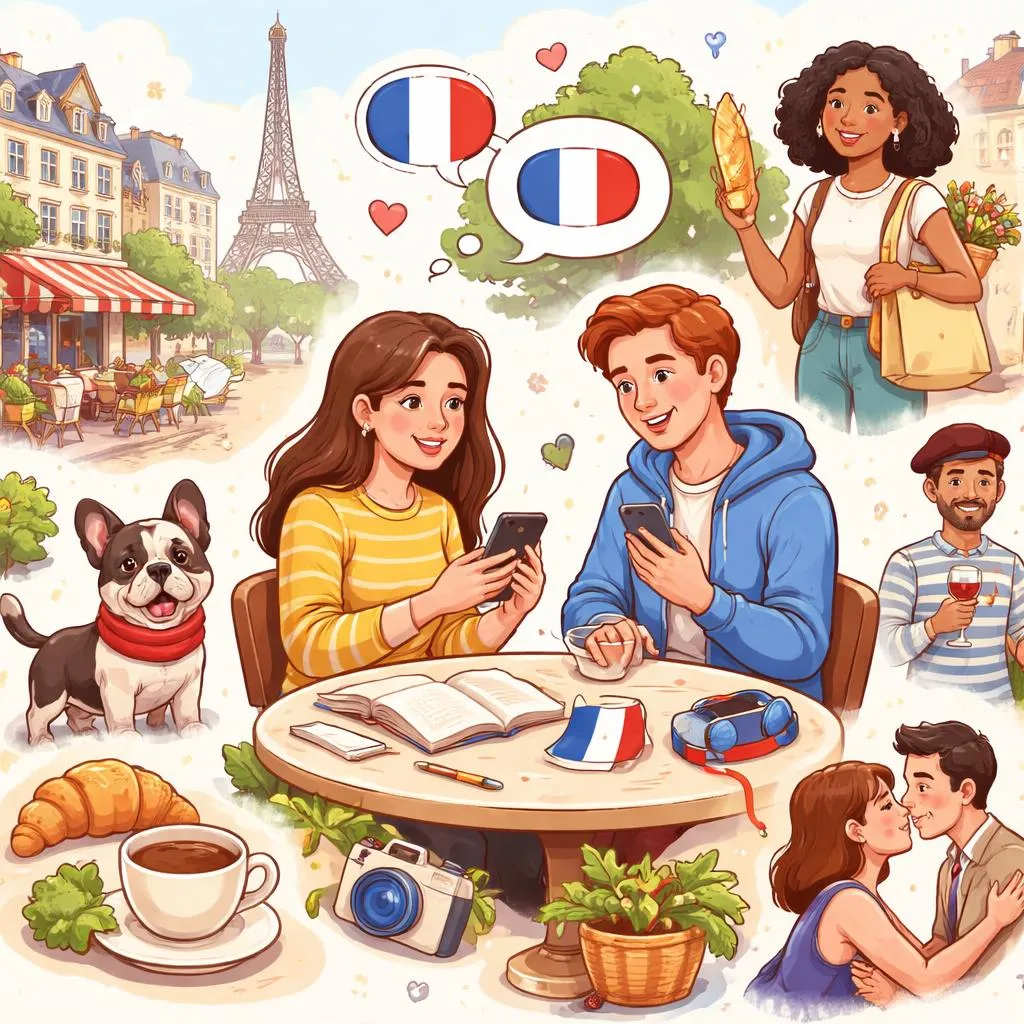
Common French Phrases: Everyday French for Beginners

Common French Phrases: Everyday French for Beginners

Fun Games + Engaging Stories = Happy Learning Kids! Download Now

What Are Common French Phrases

Common French phrases are everyday expressions. People use them often.

They appear in greetings. They appear in polite talk.

Learning these phrases helps communication. They help learners feel confident.

French phrases are useful from day one. They support real interaction.

Why Common French Phrases Matter

Single words are helpful. But phrases are more powerful.

Phrases show how language works together. They show rhythm and flow.

Using phrases sounds natural. Natural speech builds confidence.

Beginners benefit the most. They can speak sooner.

French Greetings for Daily Use

Greetings are the first step. They open conversations.

Bonjour is used during the day. It is polite and friendly.

Bonsoir is used in the evening. It feels warm.

Salut is informal. It is used with friends.

Greetings show respect. Respect matters in French culture.

Saying Goodbye in French

Goodbyes close conversations. They are just as important.

Au revoir is the most common goodbye. It works in many situations.

À bientôt shows future connection. It feels friendly.

Bonne journée wishes a good day. It sounds kind.

Goodbyes leave an impression. Polite endings matter.

French Phrases for Politeness

Politeness is important in French. Simple phrases show manners.

Merci means thank you. It is used often.

Merci beaucoup shows stronger thanks. It feels warmer.

S’il vous plaît means please. It sounds respectful.

Polite language builds positive interaction.

Saying You Are Sorry in French

Apologies matter in communication. French has clear phrases.

Pardon is short and common. It works in many situations.

Désolé expresses regret. It feels more personal.

Excusez-moi is polite. It is used to get attention.

Apologies help smooth interaction.

Introducing Yourself in French

Introductions start connections. Simple phrases work well.

Je m’appelle means my name is. It is very common.

Enchanté means nice to meet you. It feels polite.

Ravi de vous rencontrer is more formal. It is used in polite settings.

Introductions help build comfort.

Asking How Someone Is

Caring questions matter. French uses them often.

Comment ça va means how are you. It is friendly.

Ça va is a short version. It feels casual.

Comment allez-vous is formal. It shows respect.

Asking builds connection.

Answering How You Are

Answers can be simple. Short phrases work well.

Ça va means I am fine. It is very common.

Très bien means very well. It sounds positive.

Comme ci, comme ça means so-so. It feels relaxed.

Honest answers feel natural.

French Phrases for Understanding

Understanding is key in learning. French has helpful phrases.

Je comprends means I understand. It shows clarity.

Je ne comprends pas means I do not understand. It is useful for learners.

D’accord means okay or agreed. It shows acceptance.

These phrases support communication.

Asking for Help in French

Asking for help is normal. French phrases make it polite.

Pouvez-vous m’aider means can you help me. It is respectful.

Aidez-moi is more direct. It is used in urgent situations.

Help phrases reduce stress. They support confidence.

French Phrases for Clarification

Clarification helps understanding. Learners need these phrases.

Répétez, s’il vous plaît means please repeat. It is very useful.

Plus lentement means more slowly. It helps listening.

Qu’est-ce que ça veut dire means what does it mean. It supports learning.

Clarifying keeps conversation moving.

French Phrases for Daily Situations

Daily life uses simple phrases. They appear everywhere.

C’est bon means it is good. It shows approval.

Pas de problème means no problem. It sounds relaxed.

Bien sûr means of course. It feels friendly.

Daily phrases feel natural.

French Phrases for Shopping

Shopping needs clear language. Simple phrases help.

Combien ça coûte means how much is it. It is essential.

Je voudrais means I would like. It sounds polite.

C’est trop cher means it is too expensive. It expresses opinion.

Shopping phrases build independence.

French Phrases for Eating Out

Restaurants are common places. French phrases help ordering.

Le menu, s’il vous plaît means the menu please. It is polite.

L’addition, s’il vous plaît means the bill please. It is very common.

C’était délicieux means it was delicious. It shows appreciation.

Food phrases create positive experiences.

French Phrases for Directions

Asking for directions helps travel. French phrases are simple.

Où est means where is. It starts many questions.

À gauche means to the left. À droite means to the right.

Tout droit means straight ahead. These phrases guide movement.

French Phrases for Time

Time phrases appear often. They help planning.

Quelle heure est-il means what time is it. It is common.

À quelle heure means at what time. It is useful.

À bientôt means see you soon. It feels friendly.

Time phrases organize daily life.

French Phrases for Agreement

Agreement keeps conversation smooth. French has clear phrases.

Oui means yes. It is simple.

Non means no. It is clear.

Exactement means exactly. It shows strong agreement.

Agreement phrases build clarity.

French Phrases for Disagreement

Disagreement can be polite. French supports soft language.

Je ne pense pas means I do not think so. It sounds gentle.

Pas vraiment means not really. It feels casual.

Maybe phrases reduce tension.

French Phrases in Social Talk

Social talk builds relationships. Small phrases matter.

C’est intéressant means it is interesting. It shows attention.

Bonne chance means good luck. It shows support.

Félicitations means congratulations. It shows joy.

Social phrases build warmth.

French Phrases for Emotions

Expressing emotion matters. French phrases help.

Je suis content means I am happy. It feels positive.

Je suis fatigué means I am tired. It is common.

J’ai peur means I am afraid. It expresses feeling.

Emotion phrases support honesty.

French Phrases for Learning Situations

Learners need special phrases. They help in class.

Comment dit-on means how do you say. It supports vocabulary learning.

Je fais des erreurs means I make mistakes. It shows awareness.

C’est difficile means it is difficult. It expresses challenge.

Learning phrases reduce anxiety.

Common French Phrases and Pronunciation

Pronunciation matters. French sounds flow together.

Listening helps more than reading. Exposure builds comfort.

Repeating phrases improves rhythm. Rhythm supports fluency.

Phrases sound natural together.

Common French Phrases and Memory

Phrases are easier to remember. They have meaning.

Meaning supports recall. Recall supports speaking.

Using phrases daily helps memory. Daily use matters.

Memory grows through repetition.

Common French Phrases and Confidence

Confidence grows through use. Small success matters.

Using one phrase correctly feels good. Feeling good motivates practice.

Practice builds fluency. Fluency builds confidence.

Confidence supports communication.

Common French Phrases and Real Life

Real life uses phrases. Textbooks start here.

Listening to conversations helps. Phrases appear often.

Recognizing phrases feels rewarding. Reward supports motivation.

Real-life language feels alive.

Common French Phrases and Cultural Awareness

Language reflects culture. Phrases show values.

Politeness appears often. Respect matters.

Learning phrases builds cultural awareness. Awareness builds connection.

Connection supports understanding.

Common French Phrases and Daily Practice

Practice does not need long time. Short moments work.

Repeating phrases aloud helps. Hearing your voice matters.

Using phrases in thought helps. Thinking supports learning.

Daily contact builds habit.

Common French Phrases and Long-Term Learning

Phrases stay useful. They do not disappear.

Advanced learners still use them. They form the base.

Strong foundations support growth. Growth feels easier.

Common French Phrases and Communication Goals

Communication is the goal. Phrases support this.

Perfect grammar can wait. Meaning comes first.

Using phrases builds bridges. Bridges connect people.

Common French Phrases as a Starting Point

Every language journey starts somewhere. Phrases are a good start.

They feel practical. They feel achievable.

Step by step, phrases become sentences, and sentences become conversations.

Learning common French phrases opens the door to real communication and makes French feel friendly and usable.

Common French Phrases and Listening Practice

Listening is important in language learning. French phrases sound different from spelling.

Hearing phrases often helps the ear. The ear learns rhythm.

Short phrases are easier to catch. They appear again and again.

With time, learners recognize them quickly. Quick recognition supports confidence.

Common French Phrases and Natural Speed

French is often spoken fast. This can surprise beginners.

Knowing common phrases helps. The brain does not need to translate.

Meaning comes as a whole. This feels easier.

Whole-phrase understanding reduces stress. Less stress supports listening.

Common French Phrases and Repetition

Repetition builds familiarity. Familiarity builds comfort.

Repeating phrases aloud helps memory. Hearing your own voice matters.

Simple repetition is enough. No pressure is needed.

Gentle repetition works best.

Common French Phrases and Short Responses

Short responses are useful. They keep conversation moving.

Oui. D’accord. Bien sûr.

These phrases are quick. They sound natural.

Short responses build interaction. Interaction builds confidence.

Common French Phrases and Intonation

Intonation changes meaning. Tone matters in French.

Rising tone can show a question. Falling tone can show certainty.

Listening to intonation helps understanding. Understanding improves response.

Intonation makes speech alive.

Common French Phrases and Daily Exposure

Daily exposure is powerful. Even small moments count.

Hearing one phrase a day helps. Seeing it in context helps.

Small exposure adds up. Progress grows quietly.

Consistency matters more than speed.

Common French Phrases and Visual Support

Visual support helps beginners. Pictures add meaning.

Seeing a situation helps memory. Memory supports recall.

Picture plus phrase works well. This combination feels natural.

Visual learning reduces confusion.

Common French Phrases and Confidence in Travel

Travel situations use phrases often. Knowing them reduces fear.

Ordering food feels easier. Asking questions feels safer.

Confidence improves experience. Positive experience supports motivation.

Motivation keeps learning going.

Common French Phrases and Cultural Politeness

Politeness is important in French. Phrases show respect.

Using polite language feels appreciated. It creates positive reaction.

Positive reaction encourages use. Use strengthens skill.

Culture and language grow together.

Common French Phrases and Classroom Use

Teachers often start with phrases. They are practical.

Students can use them quickly. Quick use builds confidence.

Classroom phrases support interaction. Interaction supports learning.

Learning feels active.

Common French Phrases and Long-Term Value

Common phrases never disappear. They stay useful.

Advanced learners still use them. They remain part of speech.

Strong basics support growth. Growth feels smoother.

Common French phrases may look simple. But they are powerful tools.

They help learners listen. They help learners speak.

With steady exposure and gentle practice, these phrases become familiar sounds, and French begins to feel natural and welcoming.