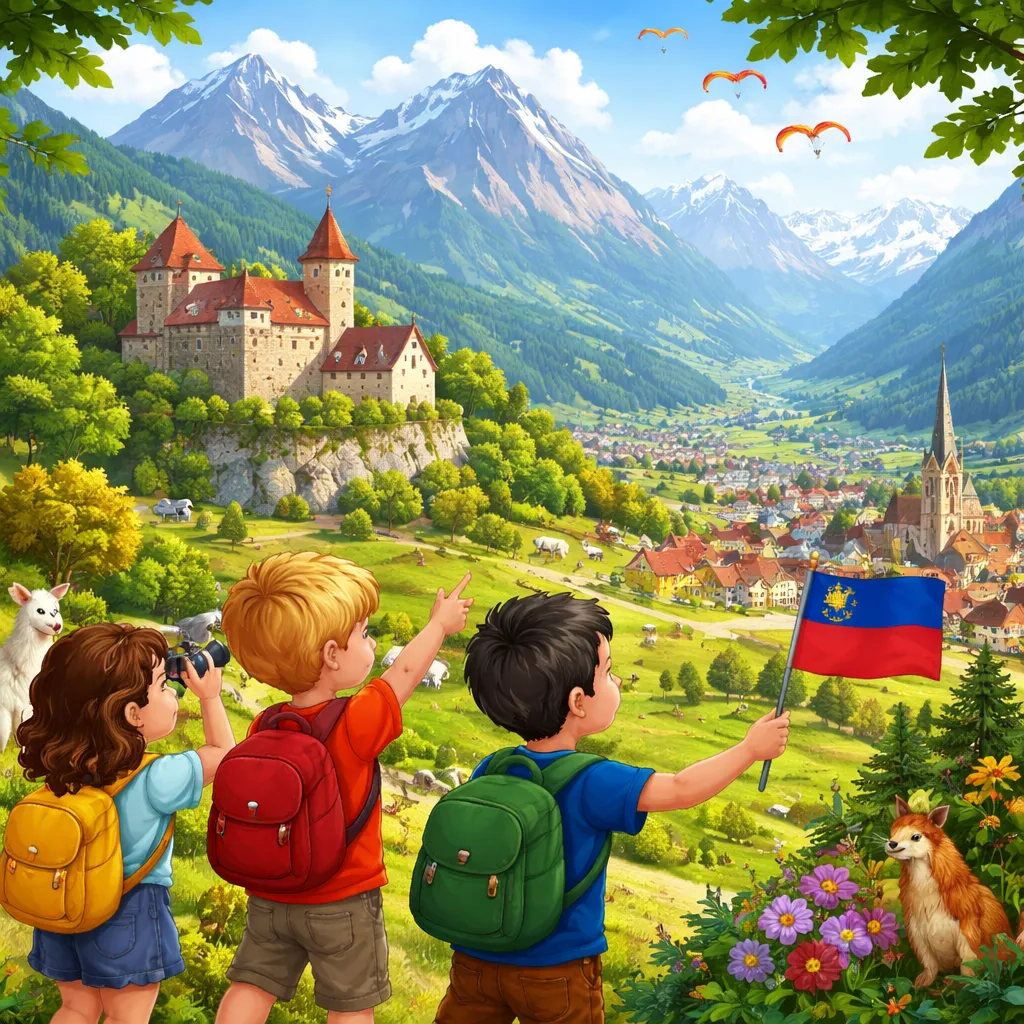

Introduction to Liechtenstein
Language learning takes us to places we may never have heard of. Today we discover one of the smallest countries in the world. This tiny nation sits tucked between mountains and valleys. It holds big surprises for young readers. Despite its small size, Liechtenstein has a rich history. It offers beautiful landscapes and unique traditions. Exploring this country helps children build reading skills. It also teaches them that great things come in small packages. Every new word brings them closer to understanding this special place.
Where Is Liechtenstein?
Liechtenstein lies in central Europe. It sits between Switzerland and Austria. The Rhine River flows along its western border. Mountains rise up to the east. This small country covers only sixty-two square miles. You could fit it inside many large cities. The capital city is Vaduz. Vaduz rests in a valley with mountains behind it. A castle overlooks the town from a hill. Liechtenstein has no coastline. It is a landlocked country surrounded by other lands. Finding it on a map takes a careful eye. Yet this tiny nation has its own government, language, and culture. Young readers will learn that size does not define importance.
Interesting Facts About Liechtenstein
Liechtenstein offers many fascinating facts for young learners. It is one of the smallest countries in the world. Only a few nations have less land. Despite its size, it has a prince. The prince lives in the castle above Vaduz. Another interesting fact involves its name. Liechtenstein means “bright stone” in German. The country has no airport. Visitors arrive by train or car. The entire nation has fewer people than many small towns. Yet it produces amazing things. Liechtenstein makes false teeth, tools, and machines used around the world.
The country also has a unique history. It remained neutral during many wars. This allowed it to preserve its buildings and traditions. Liechtenstein also has beautiful mountain trails. Families enjoy hiking in the Alps. In winter, people ski on snowy slopes. Another fun fact involves stamps. Liechtenstein prints beautiful postage stamps. Collectors around the world seek them. These facts show children that every country has a story. Even the smallest places hold wonder and discovery.
Key Vocabulary About Liechtenstein
Let us learn important words for this topic. These words help children describe what they discover.
Principality: a country ruled by a prince or princess.
Landlocked: surrounded by land with no coastline.
Valley: low land between hills or mountains.
Castle: a large building with strong walls for protection.
Alps: a major mountain range in Europe.
Rhine: a major river that flows through several countries.
Stamp: a small piece of paper stuck on mail to show payment.
Introduce these words with pictures. Show a castle, a valley, and a stamp. Let children say each word aloud. Use the words in simple sentences. Building vocabulary gives children the tools they need. They can then describe what they see and learn.
Simple Sentences for Reading Practice
Short sentences build reading confidence. Use these sentences about Liechtenstein for practice.
Liechtenstein is a small country in Europe.
The capital city is Vaduz.
A castle sits on a hill above the city.
The Rhine River flows along the border.
Switzerland and Austria surround Liechtenstein.
Many people speak German in Liechtenstein.
Hiking and skiing are popular activities.
Read each sentence together. Point to the words as you read. Let children take turns reading. These simple sentences form a foundation. They prepare young readers for longer texts.
Short Reading Passage About Liechtenstein
Here is a short passage for children to read together.
“Liechtenstein is one of the smallest countries in the world. You can find it in central Europe. Switzerland lies to the west, and Austria lies to the east. The Rhine River marks the western edge of the country. The capital, Vaduz, sits in a valley. A castle stands on a hill above the town. The prince of Liechtenstein lives in that castle. The country has mountains perfect for hiking and skiing. In summer, families walk on green trails. In winter, they glide down snowy slopes. Liechtenstein has no airport. People arrive by train or car. The country prints beautiful postage stamps. Collectors value them very much. Despite its small size, Liechtenstein makes important things. Factories there create machines and tools used worldwide.”
Read this passage aloud together. Pause after each sentence to check understanding. Ask children to find vocabulary words in the text. This activity strengthens both reading and comprehension.
Fun Questions About Liechtenstein
Questions make reading interactive. Use these to start conversations with young learners.
What two countries surround Liechtenstein?
What is the capital city of Liechtenstein?
What river flows along the western border?
What building sits on a hill above Vaduz?
Why does Liechtenstein have no airport?
What do people collect from Liechtenstein?
Let children answer in complete sentences. Encourage them to use new vocabulary. Ask them what they would do if they visited. Would they hike in the mountains? Would they visit the castle? Creative questions make the topic personal and memorable.
Tips for Learning English with This Topic
Use Liechtenstein to make English learning engaging and fun. Start with a map activity. Let children find this tiny country between Switzerland and Austria. Compare its size to other countries. Visual comparisons help children grasp scale. Next, introduce the vocabulary through a simple matching game. Place pictures of the Rhine River, the Alps, and a castle on one side. Place word cards on the other. Let children make matches.
Read the passage aloud together with enthusiasm. Change your voice for different parts. Speak softly when describing the valley. Sound excited when mentioning the castle. Reading with expression keeps children engaged. After reading, let children draw their favorite part. One child might draw the castle. Another might draw skiers on the mountain. Let them label their drawings with vocabulary words.
Incorporate simple research. Ask children to find one more fact about Liechtenstein. Help them look in books or on safe websites. Share findings together. This teaches children how to learn independently. They discover that one topic can lead to many more questions.
Use movement to reinforce learning. Pretend to hike up a mountain. Pretend to ski down a slope. Act out crossing the Rhine River. Physical movement helps children remember new information. It also makes reading time active and enjoyable.
Encourage children to share their knowledge. Let them tell a family member about this tiny country. They can explain what a principality means. They can describe the castle in Vaduz. Teaching others builds confidence and mastery.
Connect Liechtenstein to your child’s world. Ask, “What is the smallest place you have ever visited?” Talk about how small places can have big stories. Compare the mountains in Liechtenstein to any hills or mountains near your home. Making these connections helps children see that language learning reading is about understanding the world around them. By exploring Liechtenstein together, you give children a wonderful experience. They learn new words, discover a unique country, and grow their love for reading. This small European gem becomes a big adventure in their minds.