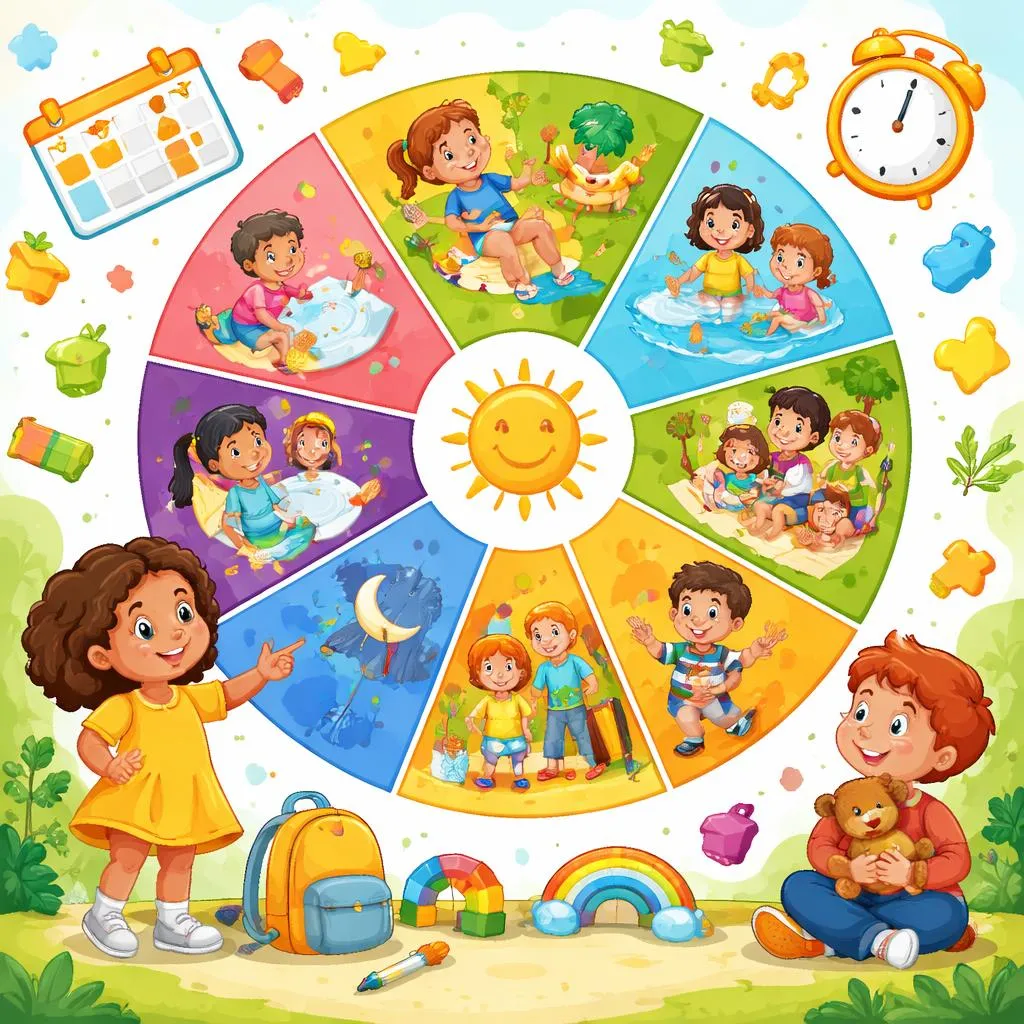

What is days of the week english?
Days of the week English refers to the seven names for each day in a week. These words help describe time, routines, and schedules. They are essential for daily communication and early literacy.
In classroom practice, days of the week connect language to real life. They help structure lessons and routines. They also support basic time awareness.
Teachers introduce these words early because they appear in songs, calendars, and daily conversations.
Meaning and explanation
The week has seven days. The names are Monday, Tuesday, Wednesday, Thursday, Friday, Saturday, and Sunday.
These words come from history and culture. Each name has roots in planets, gods, and old languages.
In English learning, days of the week function as nouns. They usually start with capital letters. They often follow prepositions like on and during.
For example: On Monday, we study English. On Sunday, we rest.
These structures help build sentence awareness and calendar literacy.
Categories or lists
Days of the week can be grouped in useful ways. This grouping supports comprehension and scheduling language.
Weekdays are Monday to Friday. Weekend days are Saturday and Sunday.
School days often refer to Monday through Friday. Holiday or rest days often refer to Saturday and Sunday.
Teachers can connect days to classroom schedules. English class on Tuesday. Art class on Thursday.
This contextual categorization reinforces meaning.
Daily life examples
Daily routines provide strong contexts for days of the week. Morning routines differ on school days and weekends. Activities change across the week.
Teachers model simple sentences. I go to school on Monday. I play soccer on Wednesday. I visit the park on Sunday.
Calendar activities support comprehension. Learners mark birthdays, events, and holidays on specific days.
Weather charts also connect to days. Today is Friday. It is sunny today.
This daily repetition strengthens time vocabulary.
Printable flashcards
Printable flashcards are effective for days of the week English instruction. Each card shows the day name and a visual icon.
Picture cues help memory. Monday can show a school bag. Saturday can show a playground.
Word cards support spelling and recognition. Sentence cards support speaking practice.
Teachers can use flashcards for sequencing activities. Learners arrange cards in correct weekly order.
Flashcards also support calendar board routines. Each day, a learner selects the correct card and says the date.
Learning activities or games
Calendar circle time builds routine language. Learners say the day, date, and weather. This repetition builds fluency and confidence.
Days of the week songs support rhythm and memory. Songs use repetition and melody to strengthen recall.
Sequencing games reinforce order. Learners place day cards in correct sequence. They say each day aloud.
Movement games connect days with actions. Monday jump. Tuesday clap. Wednesday spin.
Board games integrate time vocabulary. Players move on a weekly path and say sentences. “I am on Thursday.”
Storytelling tasks connect days to narrative. Teachers tell a story across a week. Learners describe events on each day.
Craft projects deepen understanding. Learners create a weekly planner chart. They draw activities for each day and describe them in English.
Digital interactive calendars support listening and reading. Learners click on a day and hear the word.
Assessment can occur through simple speaking tasks. What day is today? What day is your favorite?
Teachers listen for pronunciation, word order, and fluency.
Days of the week English is a core theme in early language education. It links language with time, routine, and real-world experience. Through structured teaching, visual aids, songs, and interactive games, this concept becomes meaningful and memorable. Learners gain confidence in describing their schedules and daily lives using clear and accurate English.