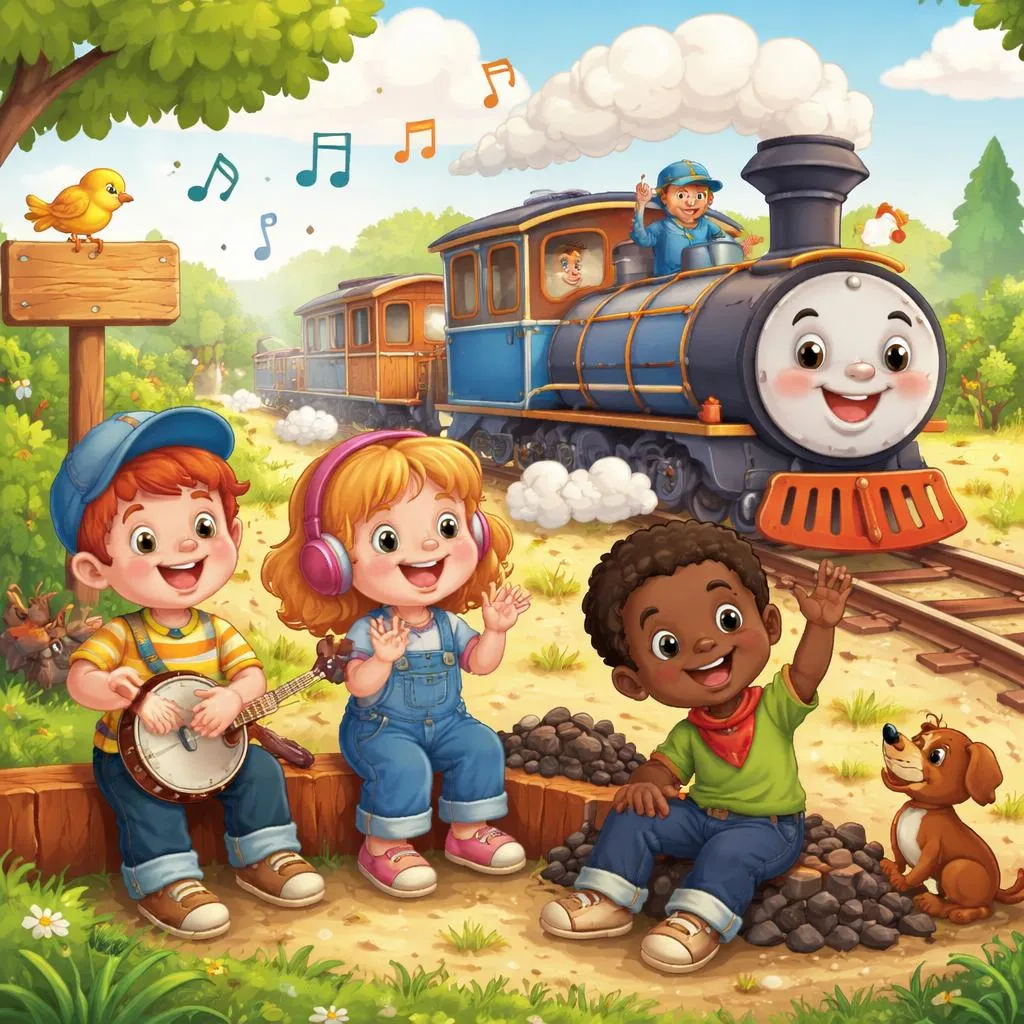

What is the i have been working on the railroad song? The song “I Have Been Working on the Railroad” is a classic American folk song. It has entertained children for generations while teaching rhythm and language. The lyrics tell a simple story about working on the railroad and daily life. Children enjoy singing along with its catchy tune and repeated lines. The song is widely used in classrooms, music activities, and home learning. It combines music, language, and storytelling into one learning experience.
The song helps children recognize word patterns. Repetition of phrases makes vocabulary easier to remember. The tune supports memory through melody and rhythm. Singing together encourages group participation and listening skills. Children learn the natural flow of English sentences. The song also introduces a historical context of American work songs.
Lyrics of the Song The lyrics are simple, repetitive, and engaging. A common version begins with: “I’ve been working on the railroad All the live-long day I’ve been working on the railroad Just to pass the time away”
The chorus repeats with joyful sounds: “Can’t you hear the whistle blowing Rise up so early in the morn Can’t you hear the captain shouting Dinah, blow your horn”
The repetitive structure makes it easy to remember. Children pick up words quickly by singing multiple times. The song combines nouns, verbs, and simple phrases for language learning. It encourages listening, speaking, and rhythm recognition. The lyrics also offer opportunities to learn rhyming patterns. Songs like this make English learning enjoyable and musical.
Vocabulary Learning The song introduces everyday words like “working,” “railroad,” “day,” “whistle,” and “morning.” These are repeated throughout the song for reinforcement. Children understand words better when they are sung and heard often. Listening to the song repeatedly helps recognize and spell these words. New vocabulary can be paired with gestures or visual aids. For example, children may mimic blowing a horn when singing “Dinah, blow your horn.”
Repetition of verbs like “working” and “blowing” improves comprehension. The song also teaches time expressions such as “all the live-long day.” Children absorb new words naturally without formal drilling. Vocabulary practice through music is more engaging than worksheets. Songs help combine language, memory, and movement in learning. Children learn words in context, improving long-term retention.
Phonics Points The song supports phonics learning in several ways. Syllables are clear and easy to hear in words like “railroad” and “Dinah.” Repetition of sounds helps children recognize pronunciation patterns. Vowels and consonants can be highlighted during singing. For example, “all the live-long day” emphasizes long vowel sounds.
Children can clap to syllables, reinforcing phonemic awareness. Hearing rhyming words improves recognition of sound patterns. Phonics learning becomes natural through rhythm and melody. Songs like this integrate listening, speaking, and phonics practice. Phonics practice supports reading readiness and spelling skills. Children enjoy the learning process as part of a musical activity.
Grammar Patterns Simple present and past continuous ideas appear in the song. The lyrics use phrases like “I’ve been working” which introduces present perfect continuous. Children hear natural sentence structures through repetition. Questions appear in lines such as “Can’t you hear the whistle blowing?” This teaches children how questions are formed in English.
The song also reinforces subject-verb-object patterns. Repeated phrases strengthen grammar understanding subconsciously. Children can learn verb forms and sentence rhythm through singing. Music helps make grammar less abstract and more memorable. Children internalize sentence structures naturally while having fun. Combining language, grammar, and melody enhances learning.
Daily Life Examples The song’s context connects with daily life and movement. Children can act out “working on the railroad” during play. Gestures like pretending to hammer or blow a horn reinforce understanding. Daily routines like singing in the morning or during free play integrate learning. The song introduces teamwork when performed in groups. Children develop social skills alongside language and musical skills.
Singing during practical activities helps link words with actions. For example, mimicking “working” while playing with blocks reinforces comprehension. Children enjoy combining movement and music while learning English. Songs provide context for language beyond the classroom. Children also explore cultural history of work songs in a fun way. Music makes language lively, memorable, and connected to real-life actions.
Printable Flashcards Flashcards with key words from the song enhance learning. Cards can feature words like “railroad,” “whistle,” “day,” and “captain.” Children can match cards while singing the song. Visual aids help reinforce auditory learning.
Flashcards can also show gestures or symbols for each word. Interactive matching games make learning engaging and playful. Repeated exposure through song and cards improves retention. Teachers and parents can create sets tailored to children’s levels. Visual and auditory learning combined strengthens language acquisition. Flashcards also encourage independent learning and review.
Learning Activities and Games The song works well with musical and interactive games. “Whistle Mimic” asks children to copy sounds while singing. “Railroad Movement” uses gestures like hammering or walking in rhythm. “Lyric Fill-In” challenges children to complete missing words from the song.
Games reinforce vocabulary, pronunciation, and sentence patterns. Children enjoy physical and cognitive engagement at the same time. Group games improve social interaction and listening skills. Repetition through play supports memory and language fluency. Music-based games make English learning active and joyful. Children combine rhythm, words, and fun for holistic learning.
Daily practice with “I Have Been Working on the Railroad” strengthens language confidence. The song helps children recognize word patterns and sentence structures. Music, movement, and repetition create a memorable and inspiring learning environment. Singing together supports both individual and group learning. Language, rhythm, and cultural context combine into a complete educational experience. Children develop vocabulary, phonics, and grammar while enjoying music and play.