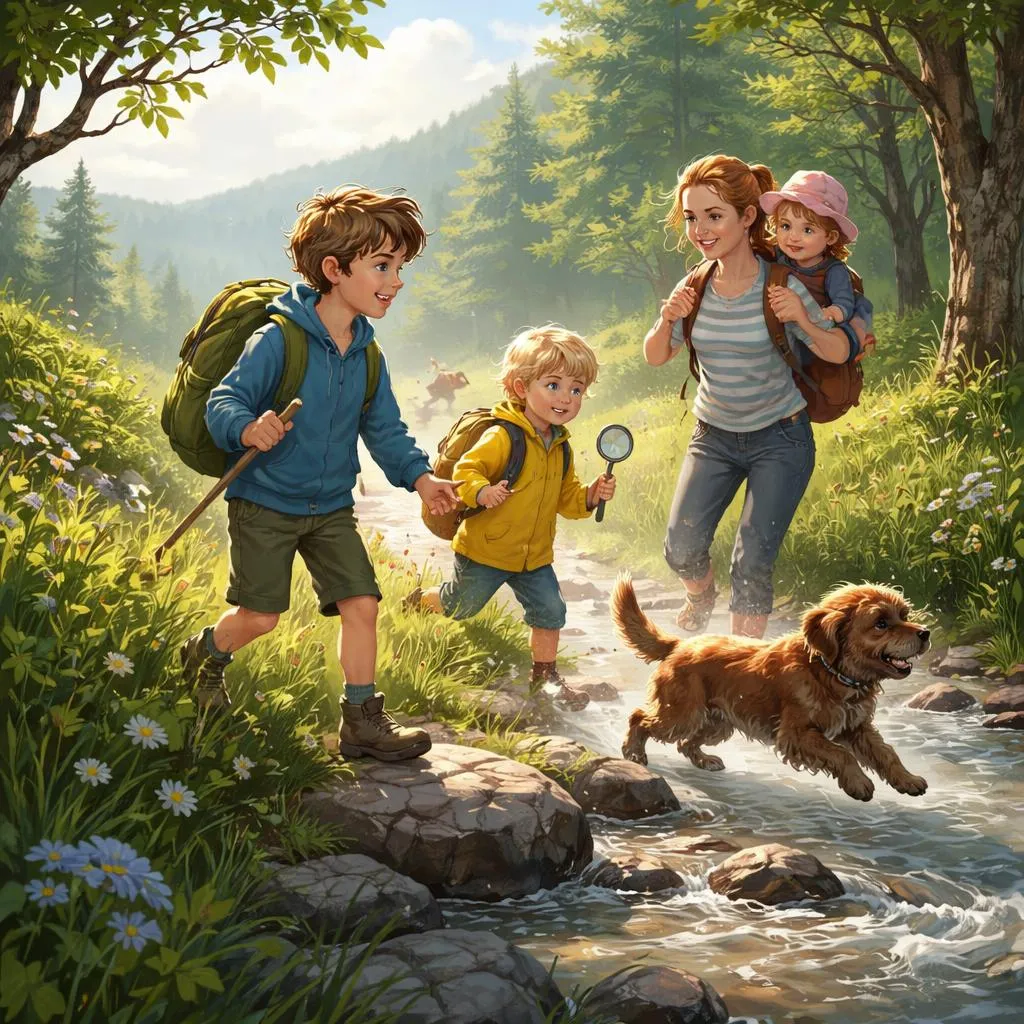

Hello, brave adventurers and wonderful teachers! Today we embark on an exciting journey. We will search for a big bear. We will face many obstacles along the way. The story "We're Going on a Bear Hunt" is a beloved classic. The going on bear hunt words are full of rhythm and repetition. Children love the sound effects and the actions. This story teaches sequencing and descriptive language. It builds anticipation and problem-solving. Let us discover this thrilling adventure together. Let us face tall grass, deep rivers, and dark caves in search of a bear.
What Is the Going on Bear Hunt Story? "We're Going on a Bear Hunt" is a beloved children's story by Michael Rosen. It follows a family of adventurers searching for a bear. Along the way, they encounter different obstacles. Tall grass, a deep river, thick mud, a dark forest, a snowstorm, and a narrow cave. They must go through each one to continue their hunt.
The story has a wonderful repetitive structure. Each obstacle follows the same pattern. The family cannot go over it or under it. They must go through it. Then they make the sound of going through that obstacle.
The story teaches that adventures can be exciting but also a little scary. The family is brave but also cautious. When they finally find the bear in the cave, they get scared and run all the way back home! This adds humor and excitement.
The Words of the Story Let us look at the complete going on bear hunt words. Many versions exist. Here is the classic version.
We're going on a bear hunt. We're going to catch a big one. What a beautiful day! We're not scared.
Uh-oh! Grass! Long, wavy grass. We can't go over it. We can't go under it. Oh no! We've got to go through it! Swishy swashy! Swishy swashy! Swishy swashy!
We're going on a bear hunt. We're going to catch a big one. What a beautiful day! We're not scared.
Uh-oh! A river! A deep, cold river. We can't go over it. We can't go under it. Oh no! We've got to go through it! Splash splosh! Splash splosh! Splash splosh!
We're going on a bear hunt. We're going to catch a big one. What a beautiful day! We're not scared.
Uh-oh! Mud! Thick, oozy mud. We can't go over it. We can't go under it. Oh no! We've got to go through it! Squelch squerch! Squelch squerch! Squelch squerch!
We're going on a bear hunt. We're going to catch a big one. What a beautiful day! We're not scared.
Uh-oh! A forest! A big, dark forest. We can't go over it. We can't go under it. Oh no! We've got to go through it! Stumble trip! Stumble trip! Stumble trip!
We're going on a bear hunt. We're going to catch a big one. What a beautiful day! We're not scared.
Uh-oh! A snowstorm! A swirling, whirling snowstorm. We can't go over it. We can't go under it. Oh no! We've got to go through it! Hoooo woooo! Hoooo woooo! Hoooo woooo!
We're going on a bear hunt. We're going to catch a big one. What a beautiful day! We're not scared.
Uh-oh! A cave! A narrow, gloomy cave. We can't go over it. We can't go under it. Oh no! We've got to go through it! Tiptoe! Tiptoe! Tiptoe!
WHAT'S THAT? One shiny wet nose! Two big furry ears! Two big goggly eyes! IT'S A BEAR!
Quick! Back through the cave! Tiptoe! Tiptoe! Tiptoe! Back through the snowstorm! Hoooo woooo! Hoooo woooo! Back through the forest! Stumble trip! Stumble trip! Back through the mud! Squelch squerch! Squelch squerch! Back through the river! Splash splosh! Splash splosh! Back through the grass! Swishy swashy! Swishy swashy!
Get to the front door! Open the door! Up the stairs! Oh no! We forgot to shut the door! Back downstairs! Shut the door! Back upstairs! Into the bedroom! Jump into bed! Under the covers! We're never going on a bear hunt again!
Vocabulary Learning from the Story This adventurous story teaches many useful words. Let us explore them together.
Action words: The story uses many action verbs. Going, catch, go over, go under, go through, run, open, shut, jump. Children learn these movement words through the repetitive structure.
Obstacle words: The story names different obstacles. Grass, river, mud, forest, snowstorm, cave. Children learn these landscape words. Each obstacle presents a different challenge.
Sound words: The story is full of wonderful sound words. Swishy swashy, splash splosh, squelch squerch, stumble trip, hoooo woooo, tiptoe. These onomatopoeic words make the story come alive. Children love making the sounds.
Descriptive words: The story uses vivid adjectives. Long, wavy, deep, cold, thick, oozy, big, dark, swirling, whirling, narrow, gloomy. Children learn to describe things with rich language.
Emotion words: The story explores feelings. Not scared, brave, then scared when they see the bear, then safe and relieved at home. Children learn to talk about courage and fear.
Phonics Points in the Story The bear hunt story offers excellent phonics practice. Let us look at some important sounds.
Listen to the "s" sound in "swishy swashy." The "s" sound is a soft hiss. Practice together. "S-s-swishy." "S-s-swashy." This sound appears in the grass obstacle.
Listen to the "spl" blend in "splash splosh." This combination of sounds is fun to say. Practice together. "Spl-spl-splash." "Spl-spl-splosh." This sound appears in the river obstacle.
Listen to the "sq" blend in "squelch squerch." This is a unique sound combination. Practice together. "Sq-sq-squelch." "Sq-sq-squerch." This sound appears in the mud obstacle.
Listen to the "st" blend in "stumble trip." Practice together. "St-st-stumble." "Tr-tr-trip." This sound appears in the forest obstacle.
The repetitive sound words reinforce these sounds. Children hear them many times. They practice them through chanting.
Grammar Patterns in the Story The story contains useful grammar patterns for young learners.
Present progressive tense: The story uses "We're going." This shows action happening now. Children learn this pattern for describing current activities.
Repetitive phrases: "We can't go over it. We can't go under it. We've got to go through it." This pattern teaches prepositions and problem-solving language.
Exclamations: The story uses excited language. "What a beautiful day!" "WHAT'S THAT?" "IT'S A BEAR!" "Quick!" Children learn to express strong feelings.
Sequence words: The story follows a clear sequence. First grass, then river, then mud, then forest, then snowstorm, then cave, then running back through everything. Children learn to follow and retell a sequence.
Learning Activities for the Story The story lends itself to many activities. Here are some ideas to extend learning.
Obstacle Course: Create an obstacle course representing each part of the story. Green paper or fabric for grass to swish through. Blue paper for river to splash through. Brown play dough or pillows for mud to squelch through. Chairs or hanging streamers for forest to stumble through. White blankets or cotton balls for snowstorm to whoosh through. A tent or box for cave to tiptoe into. Children act out going through each obstacle.
Sound Effect Practice: Practice making the sounds from the story. Swish hands together for grass. Splash hands in water for river. Squelch hands in play dough for mud. Stomp feet heavily for forest. Make wind sounds for snowstorm. Tiptoe quietly for cave. This builds phonemic awareness and fun.
Bear Drawing: After the story, ask children to draw what they think the bear looked like. One shiny wet nose, two big furry ears, two big goggly eyes. This builds comprehension and creativity.
Story Sequencing: Create picture cards showing each part of the story. Grass, river, mud, forest, snowstorm, cave, bear, running back home. Children put them in order. This builds narrative understanding.
Printable Materials for the Story Printable resources support learning from the story. They provide visual reinforcement.
Obstacle Flashcards: Create flashcards for each obstacle. Grass, river, mud, forest, snowstorm, cave. Each card has a picture and the word. Also include the sound word for each. Swishy swashy, splash splosh, squelch squerch, stumble trip, hoooo woooo, tiptoe.
Bear Description Cards: Create cards showing the bear's features. Shiny wet nose, big furry ears, big goggly eyes. Children match them to the description in the story.
Story Sequencing Cards: Create cards showing scenes from the story in order. Children arrange them and retell the adventure.
Coloring Pages: Create coloring pages for each obstacle and the bear. Children color them while listening to the story.
Educational Games for the Story Games make learning from the story even more fun.
Bear Hunt Obstacle Game: Create a board game with spaces representing each obstacle. Children roll a dice and move through the obstacles. When they land on an obstacle, they make the sound. First to reach the cave and run back wins.
What Sound Does It Make?: Hold up an obstacle card. Children make the sound for that obstacle. Grass says swishy swashy. River says splash splosh. This builds sound-word association.
Bear Hunt Memory Game: Place picture cards from the story face down. Children flip two trying to find matches. This builds memory and vocabulary.
We're Going on a Bear Hunt Charades: Act out going through an obstacle without speaking. Others guess which obstacle it is. This builds observation and vocabulary.
Bear Description Game: Describe something from the story without naming it. "I have two big goggly eyes. I have a wet nose. What am I?" Children guess "the bear!" This builds descriptive language.
Through this adventurous story, children go on an imaginary journey. They face obstacles and use their courage. They make wonderful sound effects. They finally meet the bear and run safely home. The going on bear hunt words create excitement and learning together. Children love the repetition and the anticipation. They love acting out each obstacle. Every telling is a new adventure.