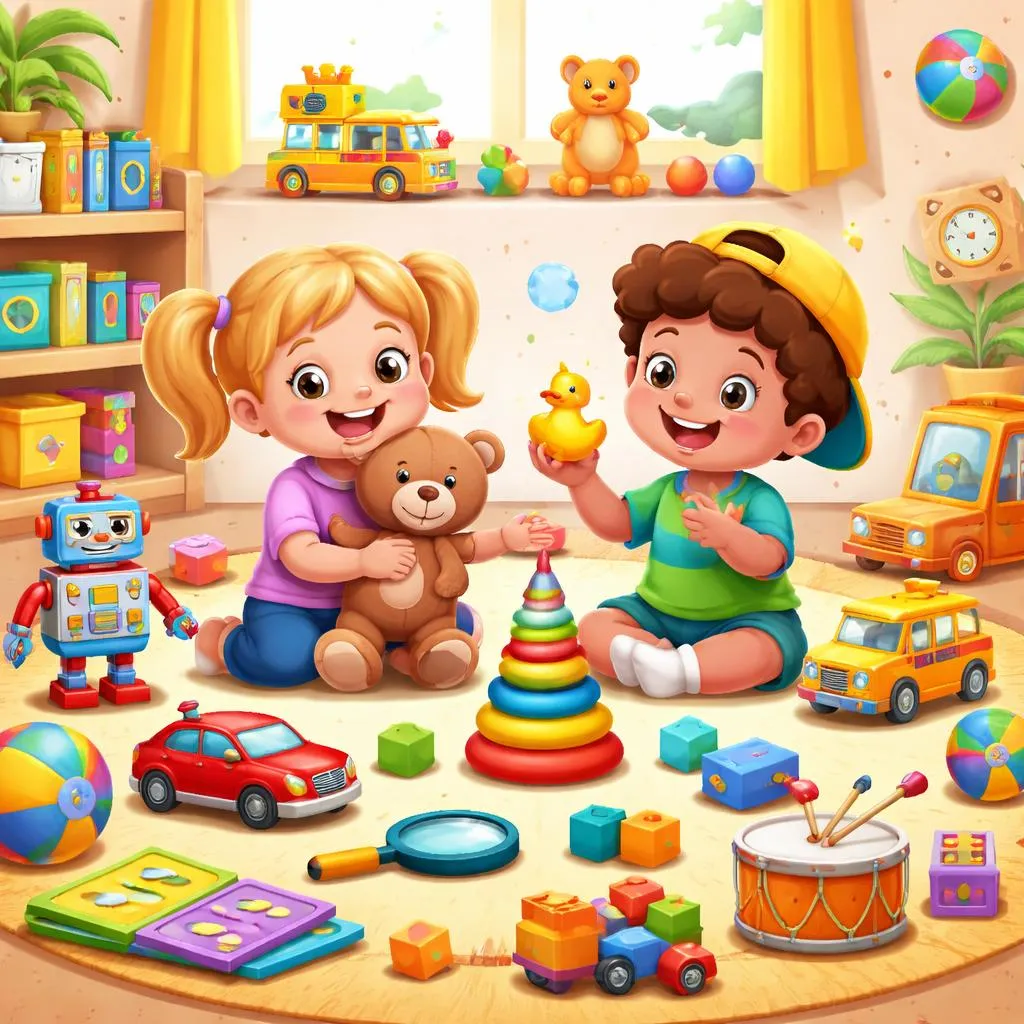

Hello, playful teachers and joyful young learners! Today we explore something children love most. Toys are everywhere in a child's world. They play with them every day. They have favorites they never want to lose. Learning to name toys in English helps children talk about what they love. It builds vocabulary for playtime conversations. It helps them ask for what they want. It connects language learning to their happiest moments. Let us discover the wonderful world of toy names together. Let us learn about dolls, blocks, balls, and more.
What Are Name Toys? Name toys means learning the English words for different playthings. Toys are objects children play with. They come in many shapes, sizes, and types. Each toy has a special name. Learning these names helps children describe their play.
Think about a child's room. What toys might be there? Stuffed animals on the bed. Building blocks in a box. Dolls sitting on a shelf. Cars and trucks on the floor. Each of these has a specific name.
Knowing toy names helps children in many situations. At playdates, they can ask for a turn with a specific toy. At the store, they can tell parents what they want. In conversations, they can describe what they played with. Toy vocabulary is practical and motivating.
Meaning and Explanation of Toy Categories Toys can be grouped into categories. Each category has common characteristics.
Dolls and figures represent people or characters. Dolls look like babies or children. Action figures look like heroes from stories. Stuffed animals are soft toys that look like animals. Children love to care for these toys and create stories with them.
Building toys help children create things. Blocks are simple wooden or plastic shapes. LEGO bricks snap together to make structures. Magnetic tiles stick together to build. These toys develop creativity and problem-solving.
Vehicles are toys that move. Cars, trucks, trains, planes, and boats. Children love to push them and make sound effects. They learn about different types of transportation.
Games and puzzles challenge the mind. Board games have rules and often involve other players. Puzzles have pieces that fit together to make a picture. Card games use special decks of cards.
Outdoor toys are for playing outside. Balls, jump ropes, bicycles, scooters, and sand toys. These toys encourage physical activity and fresh air.
Art toys help children create. Crayons, markers, paint, clay, and play dough. Children use these to express themselves creatively.
Musical toys make sounds. Drums, xylophones, maracas, and toy pianos. Children explore rhythm and melody with these toys.
Categories or Lists of Toy Names Here are common toy names organized by category.
Dolls and Figures: Doll, baby doll, action figure, stuffed animal, teddy bear, puppet, dollhouse, doll clothes, finger puppet
Building Toys: Blocks, LEGO bricks, magnetic tiles, building set, construction set, stacking rings, shape sorter
Vehicles: Car, truck, train, train set, airplane, boat, bus, fire engine, ambulance, tractor, race car, monster truck
Games and Puzzles: Puzzle, board game, card game, memory game, matching game, dominoes, checkers, chess, dice game
Outdoor Toys: Ball, jump rope, bicycle, tricycle, scooter, wagon, sandbox, sand toys, pail and shovel, water toys, sidewalk chalk
Art Toys: Crayons, markers, colored pencils, paint, paintbrush, play dough, clay, modeling clay, stickers, stamp set
Musical Toys: Drum, xylophone, maracas, tambourine, bell, keyboard, recorder, harmonica, music box
Pretend Play Toys: Kitchen set, food toys, doctor kit, tool set, cash register, dress-up clothes, costume, puppet theater
Daily Life Examples of Toy Names Toy names appear throughout daily conversations. Pointing them out helps children learn naturally.
During playtime, name the toys being used. "You are building with blocks." "Your doll is sleeping in the dollhouse." "Push the car down the ramp." This constant naming builds vocabulary.
At cleanup time, name toys as they are put away. "The LEGO bricks go in this box." "Put the stuffed animals on the bed." "The puzzles go on the shelf." This connects words to actions.
When shopping for toys, use their names. "Do you want to look at the dolls?" "We need to buy new crayons." "That truck looks fun." Children hear the words in a motivating context.
During playdates, children hear each other using toy names. "Can I have a turn with the action figure?" "Let's play with the train set." Peer conversation reinforces vocabulary.
Printable Flashcards for Toy Names Flashcards help children learn toy vocabulary visually. They provide clear images with words.
Doll and Figure Flashcards: Create cards showing different dolls and figures. Doll, baby doll, action figure, teddy bear, stuffed animal. Each card has a clear picture and the word.
Vehicle Flashcards: Create cards for different toy vehicles. Car, truck, train, airplane, boat, bus. Use bright, appealing pictures.
Building Toy Flashcards: Create cards for building toys. Blocks, LEGO bricks, magnetic tiles, construction set. Children learn to name what they build with.
Outdoor Toy Flashcards: Create cards for outdoor play. Ball, jump rope, bicycle, scooter, sand toys. These are toys for active play.
Game and Puzzle Flashcards: Create cards for games. Puzzle, board game, card game, memory game. Children learn to name these activity toys.
Use the cards for games. Hold up a card and name the toy. Ask children if they have that toy. Play memory match with two sets.
Learning Activities or Games for Toy Names Games make learning toy vocabulary fun and interactive.
Toy Store Pretend Play: Set up a pretend toy store. Arrange toy pictures or actual toys on shelves. Children take turns being shopkeeper and customer. "How much is this doll?" "I want to buy that truck." This builds real conversation skills.
**What's in the Toy Box?: Place several toys in a box. Children reach in without looking and feel a toy. They guess what it is before pulling it out. "I think it's a ball!" This uses touch and vocabulary together.
Toy Sorting: Gather a variety of toys or toy pictures. Have children sort them into categories. All vehicles together. All dolls together. All building toys together. This builds classification skills.
Toy Memory Game: Place toy picture cards face down. Children flip two at a time trying to find matches. When they find a match, they name the toy. This builds memory and vocabulary.
I Spy Toys: Play I Spy with toys in the room. "I spy something you can ride." Children look for a bicycle or scooter. "I spy something soft to cuddle." They look for stuffed animals.
Printable Materials for Toy Names Printable resources support learning about toy names. They provide structure for activities.
Toy Coloring Pages: Create coloring pages showing different toys. A doll, a truck, blocks, a ball, a teddy bear. Children color them and practice saying the names.
Toy Matching Worksheets: Create pages where children match the toy picture to its name. Draw a line from the ball to the word "ball."
My Favorite Toy Drawing Page: Create a page where children draw their favorite toy. They write or dictate a sentence about it. "My favorite toy is my teddy bear."
Toy Store Price Tags: Create printable price tags for pretend play. Children can put them on toys and practice numbers along with toy names.
Educational Games for Toy Names Games extend toy vocabulary learning in joyful ways.
Toy Bingo: Create bingo cards with toy pictures. Call out toy names. Children cover the matching picture. When someone gets BINGO, they name all the toys in their winning row.
Toy Charades: Act out playing with a toy without speaking. Pretend to bounce a ball. Pretend to rock a baby doll. Others guess which toy is being used.
**What's Missing?: Place several toy cards in a row. Children close their eyes. Remove one card. They open their eyes and guess which toy is missing. This builds observation and memory.
Toy Hunt: Hide toy picture cards around the room. Children search for them. When they find one, they name it and say one thing about it. "I found a ball. You can bounce it."
Toy Question Game: Ask questions about toys. "What toy do you like to cuddle with?" "What toy can you ride?" "What toy do you build with?" Children answer using toy vocabulary.
Through learning to name toys, children connect English to their happiest experiences. They learn words for things they truly love. Every playtime becomes a language lesson. Every favorite toy has a name they can say. This builds motivation and confidence. Toy vocabulary opens the door to conversations with friends and family.