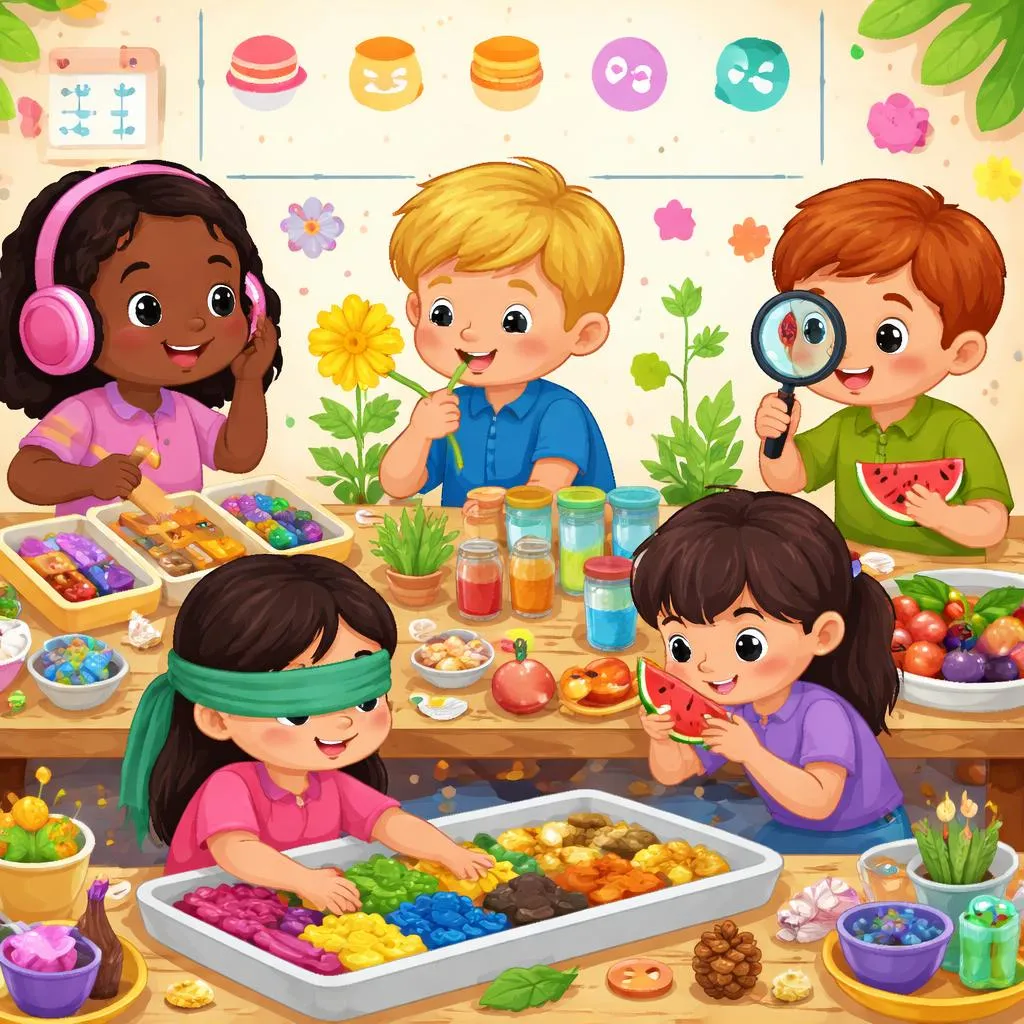

Teaching young children about the world around them is one of the greatest joys of early education. Preschoolers are naturally curious. They touch, they taste, they listen. This makes the topic of the five senses a perfect fit for their developmental stage. By exploring sight, sound, smell, taste, and touch, children begin to organize and understand the world. The key is to offer hands-on, playful experiences. Let’s explore how to guide little learners through this fascinating sensory world.
What Are the Five Senses for Preschoolers? When we talk about the five senses, we are talking about how our bodies receive information. It is the way we interact with our environment. For a preschooler, this concept needs to be concrete. We can explain that we have five special helpers on our body. Our eyes help us see. Our ears help us hear. Our nose helps us smell. Our tongue helps us taste. Our skin helps us feel. Introducing these five senses activities for preschoolers helps them connect the body part to the function. It turns an abstract idea into something they can explore every day.
Meaning and Explanation of Sensory Learning Sensory learning means learning through doing. It is not just about hearing a fact. It is about experiencing it. When a child feels the cold water or smells the sweet flower, the brain creates a strong connection. This type of learning is powerful for memory. Explaining the meaning behind each sense helps children become more aware. We can ask guiding questions. What do your eyes tell you about this apple? What does your nose tell you about the grass outside? This builds vocabulary and critical thinking. The goal is to make them stop and think about what their body is telling them.
Categories of the Five Senses We Explore To keep learning organized, we usually break the senses down into five clear categories. Each category offers unique opportunities for discovery.
Sight (Vision): This is about observing colors, shapes, and sizes. We use our eyes to see light and darkness.
Hearing (Audition): This involves recognizing sounds. We hear loud noises, soft whispers, high pitches, and low rumbles.
Smell (Olfaction): This helps us detect scents. We can identify pleasant smells like baking bread and warning smells like smoke.
Taste (Gustation): This lets us experience flavors. We usually talk about sweet, sour, salty, and bitter.
Touch (Tactile): This is about feeling textures. We explore hard, soft, rough, smooth, sticky, and slippery.
Understanding these categories helps when planning specific five senses activities for preschoolers. It allows us to focus on one sense at a time, which deepens their understanding.
Daily Life Examples to Spark Curiosity The best classroom is the world around us. We do not always need special tools to teach the senses. We can start by talking about the morning routine. How does the soap smell when we wash our hands? How does the towel feel on our skin? During snack time, we can listen to the crunch of an apple. We can look at the bright colors of a strawberry. Outside, we can feel the wind on our cheeks. We can listen to the birds singing. By pointing out these small moments, we teach children to be mindful. They learn that science happens all around them, every single day.
Printable Flashcards for Vocabulary Building Visual aids are very helpful for young learners. Flashcards can be a wonderful tool to introduce and reinforce vocabulary. For this topic, you can create simple cards.
One set could show the body part: an eye, an ear, a hand, a nose, and a mouth. Another set could show examples: a rainbow for sight, a bell for hearing, a flower for smell, a cookie for taste, and a blanket for touch.
Using these cards, we can play matching games. Ask the children to match the nose to the flower. Match the hand to the soft blanket. These printable materials help solidify the connection between the sense, the organ, and the object. They also provide a quiet, focused activity that children can do in pairs or small groups.
Learning Activities or Games for the Classroom Now, let’s get to the fun part. Here are some structured yet playful ways to explore each sense. These five senses activities for preschoolers are designed to be easy to set up and highly engaging.
Sound Eggs: Fill plastic eggs with different items. Use rice, bells, sand, or pasta. Seal them tightly with tape. Let the children shake them and guess what is inside. They must listen carefully to the different sounds. This sharpens their auditory discrimination.
Feely Bags: Place objects with different textures inside a cloth bag. Use a pinecone, a piece of silk, a cold spoon, or a soft feather. Ask a child to reach in without looking. Can they find the soft item? Can they describe how the object feels? This is a great activity for building descriptive language.
Scent Jars: Take small, opaque containers with lids. Poke small holes in the top. Place cotton balls inside soaked with different scents. Use vanilla, lemon juice, coffee grounds, or peppermint. Children can take turns smelling and guessing the scent. Always ensure scents are non-toxic and safe for children.
Taste Test Party: During snack time, arrange a tasting plate. Include small samples of sweet (grape), salty (pretzel), sour (lemon wedge), and bitter (dark chocolate). Talk about how each food makes their tongue feel. This is always a memorable experience. Remember to check for allergies first.
Color Scavenger Hunt: Take the children outside or around the room. Give them a color to find. How many red things can they see? This focuses the sense of sight on a specific task. It encourages them to look closely at details they might otherwise miss.
Integrating Sensory Play into Art Art time is a natural fit for sensory exploration. We can move beyond just using paintbrushes. Let children paint with their fingers. How does the paint feel? Is it cold and squishy? We can add sand to paint to create a textured finish. We can glue different materials like fabric scraps, cotton balls, and sandpaper onto paper. Creating a "texture collage" allows children to combine art with touch. Playing different styles of music while they paint can also influence their mood and how they move their hands. This connects hearing and sight in a creative way.
Using Storybooks to Reinforce Concepts Books are a powerful tool for learning. Reading stories that highlight the senses can reinforce what we practice in activities. Look for books where characters explore the garden, bake a cake, or go for a walk. While reading, pause and ask questions. What do you think the character smells right now? What do they see? How do they feel? This helps children apply their knowledge to new situations. It also builds empathy as they think about what another person might be experiencing through their senses.
Creating a Sensory Station in the Classroom Having a permanent sensory station in the classroom allows for continuous exploration. This area does not need to be big. A small table or a corner shelf works well. Rotate the materials regularly to keep interest high. One week, you might have a bin of dry rice with scoops and cups for pouring. Another week, you might have water with funnels and water wheels. You could include a basket of different fabrics for feeling. Having a basket of musical instruments like shakers and bells is also wonderful. This station gives children a chance to direct their own learning and revisit concepts independently.
Connecting Senses to Movement and Music Music and movement activities naturally engage multiple senses. Play a game where children move like different animals. How does a snake move? (Sliding, no sound). How does an elephant move? (Heavy, loud stomping). They are using hearing to listen to instructions and proprioception to feel their bodies move. Singing songs about the body, like "Head, Shoulders, Knees, and Toes," is always effective. It connects the names of body parts to the actions. Dancing to fast and slow music helps them feel the rhythm and hear the beat, combining auditory and kinesthetic learning.
Outdoor Exploration and Nature Walks Taking the learning outside is essential. A nature walk is a perfect five senses activity. Before going out, set a simple goal. Let's use our ears to find three different sounds. Let's use our eyes to find something beautiful. Once outside, guide them gently. Listen to the crunch of leaves under our feet. Feel the rough bark of a tree. Smell the damp earth after a rain. Look at the different colors of the flowers. If it is safe, you might even taste a simple herb from a garden, like mint. These real-world experiences are often the most powerful and memorable for young children. They see that learning is not just in the classroom, but everywhere.
Teaching the five senses is about opening a door for children. It gives them the language and the awareness to understand their own experiences. By using a variety of hands-on activities, stories, and outdoor play, we create a rich learning environment. The goal is not just to teach them the names of the senses, but to inspire a lifelong habit of curiosity and observation about the wonderful world they live in.