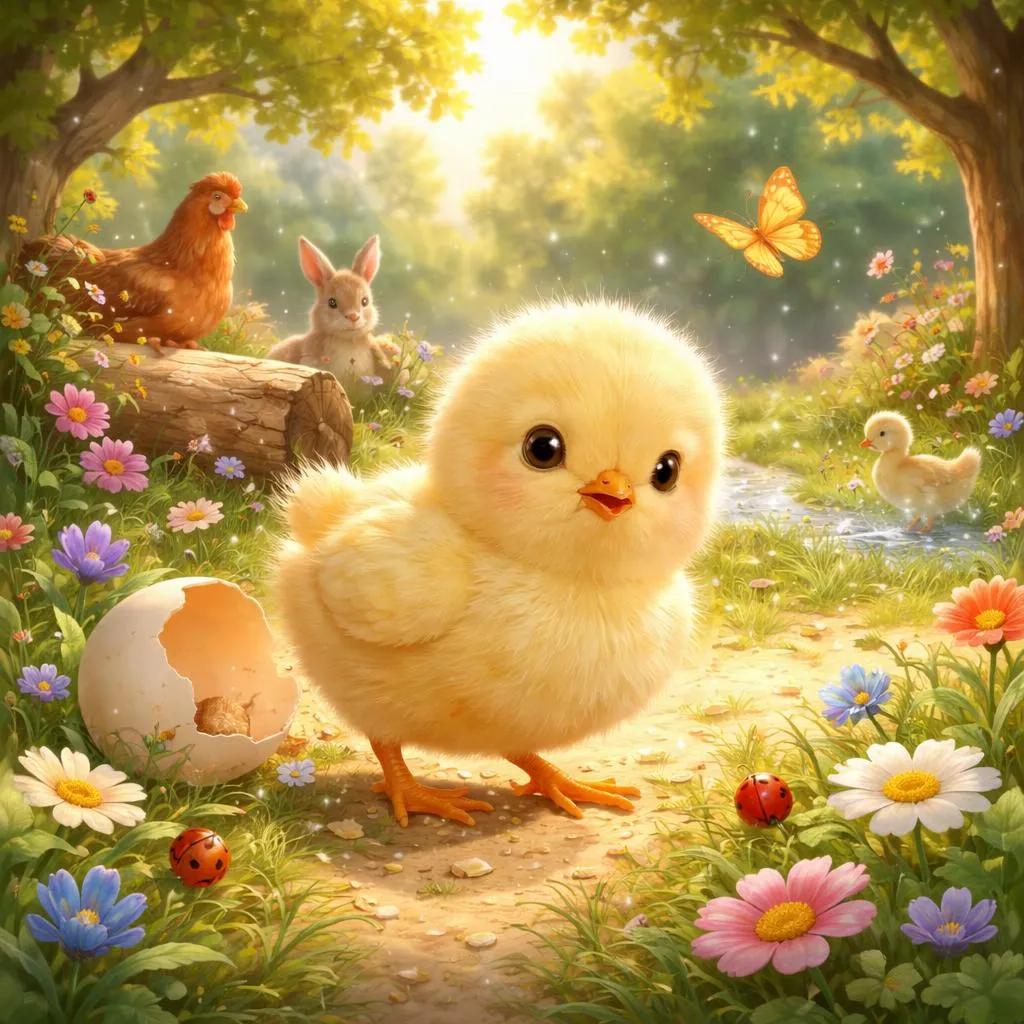

Hello, gentle teachers and curious young learners! Today we explore a delightful story about one of the cutest creatures on the farm. A tiny ball of yellow fluff that peeps and cheeps. It hatches from an egg and begins its journey. The little chick captures children's hearts everywhere. This story teaches about life cycles, farm animals, and new beginnings. It builds vocabulary and sparks wonder about nature. Let us discover this charming tale together. Let us follow a little chick as it grows and explores the world.
What Is The Little Chick Story? The Little Chick is a beloved children's story about a baby chicken. It begins with an egg sitting in a nest. The egg cracks open and a tiny chick emerges. The chick is soft and yellow. It peeps softly. It looks around at the big new world.
The story follows the chick as it meets other farm animals. It sees the cows in the field. It meets the ducks by the pond. It follows its mother hen. It learns to peck for food. It grows a little each day.
This story teaches children about life cycles. They learn that chicks come from eggs. They learn that mother hens care for their babies. They see how baby animals grow and change. The story connects children to nature and farm life.
The Story of The Little Chick Let us look at a simple version of the little chick story.
Once upon a time, on a cozy farm, a mother hen sat on her nest. She sat on five eggs, keeping them warm. She waited and waited.
One morning, she heard a tiny sound. Peep! Peep! One of the eggs began to crack. Tap, tap, tap! A tiny beak poked through. Then a little head appeared. Out came a little chick, all soft and yellow.
The little chick looked around. The world was so big! The sun was warm. The grass was green. The sky was blue.
Mother hen clucked softly. "Come, little one," she said. The little chick followed her.
They walked to the barn. The cows said, "Moo! Welcome, little chick!"
They walked to the pond. The ducks said, "Quack! Hello, little chick!"
They walked to the pigpen. The pigs said, "Oink! We are glad to meet you!"
The little chick felt happy. So many new friends!
Mother hen showed the little chick how to scratch the ground. Scratch, scratch, scratch. She showed how to find yummy seeds. Peck, peck, peck.
The little chick tried. Scratch, peck! Scratch, peck! Soon its belly was full.
As the sun began to set, mother hen called her chick. "Time to rest, little one." The little chick snuggled under her warm feathers. Safe and cozy, it fell asleep, dreaming of all the adventures tomorrow would bring.
Vocabulary Learning from the Story This sweet story teaches many useful words. Let us explore them together.
Farm words: The story introduces farm vocabulary. Farm, barn, field, pond. Children learn about places on a farm.
Animal words: The story names different farm animals. Chick, hen, cow, duck, pig. Children learn to identify these animals and their sounds. Moo, quack, oink.
Action words: The story uses action verbs. Hatch, crack, peep, follow, walk, scratch, peck, snuggle. These are common words children can use in their own speech.
Body words: The story mentions chick body parts. Beak, head, feathers. Children learn these new words.
Time words: The story uses "morning" and "sunset." Children learn about different times of day.
Emotion words: The story describes feelings. Happy, safe, cozy. Children learn to talk about emotions.
Phonics Points in the Story The story offers good phonics practice. Let us look at some important sounds.
Listen to the "ch" sound. It appears in "chick" throughout. The "ch" sound is made by pushing air through the teeth. Practice together. "Ch-ch-chick." This sound appears in many animal words.
Listen to the short "i" sound. It appears in "chick" and "little." The short "i" is in the word "it." Practice together. "Ch-ih-ck." "L-ih-ttle." This is a very common sound.
Listen to the "p" sound. It appears in "peep" and "peck." The "p" sound is a quick popping sound. Practice together. "P-p-peep." "P-p-peck."
The animal sounds are fun phonics practice. Moo, quack, oink. Each highlights different sounds.
Grammar Patterns in the Story The story contains useful grammar patterns for young learners.
Past tense verbs: The story uses past tense. "The egg cracked." "The chick looked around." "They walked to the barn." This tells what already happened.
Present tense dialogue: The animals speak in present tense. "Welcome, little chick!" "Time to rest, little one." This makes the story feel alive.
Repetitive patterns: The story uses repetition. "Scratch, scratch, scratch." "Peck, peck, peck." This builds rhythm and anticipation.
Descriptive sentences: The story uses simple descriptions. "The little chick was soft and yellow." "The sun was warm." Children learn to describe things.
Learning Activities for the Story The story lends itself to many activities. Here are some ideas to extend learning.
Chick Craft: Make little chicks from yellow pom-poms or cotton balls. Add googly eyes and orange paper beaks. Children can create their own little chick to accompany the story.
Egg Carton Chicks: Use egg carton cups to make chicks. Paint them yellow. Add eyes and beaks. This connects to the egg theme of the story.
Farm Animal Sort: Gather pictures of farm animals. Have children sort them by category. Animals with feathers in one group. Animals with fur in another. Animals that live in water in another.
Follow the Leader Game: Play a game like mother hen and chicks. One child is the mother hen. Others are chicks. They follow the hen around, copying her actions. Scratch, peck, flap wings.
Printable Materials for the Story Printable resources support learning from the story. They provide visual reinforcement.
Story Sequencing Cards: Create cards showing scenes from the story. The egg in the nest. The chick hatching. The chick meeting cows. The chick meeting ducks. Mother hen showing how to scratch. The chick sleeping under mother's wing. Children put them in order.
Farm Animal Flashcards: Create flashcards for all the animals in the story. Chick, hen, cow, duck, pig. Each card has a picture and the word. Include the sound each animal makes.
Coloring Pages: Create coloring pages showing scenes from the story. A little chick hatching from an egg. A mother hen with her chicks. Farm animals gathered together. Coloring reinforces the vocabulary quietly.
Chick Life Cycle Wheel: Create a wheel showing the life cycle. Egg, hatching chick, growing chick, adult hen. Children spin to see the stages.
Educational Games for the Story Games make learning from the story even more fun.
What Animal Am I?: Describe an animal from the story. "I have feathers. I say cluck. I have chicks. What am I?" Children guess "hen!" This builds descriptive language.
Animal Sounds Bingo: Create bingo cards with farm animal pictures. Play animal sounds. Children cover the animal that makes that sound. Moo covers cow. Quack covers duck.
Follow the Chicks Game: One child is the mother hen. Other children are chicks. The hen gives commands. "Chicks, scratch the ground!" "Chicks, peck for food!" "Chicks, follow me!" Chicks do the actions. This builds listening and movement.
Egg Matching Game: Create paper eggs cut in half with zigzag edges. On each half, put a letter or number. Children match the halves to complete the eggs. This builds matching skills.
New Animal Verses: Challenge children to add new animals to the story. What would the chick do next? Meet the horse? Meet the sheep? Create new adventures.
Through the charming story of the little chick, children learn about farm life and new beginnings. They discover how baby animals grow. They meet friendly farm animals and learn their sounds. The story builds vocabulary and comprehension. It sparks curiosity about nature. Every reading brings new discoveries about the little yellow chick and its world.