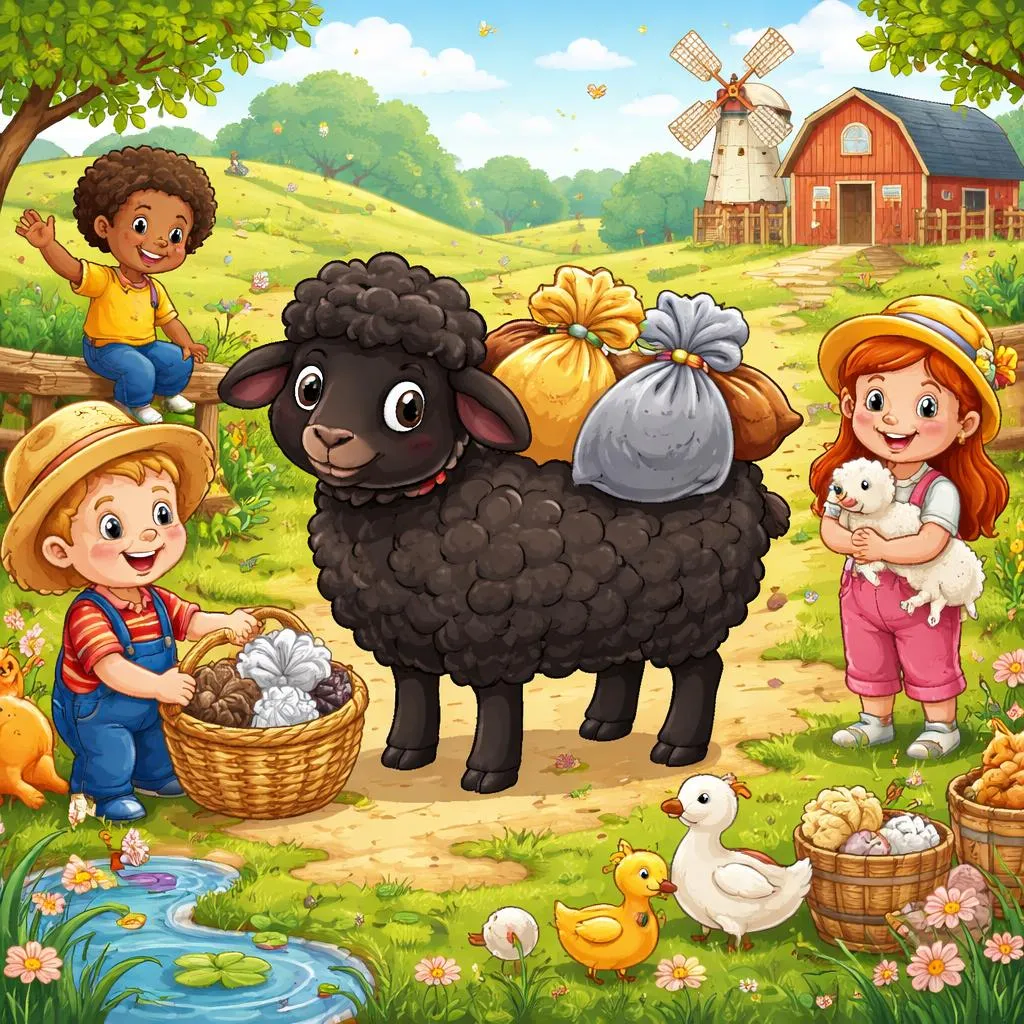

Hello, wonderful teachers and happy young singers! Today we explore one of the oldest and most beloved nursery rhymes. It asks a simple question to a sheep. The sheep has wool to share. The song is "Baa, Baa, Black Sheep." The baa baa black sheep with lyrics have been sung for centuries. Children love the animal sounds. They love the counting. They love the idea of sharing wool. This song teaches animal vocabulary and kindness. Let us discover this classic together. Let us meet the black sheep and see who gets the wool.
What Is the Baa Baa Black Sheep Rhyme? "Baa, Baa, Black Sheep" is a traditional English nursery rhyme. It dates back to the 1700s. The song asks a black sheep if it has any wool. The sheep answers yes. It has three bags full. One for the master, one for the dame, and one for the little boy down the lane.
The song has a simple, memorable tune. The same melody is used for "Twinkle, Twinkle, Little Star" and the "Alphabet Song." This makes it easy for children to learn. They already know the tune from other songs.
The rhyme teaches sharing and kindness. The sheep has plenty of wool. It gives some to important people. It also gives some to a little boy. This shows that everyone deserves to be warm. Even a simple sheep understands sharing.
The Lyrics of the Nursery Rhyme Let us look at the complete baa baa black sheep with lyrics. Here is the most common version.
Baa, baa, black sheep, Have you any wool? Yes sir, yes sir, Three bags full.
One for the master, One for the dame, And one for the little boy Who lives down the lane.
Baa, baa, black sheep, Have you any wool? Yes sir, yes sir, Three bags full.
Some versions add extra verses. Sometimes the sheep gives wool to other people. Sometimes the little boy thanks the sheep. The core verses remain the same. The question and answer pattern repeats.
Vocabulary Learning from the Song This simple song teaches many useful words. Let us explore them together.
Animal words: The song introduces "sheep." Children learn the name of this farm animal. They learn the sound sheep make: "baa, baa." This connects the animal to its sound.
Color words: The song mentions "black" sheep. Children learn that sheep can be different colors. Most sheep are white, but some are black. This teaches color vocabulary and diversity.
Question words: The song uses "have you any wool?" This teaches a question form. Children learn to ask if someone has something. They learn to answer with "yes sir."
People words: The song introduces "master," "dame," and "little boy." These are different people. Master might be the farmer. Dame might be his wife. The little boy is a child like them.
Quantity words: The song teaches "three bags full." Children learn to count to three. They learn that wool comes in bags. This builds number sense.
Phonics Points in the Rhyme The sheep song offers excellent phonics practice. Let us look at some important sounds.
Listen to the "b" sound. It appears in "baa" and "black" and "bags." The "b" sound is a quick popping sound. Practice together. "B-b-baa." "B-b-black." "B-b-bags." This sound appears throughout the song.
Listen to the "sh" sound. It appears in "sheep" and "share." The "sh" sound is a quiet, shushing sound. Practice together. "Sh-sh-sheep." This sound appears in many animal words.
Listen to the long "e" sound. It appears in "sheep" and "three." The long "e" says its name. Practice together. "Sh-ee-p." "Thr-ee." This sound appears in number words.
The rhyming words are simple. Wool and full. Dame and lane. This builds phonemic awareness. Children learn to recognize words that sound the same at the end.
Grammar Patterns in the Song The song contains useful grammar patterns for young learners.
Questions: The song asks a direct question. "Have you any wool?" This teaches question formation. Children learn to ask about possession.
Answers: The sheep answers politely. "Yes sir, yes sir." This teaches polite responses. Children learn to address others with respect.
Prepositions: The song uses "for" to show who gets the wool. "One for the master." This teaches how to show purpose or recipient.
Possession: The song shows that wool belongs to the sheep. The sheep gives it away. This teaches the concept of ownership and sharing.
Learning Activities for the Song The song lends itself to many activities. Here are some ideas to extend learning.
Sheep Craft: Make simple sheep from cotton balls and paper. Glue cotton balls onto a sheep shape. Count how many cotton balls each sheep has. This connects to the three bags of wool.
Wool Sorting: Provide different colors of yarn or cotton balls. Sort them by color. Black wool for the black sheep. White wool for other sheep. This builds color recognition and sorting skills.
Role Play: Act out the song. One child is the black sheep. Another is the person asking. Others are the master, dame, and little boy. Use bags to represent the wool. This brings the song to life.
Counting Bags: Make three small bags. Fill them with cotton balls. Count them together. "One bag for the master. Two bags for the dame. Three bags for the little boy." This practices counting.
Printable Materials for the Song Printable resources support learning from the song. They provide visual reinforcement.
Sheep Puppet Templates: Create printable templates for sheep puppets. Children color and cut them out. They attach them to craft sticks. Use them to act out the song.
Wool Counting Cards: Create cards showing different numbers of wool bags. One bag, two bags, three bags. Children match them to number cards. This builds counting skills.
Lyrics Poster: Create a colorful poster with the full lyrics. Add pictures of the sheep, master, dame, and little boy. Display the poster during singing time. This supports reading development.
Coloring Pages: Create coloring pages showing the black sheep with its three bags of wool. Children color the picture while listening to the song. This reinforces the vocabulary quietly.
Educational Games for the Song Games make learning from the song even more fun.
Baa Baa Memory: Place cards face down. Some cards show the sheep. Some show the master. Some show the dame. Some show the little boy. Children flip two cards and try to find matches. This builds memory skills.
Wool Hunt: Hide cotton balls around the room. Children search for them. When they find one, they put it in a bag. At the end, count how many wool balls each child found. This combines movement and counting.
Who Gets the Wool?: After singing, ask questions about the song. "Who gets the first bag?" "Who gets the second bag?" "Who gets the third bag?" Children answer using the vocabulary. This builds comprehension.
New Characters Game: Ask children to suggest new people who could get wool. "One for the teacher." "One for the baby." "One for the grandma." Sing new verses with these characters. This builds creativity and language skills.
Sheep Sound Game: Practice different animal sounds. Sheep say "baa." Cows say "moo." Pigs say "oink." Play a guessing game. Make an animal sound. Children guess which animal. This builds animal vocabulary.
Through this classic song, children learn about farm animals and sharing. They practice counting and polite language. They meet a friendly black sheep who gives away its wool. The baa baa black sheep with lyrics create warmth and kindness. The song builds vocabulary and phonemic awareness. It connects children to a tradition hundreds of years old. Every time they sing, they join generations of children who loved this same song. The black sheep becomes a friend who teaches about generosity.