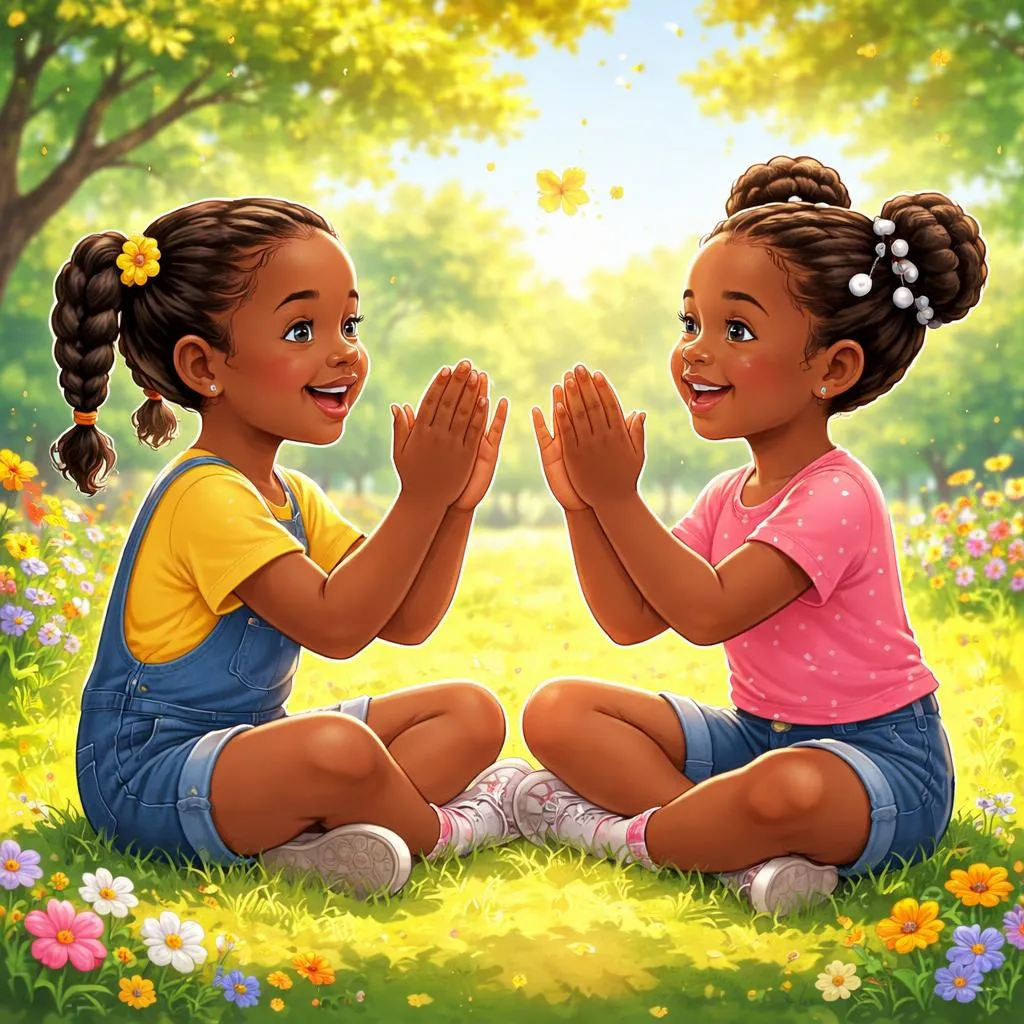

Hello, cheerful teachers and happy young learners! Today we explore a playful rhyme that children have enjoyed for generations. It involves clapping hands and silly questions. The mary mack rhyme is a favorite on playgrounds everywhere. Children love the rhythm and the funny answers. They love the challenge of clapping along. This rhyme builds coordination and listening skills. It teaches question and answer patterns. Let us discover this classic clapping game together. Let us meet Mary Mack and find out about her silver buttons.
What Is the Mary Mack Rhyme? "Miss Mary Mack" is a traditional children's clapping game and nursery rhyme. It tells a silly story about a girl named Mary Mack. She wears silver buttons down her back. She asks her mother for something. The answers are playful and imaginative.
The rhyme is usually performed with a clapping pattern. Two children face each other and clap hands in rhythm. The clapping pattern matches the words. This makes it a favorite playground activity.
The rhyme has been popular for many generations. Children pass it down to each other on schoolyards everywhere. The words have slight variations in different places. But the core story remains the same. Mary Mack, her silver buttons, and the funny questions and answers.
The Lyrics of the Nursery Rhyme Let us look at the complete mary mack rhyme lyrics. Several versions exist. Here is the most common version.
Miss Mary Mack, Mack, Mack, All dressed in black, black, black, With silver buttons, buttons, buttons, All down her back, back, back.
She asked her mother, mother, mother, For fifty cents, cents, cents, To see the elephants, elephants, elephants, Jump the fence, fence, fence.
They jumped so high, high, high, They reached the sky, sky, sky, And they never came back, back, back, Till the Fourth of July, July, July!
Some versions add more verses. They might ask about seeing other animals or doing other things. The pattern stays the same. Each line repeats the last word three times. This repetition makes the rhyme easy to learn and fun to say.
Vocabulary Learning from the Rhyme This playful rhyme teaches many useful words. Let us explore them together.
People words: The rhyme introduces "Mary Mack" and "mother." Children learn names and family words. Mary is a girl's name. Mother is another word for mom.
Clothing words: The rhyme mentions "dressed in black" and "silver buttons." Children learn words for what people wear. Buttons are on clothes. Black is a color.
Money words: The rhyme asks for "fifty cents." Children learn about money. Cents are coins. Fifty is a number. This introduces basic math vocabulary.
Animal words: The rhyme mentions "elephants." Children learn the name of this large animal. Elephants are big and strong. They can jump in the imagination.
Action words: The rhyme uses action verbs. Dressed, asked, see, jump, reached, came back. These are common words children use in daily conversation.
Time words: The rhyme mentions "the Fourth of July." Children learn about holidays. July is a month. The Fourth is a special day in America.
Phonics Points in the Rhyme The Mary Mack rhyme offers excellent phonics practice. Let us look at some important sounds.
Listen to the "m" sound. It appears in "Mary" and "Mack" and "mother." The "m" sound is made with closed lips. Practice together. "M-m-Mary." "M-m-Mack." "M-m-mother." This sound appears throughout the rhyme.
Listen to the "b" sound. It appears in "black" and "buttons" and "back." The "b" sound is a quick popping sound. Practice together. "B-b-black." "B-b-buttons." "B-b-back."
Listen to the short "e" sound. It appears in "cents" and "elephants" and "fence." The short "e" is in the word "red." Practice together. "C-e-nts." "El-e-phants." "F-e-nce."
The repeating words are key to this rhyme. Mack, Mack, Mack. Black, black, black. Back, back, back. This repetition builds phonemic awareness. Children learn to hear the same ending sounds repeated.
Grammar Patterns in the Rhyme The rhyme contains useful grammar patterns for young learners.
Repetition for emphasis: The rhyme repeats words three times. "Mack, Mack, Mack." This is a stylistic pattern. Children learn that repetition can add rhythm and fun to language.
Past tense verbs: The rhyme uses past tense. "She asked." "They jumped." "They reached." This tells a story about what already happened.
Questions: The rhyme implies questions. What did Mary ask for? What did she see? Children learn to understand question and answer patterns.
Prepositional phrases: The rhyme uses phrases like "down her back" and "to see the elephants." These show location and purpose. Children learn to describe where and why.
Learning Activities for the Rhyme The rhyme lends itself to many activities. Here are some ideas to extend learning.
Clapping Practice: Teach the clapping pattern that goes with the rhyme. Partners face each other. They clap their own hands. They clap right hands together. They clap their own hands. They clap left hands together. The pattern repeats through the rhyme. This builds coordination and social skills.
Mary Mack Puppets: Create simple puppets of Mary and her mother. Use them to act out the rhyme. Children can make the puppets ask and answer questions. This brings the characters to life.
Button Counting: Bring real buttons of different colors and sizes. Count them. Sort them by color. Talk about "silver buttons" from the rhyme. This connects the rhyme to math skills.
Elephant Movement: Pretend to be elephants while saying the rhyme. Walk heavily like elephants. Stretch arms like trunks. Jump high when the elephants jump. This adds physical fun to the language.
Printable Materials for the Rhyme Printable resources support learning from the rhyme. They provide visual reinforcement.
Mary Mack Coloring Page: Create a coloring page showing Mary Mack in her black dress with silver buttons. Children color her clothes and add button details. This reinforces the vocabulary.
Sequencing Cards: Create cards showing scenes from the rhyme. Mary dressed in black. Mary asking her mother. Elephants jumping. Elephants reaching the sky. Children put them in order.
Rhyme Poster: Create a colorful poster with the full lyrics. Add pictures of Mary, her mother, and the jumping elephants. Display it during rhyme time.
Button Flashcards: Create flashcards with different numbers of buttons. One button, two buttons, three buttons. Children count them and match to number cards.
Educational Games for the Rhyme Games make learning from the rhyme even more fun.
Mary Mack Memory: Place picture cards from the rhyme face down. Mary, mother, elephants, fence, buttons. Children flip two trying to find matches. This builds memory and vocabulary.
What Comes Next?: Say a line from the rhyme but leave out the last word. "Miss Mary Mack, Mack, ____." Children fill in "Mack!" This builds prediction and memory.
Button Sort: Gather buttons of different colors. Have children sort them into groups. Silver buttons in one group. Other colors in other groups. This builds classification skills.
Elephant Parade: Line up and march like elephants while saying the rhyme. When the elephants jump, everyone jumps. When they reach the sky, everyone reaches up. This combines movement with language.
New Verse Creation: Challenge children to create new verses for the rhyme. What other animals could Mary see? "To see the kangaroos, roos, roos, jump in the zoo, zoo, zoo!" This builds creativity and language skills.
Through this playful rhyme, children learn rhythm and coordination. They practice question and answer patterns. They build vocabulary and memory skills. The mary mack rhyme creates joy on playgrounds and in classrooms. Children love the clapping and the silly story. Every time they chant it, they build language skills and social connections. Mary Mack and her silver buttons become old friends.