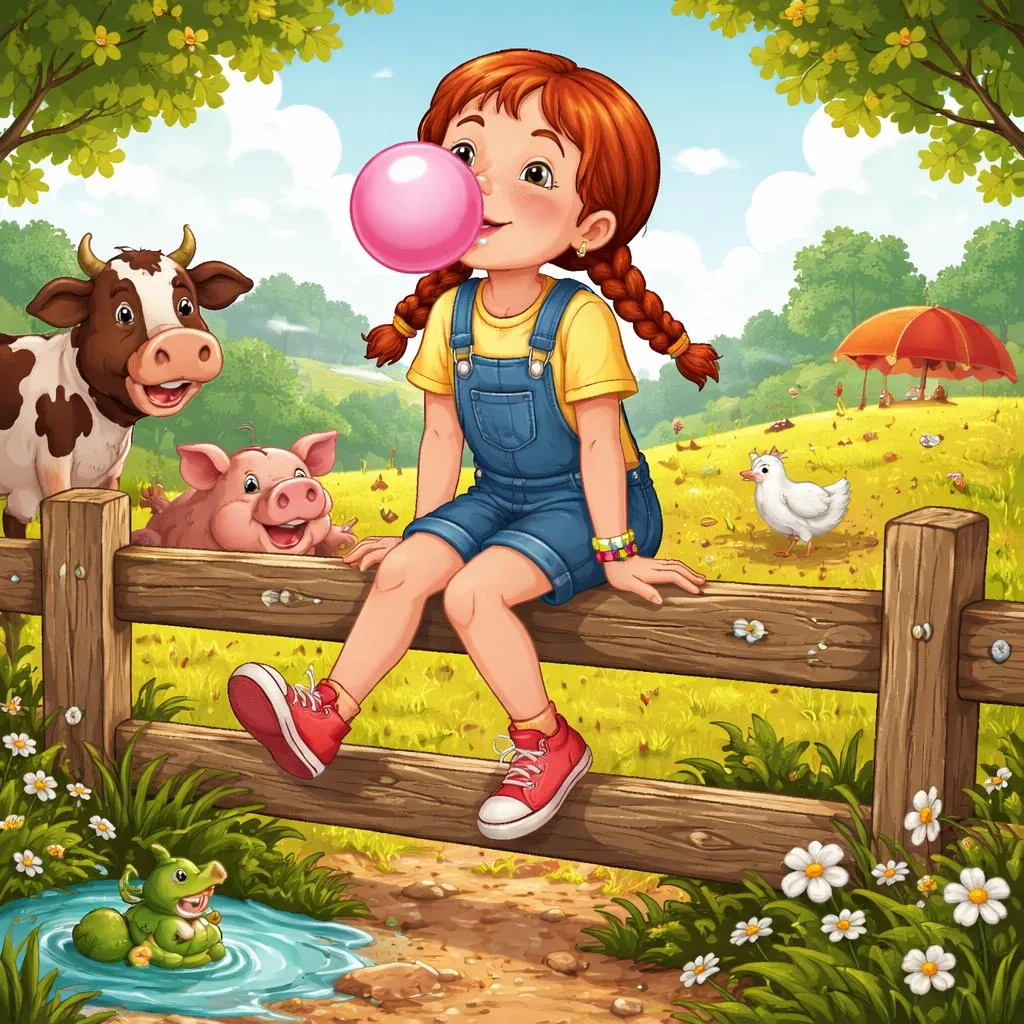

Hello, joyful teachers and playful young learners! Today we explore a delightfully silly song. It involves sitting on a fence, chewing gum, and a very hungry worm. The words "i was sitting on a fencepost chewing my bubblegum" begin a beloved children's camp song. Children love the growing suspense. They love the giant burp at the end. This song teaches sequencing and size words. It builds listening skills and laughter. Let us discover this funny song together. Let us meet Herman the Worm and see how big he grows.
What Is the I Was Sitting on a Fencepost Chewing My Bubblegum Rhyme? This song is commonly known as "Herman the Worm" or "The Worm Song." It is a popular camp song and children's tune. The song starts with someone sitting on a fencepost, chewing bubblegum and playing with a yo-yo. Then along comes Herman the Worm.
Herman is not an ordinary worm. He eats huge things. With each verse, he eats something bigger. A dog, a cat, a cow, a horse. With each bite, he grows larger. The children show how big by stretching their arms wider.
The song has a call and response pattern. The leader asks what Herman ate. The children respond with the answer. This interactive format keeps everyone engaged. The final verse ends with a giant burp that makes everyone laugh.
The Lyrics of the Nursery Rhyme Let us look at the complete lyrics beginning with i was sitting on a fencepost chewing my bubblegum. Here is the most common version.
I was sitting on a fencepost chewing my bubblegum, Playing with my yo-yo, when along came Herman. Herman the Worm! And he was this big. And I said, "Herman, what happened?" "I ate my dog."
I was sitting on a fencepost chewing my bubblegum, Playing with my yo-yo, when along came Herman. Herman the Worm! And he was THIS big. And I said, "Herman, what happened?" "I ate my cat."
I was sitting on a fencepost chewing my bubblegum, Playing with my yo-yo, when along came Herman. Herman the Worm! And he was THIS big. And I said, "Herman, what happened?" "I ate my cow."
I was sitting on a fencepost chewing my bubblegum, Playing with my yo-yo, when along came Herman. Herman the Worm! And he was THIS big. And I said, "Herman, what happened?" "I ate my horse."
I was sitting on a fencepost chewing my bubblegum, Playing with my yo-yo, when along came Herman. Herman the Worm! And he was THIS big. And I said, "Herman, what happened?" "I ate my... BURP!"
Each time, Herman gets bigger. Children show how big by stretching their arms wider apart. The final burp is the highlight. Everyone laughs and pretends to burp.
Vocabulary Learning from the Song This silly song teaches many useful words. Let us explore them together.
Action words: The song begins with action verbs. Sitting, chewing, playing. These are common words children use. They describe what someone is doing.
Object words: The song mentions specific objects. Fencepost, bubblegum, yo-yo. Children learn these concrete nouns. A fencepost is a wooden post in a fence. Bubblegum is gum you can blow bubbles with. A yo-yo is a toy that goes up and down on a string.
Animal words: The song introduces different animals. Dog, cat, cow, horse. Children learn to name these common animals. They learn that worms do not really eat these things, which adds humor.
Size words: The song teaches size comparison. "This big" shows how big Herman grows. Children use hand gestures to show size. They learn words like bigger and biggest.
Sound words: The song ends with a giant burp. This sound effect is hilarious to children. It teaches that words can represent sounds.
Phonics Points in the Rhyme The Herman song offers good phonics practice. Let us look at some important sounds.
Listen to the "b" sound. It appears in "bubblegum" and "big." The "b" sound is a quick popping sound. Practice together. "B-b-bubblegum." "B-b-big." This sound appears in many fun words.
Listen to the "g" sound. It appears in "gum" and "playing" and "dog." The "g" sound is made at the back of the throat. Practice together. "G-g-gum." "Play-ing-g." "Do-g-g."
Listen to the "h" sound. It appears in "Herman" throughout. The "h" sound is a soft breath sound. Practice together. "H-h-Herman." This sound appears in many names.
The repetitive nature of the song reinforces these sounds. Children hear them many times. They practice them through singing.
Grammar Patterns in the Song The song contains useful grammar patterns for young learners.
Past tense verbs: The song uses past tense. "I was sitting." "He ate my dog." This tells what already happened. Children learn to use past tense naturally through the song.
Present progressive: The song begins with "I was sitting" and "chewing" and "playing." These show actions in progress in the past. Children learn this pattern for describing ongoing past actions.
Questions and answers: The song uses a question and answer format. "Herman, what happened?" "I ate my dog." This teaches conversation structure. Children learn to ask and answer questions.
Repetition: Each verse follows the same pattern. This helps children predict language. They feel successful when they can join in.
Learning Activities for the Song The song lends itself to many activities. Here are some ideas to extend learning.
Size Stretching: As Herman grows, children stretch their arms wider and wider. Start with arms close together for small Herman. Each verse, stretch them farther apart. This physical activity connects to the concept of size.
Animal Actions: Act out each animal Herman eats. Bark like a dog. Meow like a cat. Moo like a cow. Neigh like a horse. This builds animal vocabulary and movement.
What Will Herman Eat?: Before each verse, ask children to guess what Herman will eat next. They can suggest their own animals. "Maybe he will eat a pig!" This builds prediction and creativity.
Burp Practice: Practice the final burp together. Make it as loud and silly as possible. Children love this part. It releases energy and ends the song with laughter.
Printable Materials for the Song Printable resources support learning from the song. They provide visual reinforcement.
Herman Growth Chart: Create a chart showing Herman growing. Each picture shows him bigger than before. Label each stage with what he ate. This makes the size progression visual.
Animal Flashcards: Create flashcards for all the animals mentioned. Dog, cat, cow, horse. Add other animals children suggest. Use these for vocabulary review.
Sequence Cards: Create cards showing each thing Herman ate. Dog, cat, cow, horse. Children put them in the order from the song. This builds sequencing skills.
Lyrics Poster: Create a colorful poster with the full lyrics. Add pictures of the fencepost, bubblegum, yo-yo, and Herman at different sizes. Display it during singing time.
Educational Games for the Song Games make learning from the song even more fun.
Herman's Lunch Guessing Game: One child thinks of an animal Herman might eat. Others ask yes or no questions to guess. "Is it a farm animal?" "Does it have fur?" "Is it bigger than a cat?" This builds questioning and reasoning skills.
Size Sorting: Collect pictures of different animals. Sort them by size. Small animals like mice and birds. Medium animals like dogs and cats. Large animals like cows and horses. This builds size comparison vocabulary.
Animal Sound Bingo: Create bingo cards with animal pictures. Play animal sounds. Children cover the animal that makes that sound. This builds listening and animal recognition.
What Did Herman Eat? Memory Game: Place animal cards face down. Children take turns flipping two cards. They try to find matches. When they find a match, they say, "Herman ate the dog!" This builds memory and language.
Create New Verses: Challenge children to create new verses for Herman. Choose new animals and make the sounds. "I ate my pig. Oink, oink!" This builds creativity and extends vocabulary.
Through this silly song, children learn about animals and size. They practice past tense verbs. They stretch and act and laugh together. The song beginning with i was sitting on a fencepost chewing my bubblegum creates joy and learning together. Children love the growing suspense and the giant burp at the end. Every verse adds a new animal and a new chance to stretch. Herman becomes a friend children want to visit again and again.