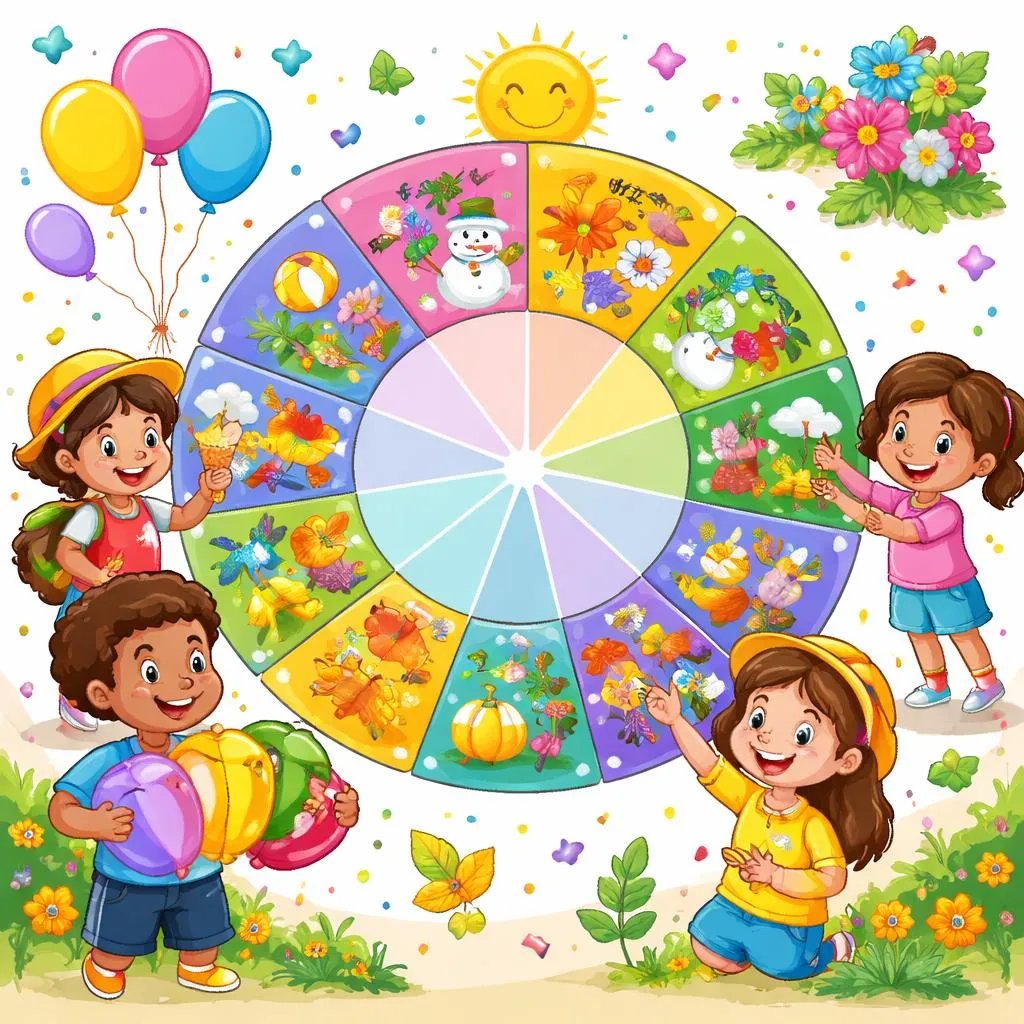

Time moves forward in a steady rhythm. The months mark this passage. Each month brings new weather, new holidays, and new experiences. Learning the 12 months helps children understand the cycle of the year. They can talk about when things happen. They can look forward to birthdays and special events. They can make sense of calendars and schedules. Teaching the months builds a foundation for understanding time. Let us explore how to guide young learners through this important vocabulary with engaging and effective methods.
What Are the 12 Months of the Year? The year divides into twelve parts. Each part is a month. The months follow a specific order. Children need to learn both the names and the sequence.
The twelve months in order: January February March April May June July August September October November December
January is the first month. December is the last month. Then the cycle begins again. This pattern repeats every year.
The months have different lengths. Most have thirty or thirty-one days. February is special. It has twenty-eight days usually. Every four years, it has twenty-nine. This is called a leap year. Children find this interesting.
The names come from old stories. January comes from Janus, a god with two faces. March comes from Mars, a god of war. June comes from Juno, a goddess. July and August come from Roman emperors. These stories add interest for curious children.
Meaning and Explanation of Month Names Each month name has a history. Understanding the meaning helps some children remember.
January: Named for Janus. He had two faces. One looked back at the old year. One looked forward to the new year. This makes sense for the first month.
February: Comes from a word meaning to clean. Long ago, people cleaned and prepared for spring during this month.
March: Named for Mars, the god of war. This month marked the start of the military season in ancient Rome. The weather improved enough for fighting.
April: The meaning is not certain. It may come from a word meaning to open. Flowers and buds open in April.
May: Named for Maia, a goddess of growth and spring. Plants grow quickly in May.
June: Named for Juno, a goddess of marriage and women. Many weddings still happen in June.
July: Named for Julius Caesar. He was a famous Roman leader. His birthday was in this month.
August: Named for Augustus Caesar. He was the first Roman emperor. He wanted a month named for himself too.
September: Comes from a word meaning seven. It was the seventh month in the old Roman calendar.
October: Comes from a word meaning eight. It was the eighth month in the old calendar.
November: Comes from a word meaning nine. It was the ninth month in the old calendar.
December: Comes from a word meaning ten. It was the tenth month in the old calendar.
The last four months still have names that mean seven, eight, nine, and ten. This confuses some children. Explain that the calendar changed long ago. The names stayed the same.
Categories of Months Months can be grouped in different ways. These categories help children understand the structure of the year.
Seasons: Each season has three months. Spring includes March, April, May. Summer includes June, July, August. Autumn includes September, October, November. Winter includes December, January, February.
School months: In many places, school runs from August or September through May or June. Summer months are vacation time.
Birthday months: Each child has a birthday month. Graphing class birthdays by month makes learning personal.
Holiday months: Some months have major holidays. December has Christmas. October has Halloween. February has Valentine's Day. These associations help children remember.
Number of days: Teach which months have thirty days and which have thirty-one. The knuckle trick helps. Make a fist. Knuckles are thirty-one month. Valleys are thirty days except February.
Daily Life Examples for Each Month Connecting months to real experiences makes them meaningful. Here are examples for each month.
January: The new year begins. It might be cold and snowy. Children return to school after winter break. New year resolutions begin.
February: Days are still short and cold. Valentine's Day brings hearts and cards. Groundhog Day predicts more winter or early spring.
March: Spring tries to arrive. Weather can be windy. Some places celebrate St. Patrick's Day with green clothes.
April: Rain showers appear. Flowers start blooming. Easter sometimes falls in April. April Fool's Day brings jokes and tricks.
May: Flowers bloom everywhere. Weather gets warmer. Mother's Day celebrates moms. Many schools have spring programs.
June: School ends for summer. Weather turns hot. Father's Day happens. Summer vacation begins.
July: Summer continues. It is very hot in many places. Independence Day in the United States brings fireworks and picnics.
August: Summer continues. Families take trips. Weather stays hot. School starts again in many places near the end of August.
September: School is in full swing. Weather cools slightly. Autumn begins. Leaves start changing color in some places.
October: Leaves turn beautiful colors. Weather becomes crisp. Halloween brings costumes and candy.
November: Weather grows colder. Leaves fall from trees. Thanksgiving happens in some countries. Families gather for meals.
December: Winter arrives. It might snow. Christmas and Hanukkah bring gifts and lights. The year ends with celebrations.
Use these examples in classroom discussions. Each month, highlight what makes it special. Children will learn the names because they connect to real experiences.
Printable Flashcards for the Months Flashcards provide visual support for learning the months. Here are ideas for creating and using them.
Basic Month Cards: Create twelve cards, one for each month. Write the name clearly. Add a simple picture representing that month. A snowflake for January. A heart for February. A flower for April. A flag for July. A pumpkin for October.
Number Cards: Create cards with the numbers one through twelve. Children match the number to the correct month. January is one. December is twelve.
Season Cards: Create four season cards. Children sort the month cards under the correct season. This builds understanding of the yearly cycle.
Holiday Cards: Create cards showing holiday symbols. A heart for Valentine's Day. A pumpkin for Halloween. A turkey for Thanksgiving. A tree for Christmas. Children match these to the correct month.
Weather Cards: Create cards showing weather. Snow, rain, sun, wind, leaves. Children match weather to the months where it occurs in your location.
Laminate the cards for durability. Keep them in a pocket chart. Use them daily during calendar time. The repetition builds familiarity and confidence.
Learning Activities for Month Names Active learning helps children remember the months. Here are activities that work well in the classroom.
Daily Calendar Time: Start each day with calendar routine. Name the current month. Identify the date. Talk about what month comes next. This consistent practice builds knowledge naturally.
Months of the Year Song: Many songs exist for learning the months. The tune of "Ten Little Indians" works well. Sing through the months in order. Add clapping or movements. The music helps the order stick in memory.
Month Bingo: Create bingo cards with the twelve months in different arrangements. Call out a month. Children cover it if they have it. The first to cover all twelve wins. This builds recognition of the written words.
Order Race: Give twelve children each a card with one month. They must arrange themselves in the correct order as quickly as possible. The class checks their work. This builds teamwork and reinforces sequence.
Missing Month Game: Place all twelve month cards in order on the board. Have children close their eyes. Remove one card. Children open their eyes and guess which month is missing. This builds attention to the sequence.
Month Associations: Say a holiday or event. "Valentine's Day." Children respond with the correct month. "February!" This connects months to real experiences.
Birthday Graph: Create a classroom graph showing birthdays by month. Count how many birthdays in each month. Which month has the most? The least? This makes learning personal and meaningful.
Educational Games for Deeper Learning Games make practice feel like play. Here are games specifically for learning the months.
Month Hopscotch: Draw a hopscotch grid outside. Write one month in each square. Children hop through the grid, saying the month as they land. This combines movement with learning.
Month Ball Toss: Stand in a circle with a soft ball. Toss the ball to a child and say "January." That child must say "February" and toss to someone else. Continue through the year. Drop the ball means starting over. This builds quick recall of the order.
Spin the Wheel: Create a wheel with the twelve months. Children take turns spinning. They must say the month where the spinner lands. For extra challenge, they name a holiday or event in that month.
Month Memory Match: Create two sets of month cards. Place them face down. Children take turns flipping two cards. They try to find matches. When they make a match, they say the month name aloud.
Before and After: Call out a month. Children name the month that comes before and the month that comes after. "Before March is February. After March is April." This builds understanding of sequence.
Month Detective: Give clues about a mystery month. "This month comes after June. It is very hot. It has a holiday with fireworks. What month is it?" Children guess July. They can create their own clues for friends.
Season Sort: Place four hoops on the floor, each labeled with a season. Give children month cards. They jump into the correct season hoop with their month. Check answers together.
Connecting Months to Writing Practice Writing the month names helps reinforce spelling and recognition. Here are writing activities.
Daily Journal: Each day, children write the date at the top of their journal page. They copy the month name from the board. This daily practice builds automaticity.
Fill in the Blank: Create sentences with missing month names. "My birthday is in _______." Children complete the sentence with the correct month.
Month Book: Create a class book about the year. Each page features one month. Children draw what happens in that month and write a simple sentence. "In January, it is cold." "In July, we see fireworks." Bind the pages together and read them often.
Rainbow Writing: Children write each month name using different colors. They trace over the letters multiple times. This builds muscle memory for spelling.
Month Word Search: Create simple word searches with the twelve month names. Children find and circle them. This builds visual recognition.
Calendar Making: Provide blank calendar templates for a month. Children fill in the dates. They write the month name at the top. This connects month names to real calendar use.
Using Technology for Month Learning Digital tools can support month name learning. Here are simple ways to incorporate technology.
Calendar Apps: Display a digital calendar on the classroom screen. Point to the current month. Show how the months change. Children can see the year visually.
Recording Station: Children record themselves saying the months of the year. They listen to the recording and check their pronunciation. This builds confidence and self-assessment.
Interactive Whiteboard Games: Many websites offer simple drag-and-drop games for ordering the months. Use these during center time for extra practice.
Morning Message: Display a daily message on the screen. Include the full date with month, day, and year. Read it together each morning. This connects reading practice to calendar learning.
Birthday Reminder Videos: Create a short video showing each child with their birthday month. Play it throughout the year. Children love seeing themselves and learning when birthdays happen.
The months structure our lives. They tell us when seasons change. They mark when holidays arrive. They help us count down to special days. Teaching the 12 months gives children language to participate in these time conversations. They can talk about when things happen. They can understand calendars. They can look forward to their own special month. With songs, games, and daily practice, the twelve names become second nature. The cycle of the year becomes a familiar friend. And that understanding brings comfort and confidence to young learners.