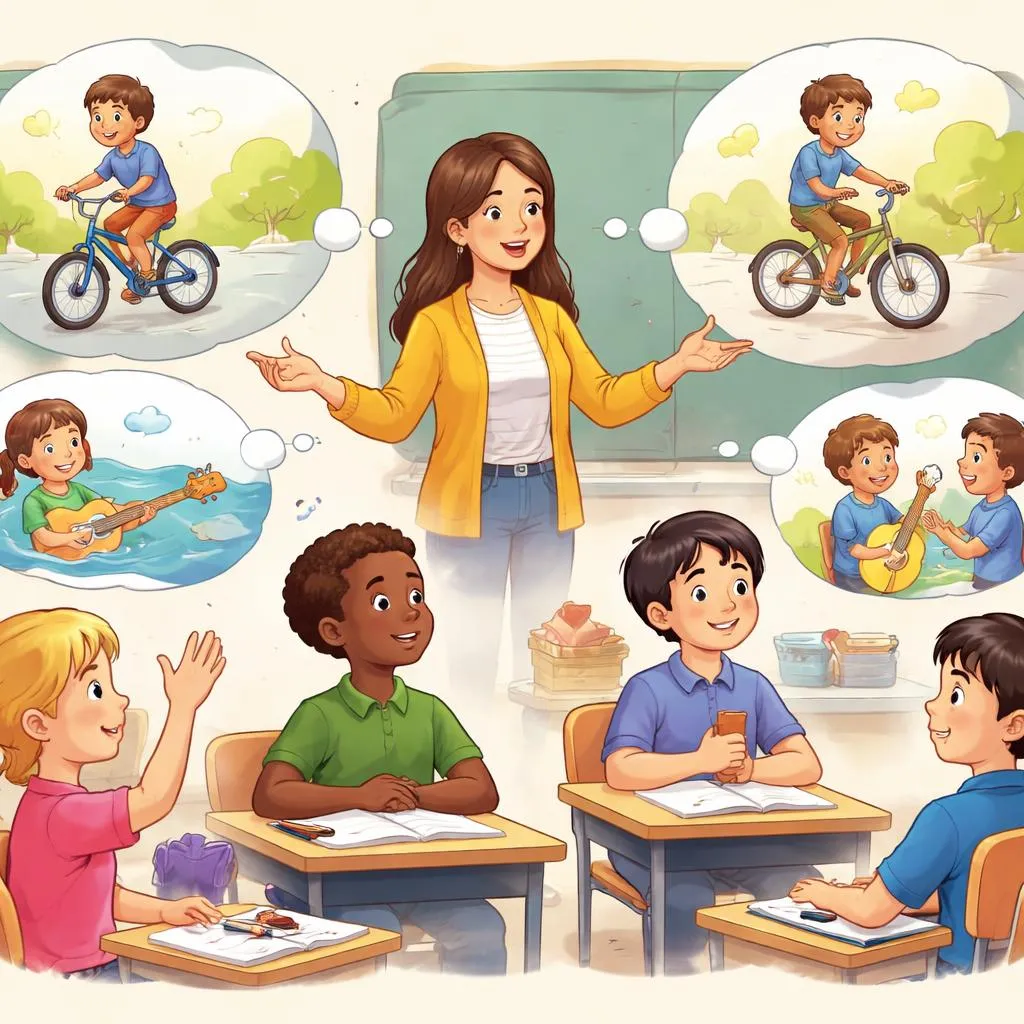

The verb "can" appears constantly in classroom language. Children use it to ask for permission. They use it to talk about what they are able to do. But when the moment passes and we talk about yesterday or last week, "can" must change. The past form of can helps children share memories and stories. It allows them to describe what they were able to do before. It opens doors to comparing then and now. Teaching this grammar point gives children the tools to talk about their own growth and experiences. Let us explore how to guide young learners through this important language step.
Meaning of the Past Form of Can The word "can" expresses ability or possibility in the present. When we move to the past, we use "could." This is the past form of can. The meaning stays similar. It still talks about ability or possibility. But the time shifts to the past.
Past ability: This describes something someone was able to do before. "When I was three, I could jump." The ability existed in the past. Maybe the child can still jump now. The focus is on the past time.
Past possibility: This describes something that was possible. "Yesterday, we could play outside because the rain stopped." The possibility existed at that past moment.
Past permission: This describes something that was allowed. "When Grandma visited, we could stay up late." The permission happened in the past.
The same word "could" covers all these meanings. Children need to understand the connection between "can" for now and "could" for then. Time markers like yesterday, last week, and when I was little help make this clear.
Conjugation of the Past Form of Can The verb "can" is a modal verb. This means it follows special rules. It does not add -s for he, she, or it. Its past form is "could" for every person. This simplicity helps young learners.
Past form for all subjects: I could You could He could She could It could We could They could
No exceptions exist. One word works for everyone. This is much easier than regular verbs that add -ed. Children gain confidence quickly with this pattern.
Negative past form: I could not You could not He could not She could not It could not We could not They could not
The contraction is "couldn't." This is very common in speech. "I couldn't find my shoe." "She couldn't come to the party." Children hear this often and can learn to use it naturally.
The past form does not change for questions either. "Could you swim?" "Could he read?" The word "could" moves to the front. The main verb stays in base form.
Present Tense of Can Before teaching the past, children need a solid understanding of the present. The present tense of "can" expresses current ability, possibility, or permission.
Present ability examples: I can tie my shoes. You can sing very well. He can count to twenty. She can write her name. It can run fast. We can play outside. They can speak English.
Present permission examples: You can go to the bathroom. She can have a snack now. We can play after work.
Present possibility examples: It can rain today. We can see the mountains from here.
The negative is "cannot" or "can't." "I can't find my pencil." "She can't come today."
Practice present tense sentences daily. Use real situations in the classroom. When a child finishes work, say "You can play now." When someone shows a skill, say "Look! She can do it." This builds a strong foundation for introducing the past.
Past Tense of Can with Examples Now we introduce "could" for the past. Clear time markers help children understand when to use it.
Past ability examples: When I was a baby, I could not walk. Now I can. Last year, she could write her name. Before school started, he could count to ten. My little sister could not talk. Now she says many words. When Grandpa was young, he could run very fast. We could climb that tree before it got too tall. They could speak French when they lived in Paris.
Past possibility examples: Yesterday, we could play outside because it was sunny. Last week, we could visit the library after school. During vacation, we could sleep late every day. When the pool opened, we could swim every afternoon.
Past permission examples: When we finished our work, we could choose a game. At the birthday party, children could have two pieces of cake. During free time, we could draw or read books. When Mom said yes, we could have a friend over.
Notice how each sentence includes a clear past time marker. This helps children understand when the action happened. The word "could" signals that the ability or permission existed before now.
Comparing then and now: When I was four, I could not read. Now I can read. Last year, she could not ride a bike. Now she can. Before, we could not reach the shelf. Now we can.
This comparison is very natural for children. They love seeing how much they have grown and learned.
Future Tense with Can Talking about the future with "can" requires different helping words. "Can" itself does not have a future form. We use "will be able to" for future ability.
Future ability examples: Next year, I will be able to read harder books. After practice, she will be able to ride without training wheels. When we learn more, we will be able to speak English better. Someday, you will be able to drive a car.
For future possibility or permission, we often use "can" with a future time word. The present form works for near future events.
Future with present "can": Tomorrow, we can go to the park. Next week, you can bring a toy for show and tell. After lunch, children can play outside. On Saturday, we can stay up late.
Young learners understand this with clear time references. "Tomorrow" and "next week" signal future. The meaning stays clear even though we use the present form.
Future negative: I will not be able to come to the party. She won't be able to finish today. We will not be able to play if it rains.
These forms come later. Master the past first. Then introduce future expressions gradually.
Questions with the Past Form of Can Forming questions with "could" follows the same pattern as "can." Move "could" to the beginning of the sentence.
Yes or no questions: Could you read when you were four? Could she swim last summer? Could they come to the party yesterday? Could he find his lost toy? Could we play outside after school? Could it really snow in April?
Information questions: What could you do when you were little? Where could we go after school yesterday? Who could help with the project? How many words could you spell last week? When could she first walk? Why could he not come to school?
Answer practice: Yes, I could. No, I could not. Yes, she could swim. No, they could not come. Yes, we could play. No, it could not snow.
Practice these question patterns in conversations. Ask children about their past abilities. What could they do as babies? What could they not do? This personal connection makes grammar meaningful.
Interview activity: Children interview each other about past abilities. Provide question cards. "Could you ride a bike two years ago?" "Could you write your name in kindergarten?" Partners ask and answer. Share interesting answers with the class.
Other Uses of Could "Could" has other important uses beyond the past of can. Children will encounter these as they progress in English.
Polite requests: Could I have a pencil, please? Could you help me carry this? Could we play outside now? Could she join our group?
This use is very common in classroom language. It sounds more polite than "can." Teaching children to ask with "could" builds good communication habits. It shows respect and kindness.
Polite suggestions: You could try the blue crayon instead. We could read this book together. She could ask the teacher for help. They could come over after school.
These suggestions offer ideas without commanding. Children learn to offer help politely. They learn to make suggestions without being bossy.
Conditional meaning: If we finished early, we could play a game. If it stopped raining, we could go outside. If she practiced every day, she could get better. If we had more time, we could visit the museum.
These sentences talk about possibilities that depend on something else. This is more advanced. Introduce it after children master the basic past meaning. Use simple examples with clear conditions.
Learning Tips for Teaching Past Form of Can Teaching grammar to young learners works best with specific strategies. Here are tips for introducing the past form of can effectively.
Use time lines: Draw a simple line on the board. Mark "now" in the middle. Mark "yesterday" on the left. Mark "tomorrow" on the right. Place "can" at now. Place "could" at yesterday. This visual helps children understand the time difference.
Connect to personal experience: Ask about things children could do as babies. Bring in baby photos if possible. Talk about first steps, first words, first time riding a bike. This makes the grammar personal and memorable.
Use gestures: For present "can," point to now. For past "could," point backward over the shoulder. Use these gestures consistently. Children will associate the movement with the time meaning.
Contrast with can't: Show the difference between "I can't do this now" and "I couldn't do it before." This highlights progress and growth. Children love seeing how much they have learned.
Use stories: Read simple picture books that talk about past abilities. "When I was Little" by Jamie Lee Curtis works well. Pause and point out the "could" and "couldn't" examples.
Repeat often: Use "could" naturally throughout the day. "Yesterday we could play outside." "Last week you could not write that word." Frequent exposure helps the form sink in.
Correct gently: When children say "can" for past, simply repeat correctly. "Yes, yesterday I could play." Do not make a big fuss. Gentle modeling works better than explicit correction.
Educational Games for Practice Games turn grammar practice into play. Here are games for practicing the past form of can.
Ability Memory Chain: Start a memory chain about past abilities. The first child says "When I was three, I could walk." The next says "When I was three, I could walk and I could say Mama." Continue adding abilities. This builds memory and past tense practice together.
Then and Now Sorting: Prepare picture cards showing abilities. Some show babies doing things. Some show older children. Children sort cards into "could do as baby" and "could do later." Discuss the differences.
Teacher Says Past Version: Play "Teacher Says" but use past abilities. "Teacher says show something you could do last year." Children act out past actions. This combines movement with grammar practice.
Mystery Abilities: One child thinks of an ability they had in the past. Others ask yes or no questions to guess. "Could you do it outside?" "Could you do it with your hands?" This practices question formation and past tense together.
Story Building: Start a story about the past. "Last week, we could..." Children take turns completing the sentence. Each child adds a new idea. "We could play in the rain." "We could stay up late." This builds creativity and grammar together.
Ability Bingo: Create bingo cards with past abilities. "Ride a bike." "Swim." "Write my name." Children ask classmates "Could you ride a bike when you were four?" They mark squares when someone says yes. This builds question practice and social interaction.
Before and After: Give children two cards. One says "before." One says "now." Call out sentences. "I could not read." Children hold up the correct card. "I can read." They hold up now card. This practices choosing between past and present.
The past form of can opens new worlds for young learners. They can share memories. They can talk about how they have grown. They can compare then and now. This grammar point connects directly to their own lives and experiences. With patient teaching and plenty of practice, "could" becomes a natural part of their English. They use it to tell stories, ask politely, and imagine possibilities. And that is real communication.