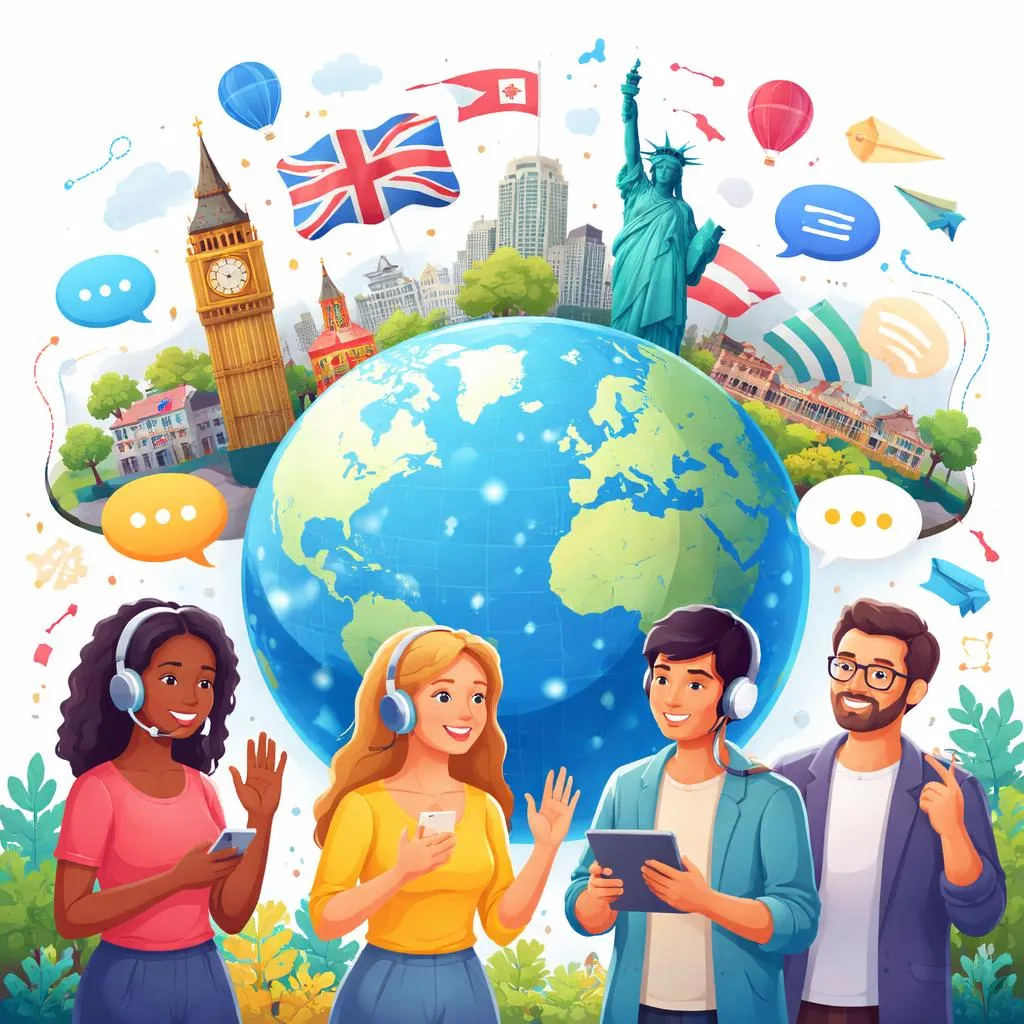

English is a language used around the world. It is spoken by many people every day.
Some people speak English as a first language. Others learn it as a second or third language.
English connects people. It helps communication across countries.
Understanding why English is a language and how it works helps learners feel more confident.
What Does It Mean to Say English Is a Language
A language is a system. It uses sounds, words, and rules.
English has its own sounds. It has its own grammar.
It also has vocabulary. Vocabulary grows all the time.
When we say English is a language, we mean it is a complete system used to share meaning.
English as a Natural Language
English is a natural language. People developed it over time.
It was not invented at once. It changed slowly.
People used English to talk, to tell stories, and to share ideas.
Natural languages grow with people. English continues to grow today.
Where English Comes From
English did not appear suddenly. It has a long history.
It began in parts of Europe. Early forms sounded very different.
Over time, English changed. New words entered the language.
This history explains why English spelling feels complex.
English and Its Language Family
English belongs to a language family. It is part of the Germanic family.
This family includes German and Dutch. They share some patterns.
Later, English borrowed words from other language families.
This mixing made English rich. It also made it flexible.
English and Vocabulary Growth
English has a very large vocabulary. This is one special feature.
Words come from many sources. Latin words appear often.
French words appear often too. Old Germanic words remain.
This mix gives English many synonyms. Learners can choose tone and style.
English as a Global Language
English is used worldwide. It is a global language.
People use English for travel. They use it for study.
It is common in science. It is common in technology.
Global use makes English powerful. It also makes it practical.
English as a Bridge Language
English often acts as a bridge. People with different languages use it.
Two speakers may not share a native language. But they may share English.
This helps communication. It reduces barriers.
A bridge language connects people. English often fills this role.
English and Communication
Communication is the goal of language. English supports communication.
People use English to ask questions. They use it to give information.
They also use it to express feelings. Language carries emotion.
English supports many communication styles. Formal and informal both exist.
English and Daily Life
English appears in daily life. Signs use English.
Music uses English. Movies use English.
Social media uses English often. The internet spreads it.
Seeing English often builds familiarity. Familiarity supports learning.
English and Education
English is important in education. Many schools teach it.
Books are written in English. Courses are taught in English.
Students learn English to access knowledge. Knowledge opens opportunities.
Education spreads English further. This creates a cycle.
English and Science
Science uses English widely. Research papers appear in English.
Scientists share results in English. This allows global exchange.
Using one language helps clarity. Clarity supports progress.
English helps science move faster. Shared language matters.
English and Technology
Technology uses English often. Software uses English terms.
Programming languages use English words. Instructions use English.
This does not mean English is better. It means it became common.
Understanding English helps access technology. Access supports participation.
English and Business
Business communication often uses English. Meetings may happen in English.
Emails use English. Contracts use English.
Shared language reduces misunderstanding. It supports cooperation.
English helps global business function. This increases its importance.
English and Travel
Travelers use English often. It helps in airports.
Hotels use English. Maps use English.
Knowing basic English phrases helps travel. It reduces stress.
English supports mobility. Mobility supports connection.
English and Culture
Language and culture connect. English carries culture.
Books tell stories. Songs share emotion.
Movies show values. Media spreads ideas.
Learning English opens cultural doors. It allows deeper understanding.
English and Identity
Language shapes identity. English can be part of identity.
Some people feel proud speaking English. Others feel challenged.
Learning English does not replace identity. It adds another layer.
Multilingual identity is common today. English fits into this picture.
English and Variation
English is not one single form. Many varieties exist.
British English differs from American English. Australian English sounds different too.
Vocabulary can change. Pronunciation can change.
These differences are normal. Variation shows living language.
English and Accents
Accents are part of language. English has many accents.
Accent does not equal ability. It shows background.
Listening to different accents builds skill. Skill supports understanding.
Accent diversity makes English rich. It reflects global use.
English Grammar as a System
English grammar has rules. These rules guide meaning.
Word order matters. Tense matters.
Grammar helps clarity. It reduces confusion.
Learning grammar takes time. Practice helps patterns feel natural.
English and Simplicity
Some parts of English feel simple. Nouns do not have gender.
Verb endings are limited. Articles are few.
This helps beginners. Early progress feels possible.
Simple systems support confidence. Confidence supports motivation.
English and Complexity
Other parts of English feel complex. Spelling can be tricky.
Pronunciation does not always match spelling. This challenges learners.
Irregular verbs exist. Idioms exist.
Complexity is normal in natural languages. Exposure helps manage it.
English and Learning Order
Learners often start with vocabulary. Words come first.
Then grammar appears. Structure follows.
Listening helps pronunciation. Speaking builds confidence.
English learning works step by step. No rush is needed.
English and Children
Children learn English easily. Their brains adapt quickly.
Songs help learning. Stories help memory.
Repetition works well. Play supports language growth.
Early exposure builds comfort. Comfort supports fluency.
English and Adult Learners
Adults learn differently. They use logic.
Adults ask why. They want structure.
English offers patterns. Patterns help understanding.
Adults succeed with patience. Consistency matters.
English and Vocabulary Learning
Vocabulary grows over time. No one knows all words.
Learning common words first helps. Frequency matters.
Using words in context helps memory. Context supports recall.
Vocabulary learning never ends. This is normal.
English and Listening Skills
Listening is important. English sounds vary.
Stress and rhythm matter. Intonation carries meaning.
Listening often improves skill. Exposure builds recognition.
Understanding grows slowly. Progress becomes visible.
English and Speaking Skills
Speaking feels challenging. Mistakes are normal.
English speakers understand variation. Communication matters more than perfection.
Confidence grows through use. Use builds fluency.
Fluency comes with time. Patience supports success.
English and Reading
Reading supports learning. Text shows structure.
Reading builds vocabulary. It shows grammar patterns.
Simple texts work best at first. Difficulty increases gradually.
Reading supports independence. Independent learners grow faster.
English and Writing
Writing organizes thought. English writing shows clarity.
Sentence structure matters. Punctuation matters.
Writing practice improves accuracy. Accuracy supports confidence.
Writing reinforces learning. It strengthens memory.
English and Learning Motivation
Motivation matters. Purpose helps.
People learn English for different reasons. Work, travel, study, connection.
Clear goals support effort. Effort leads to progress.
Positive experience matters. Enjoyment supports persistence.
English as a Tool
English is a tool. It helps communication.
It opens access. It connects people.
Tools are learned through use. Use brings improvement.
English works best when used. Practice matters.
English and Long-Term Learning
Learning English takes time. There is no finish line.
Skills grow gradually. Comfort increases.
Understanding deepens. Expression improves.
Long-term exposure works best. Consistency matters.
English Is a Language, Not a Test
English is not just exams. It is communication.
Mistakes do not mean failure. They show learning.
Using English matters more than perfection. Meaning comes first.
Language lives through use. English lives in people.
English in the Modern World
The modern world is connected. English supports this connection.
Online spaces use English often. Global discussion happens in English.
This does not replace other languages. It adds another option.
Multilingual worlds are stronger. English is one part of that world.
English as a Living Language
English changes constantly. New words appear.
Old words change meaning. Slang develops.
This shows English is alive. Living languages adapt.
Learning English means joining this change. Change is natural.
English and the Learning Journey
Every learner starts somewhere. No level is too small.
Alphabet comes first. Words follow.
Sentences grow. Confidence grows.
English learning is a journey. Journeys take time.
English is a language used to connect, to share ideas, and to understand the world.
It is not perfect. It is not simple.
But it is flexible, powerful, and open.
With steady practice and patience, English becomes less foreign, more familiar, and more useful every day.