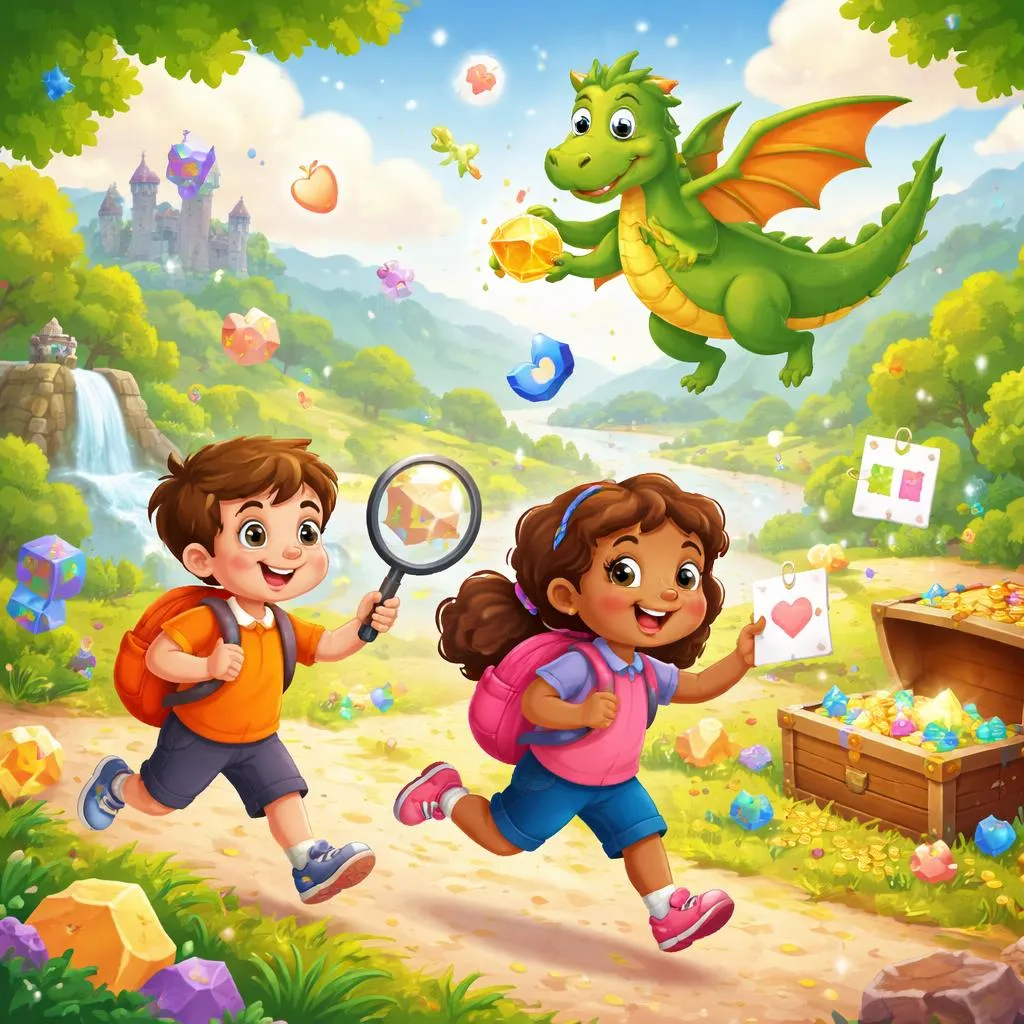
Exciting English Learning Adventures: Join the Dragon Hunt for Vocab and Phonics Fun What is a Dragon Hunt? A dragon hunt is a playful, imaginative adventure activity.It follows clues to search for a friendly, mythical dragon.It works perfectly for interactive English learning for kids. This activity blends fantasy and language practice.It keeps young learners engaged while building English skills.It can be played indoors, outdoors, or in classroom settings. A dragon hunt turns vocabulary and grammar into a quest.No real dragons are used.It focuses on fun, creativity, and positive learning. It fits well into circle time, homeschool lessons, or family play.The theme sparks curiosity and makes learning memorable.Every step of the hunt teaches new English naturally. Core Vocabulary for the Dragon Hunt Adventure words bring the dragon hunt to life.Hunt means searching carefully for something special.Dragon is a magical, fire-friendly mythical creature. Clue is a hint that helps find a hidden object or path.Map shows directions and locations for the hunt.Treasure is a special reward found at the end. Action words add movement to the hunt.Search means look carefully in all places.Follow means go after a path or clue. Find means discover something hidden.Run means move quickly with energy.Jump means push off the ground with both feet. Place words set the hunt scene.Forest is an area with many trees and plants.Cave is a dark hollow space in rocks or hills. Castle is a big stone building from old stories.Bridge connects two areas over water or ground. Descriptive words make the hunt vivid.Shiny means bright and sparkling.Mysterious means strange and exciting to explore.Brave means ready to face new adventures. Phonics Points in Dragon Hunt Vocabulary Focus on the long “a” sound first.Words like dragon, hunt, map, castle use clear vowel sounds.Practice stretching the vowel sound slowly. The “dr” consonant blend starts the word dragon.Say the blend together: dr‑ag‑on.Clap the syllables to build phonemic awareness. Short “u” sound appears in hunt and fun.These words rhyme and create a playful rhythm.Chant them together during the hunt. The “ch” blend is in clue and chase.Make a soft breath sound for the “ch” start.Link the sound to actions in the dragon hunt. Syllable practice supports early reading skills.Drag‑on has two syllables.Ad‑ven‑ture has three syllables.Clap each syllable while saying the word. Grammar Patterns for Dragon Hunt Play Simple present tense describes hunt actions.Search the path. Follow the clue.These short commands are easy to repeat and use. Present continuous tense shows ongoing action.Looking for the dragon. Following the map.It describes what is happening during the hunt. Imperative sentences guide the hunt.Find the next clue. Open the treasure box.These clear sentences work well for game instructions. There is / there are describe hidden items.There is a clue under the rock.There are three signs by the bridge.This pattern builds descriptive speaking skills. Prepositions of place show locations.Under the leaf. Behind the tree.On the bridge. Near the cave.These small words are key for giving directions. Dragon Hunt Learning Activities Create a paper dragon hunt map together.Draw simple locations: forest, cave, castle, bridge.Mark clue spots with small stars or circles. Label each area with simple English words.Practice reading the labels before starting the hunt.Use the map to follow the path step by step. Make paper clues for the dragon hunt.Write one short sentence on each clue card.Use words from the hunt vocabulary list. Hide clues in safe, easy-to-reach spots.Read each clue aloud when found.Move to the next location together. Act out the dragon hunt with movements.Stomp like walking through a forest.Creep like approaching a quiet cave. Flap arms like flying near a castle.Pretend to hold a treasure box at the end.Movement strengthens word memory and focus. Rewrite simple hunt sentences together.Change place words to make new clues.Replace “under the rock” with “behind the tree”.This builds grammar flexibility and creativity. Printable Materials for Dragon Hunt Print a full-color dragon hunt map.Include labeled locations and blank clue spaces.Laminate it to use for many hunts. Create vocabulary flashcards for the hunt.One side shows a colorful picture.The other side has the English word. Add a simple example phrase on each flashcard.Use the cards for quick review before the hunt.Take them along as a reference during play. Design clue card templates for writing.Leave blank lines for short hunt sentences.Add small dragon or star borders for fun. Make a dragon hunt certificate printable.Add lines for a learner’s name.Write “Completed the Dragon Hunt Adventure”.Use it as a positive reward at the end. Print coloring pages of hunt scenes.Include dragon, map, clue, castle, and treasure.Add simple words next to each image.Coloring reinforces word recognition quietly. Educational Games for the Dragon Hunt Play dragon hunt vocabulary bingo.Make bingo cards with hunt images and words.Call out words and mark matching squares. The first to mark a line wins a small sticker.This game builds listening and recognition skills. Play clue charades for the dragon hunt.Pick a vocabulary card without showing it.Act out the word for others to guess. Guess words like hunt, map, cave, or treasure.Acting out words builds confidence and recall. Play phonics dragon roll.Use a die with phonics sounds or blends.Roll the die and say a hunt word with that sound. Examples: dr‑ for dragon, ch‑ for clue.This game targets phonics skills in a playful way. Play treasure box sentence build.Put word cards in a small treasure box.Pull out words and make hunt sentences. Make short, clear sentences.Rearrange words to try new patterns.This game builds grammar and sentence structure. A dragon hunt turns every English lesson into a joyful adventure.Learners absorb vocabulary, phonics, and grammar without pressure.The fantasy theme keeps attention high and motivation strong.Teachers and parents can adapt the hunt for any skill level.Short sentences and repeated words build steady language progress.Every clue found and every word said adds confidence.The dragon hunt creates warm, positive memories of learning English.Young learners look forward to each new quest and each new word.Imagination grows alongside language skills in every hunt.
Exciting English Learning Adventures: Join the Dragon Hunt for Vocab and Phonics Fun
