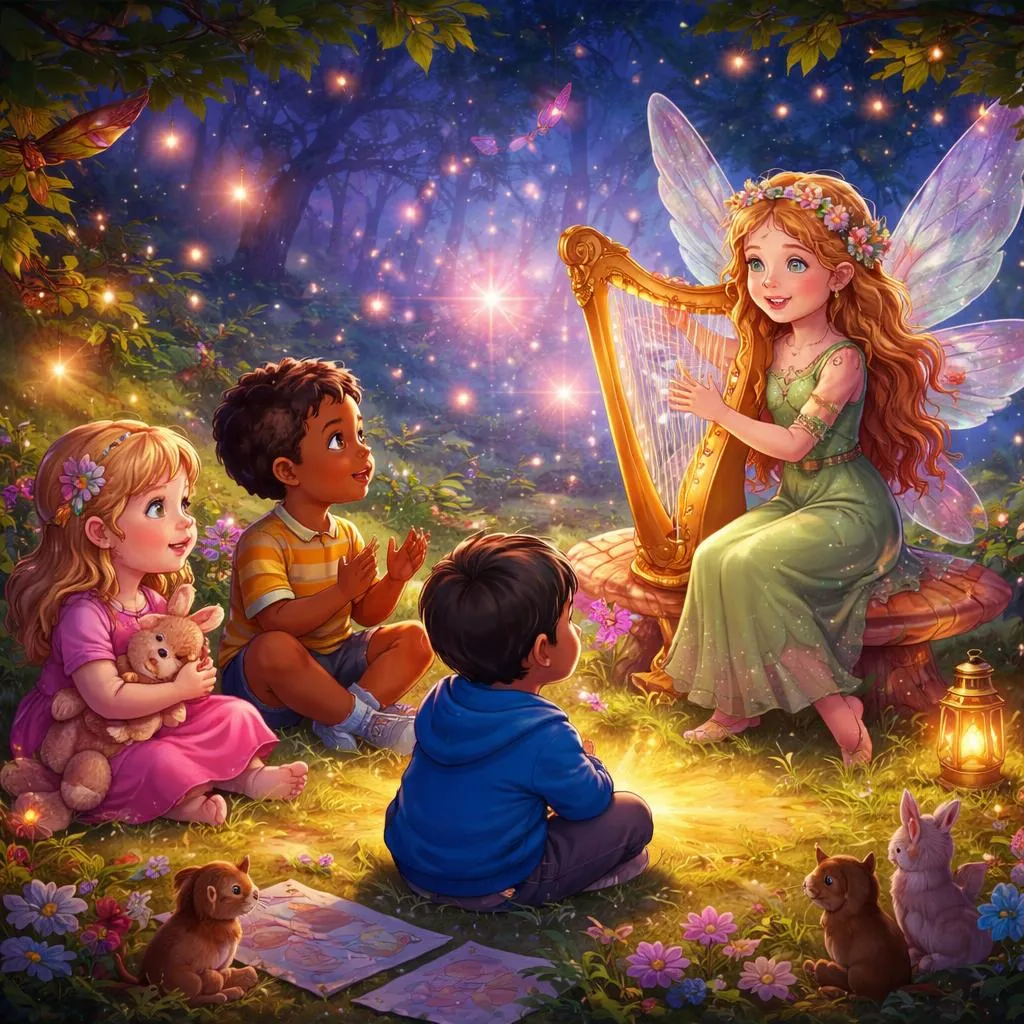

What is the rhyme?
Fairy song refers to songs or rhymes about fairies and magical worlds. These songs often use gentle rhythm and imaginative images. Teachers use fairy-themed songs to introduce fantasy vocabulary and creative language.
In early English learning, fairy songs encourage imagination and emotional expression. They also support listening skills and pronunciation practice. Fantasy themes help learners engage deeply with language.
The lyrics of nursery rhymes
A simple example of a fairy song can be used in class.
Twinkle, twinkle, fairy light, Dancing softly in the night. Fly so high and touch the star, Shining bright from near and far.
These lyrics use rhyme and rhythm. They repeat sounds and patterns that support memory. Teachers can adapt lyrics to classroom themes and vocabulary.
Vocabulary learning
Fairy songs introduce imaginative and descriptive vocabulary. Fairy, light, star, night, fly, dance, and shine are common words.
Fairy describes a magical small being with wings. Light refers to brightness. Star refers to a bright object in the sky. Fly describes movement in the air. Dance describes rhythmic movement.
Teachers can connect these words to pictures and gestures. Learners move like a fairy and say the words aloud. This multisensory approach strengthens retention.
Adjectives such as bright, soft, and magical enrich expressive language. These words support descriptive sentences.
Phonics points
Fairy songs provide rich phonics input. Fairy highlights the /eə/ sound. Light highlights the long /aɪ/ sound. Star highlights the /ɑː/ sound.
Teachers can isolate key sounds and practice blending. Fa-ry, light, star, night become phonics practice items.
Rhyming words like light and night support phonemic awareness. Repetition strengthens decoding skills.
Singing helps with stress, rhythm, and intonation. This improves listening discrimination and speech fluency.
Grammar patterns
Fairy songs often use simple present tense. Fairies fly. Stars shine.
Imperative sentences appear in classroom versions. Fly, fairy, fly. Dance in the sky.
Teachers can expand grammar patterns through guided sentences. The fairy is bright. The star is far.
These structures introduce subject-verb and descriptive patterns. Fantasy content makes grammar practice engaging.
Learning activities
Action singing engages the whole body. Learners pretend to fly like fairies. They point to stars and lights.
Role play enhances speaking. One learner becomes a fairy. Others ask questions and respond.
Story extension activities deepen comprehension. Teachers ask where the fairy goes and what it sees. Learners create short sentences or drawings.
Art integration supports vocabulary. Learners draw a fairy scene and label objects.
Music and movement activities strengthen rhythm and pronunciation. Clapping to the beat supports phonological awareness.
Guided sentence building tasks support literacy. The fairy is in the forest. The fairy can fly at night.
Printable materials
Printable lyric sheets support reading practice. Large font helps early readers follow text.
Flashcards show fairies, stars, moon, and magic wands. Word cards reinforce spelling and recognition.
Coloring pages integrate art and language. Learners color fairies and repeat key words.
Mini-books with fairy song themes support independent reading. Each page includes a simple sentence and picture.
Teachers can use cut-and-paste worksheets to build sentences. This integrates writing and grammar.
Educational games
Fairy sound guessing games develop listening skills. Teachers play soft bell or chime sounds. Learners guess the fairy sound.
Rhyming word games reinforce phonics. Learners match night with light and star with far.
Movement games connect music and language. When the music stops, learners say a sentence about fairies.
Memory card games strengthen vocabulary recall. Pairs of pictures and words build recognition.
Digital interactive fairy games support listening and reading. Learners click on fairies and hear the word spoken.
Creative storytelling games encourage expressive language. Learners add one sentence to a fairy story in sequence.
Fairy song themes offer a powerful tool for early English education. They integrate imagination, phonics, vocabulary, and grammar in a joyful way. Through guided singing, creative tasks, and structured practice, fairy songs nurture language development and inspire a lifelong interest in English and storytelling.