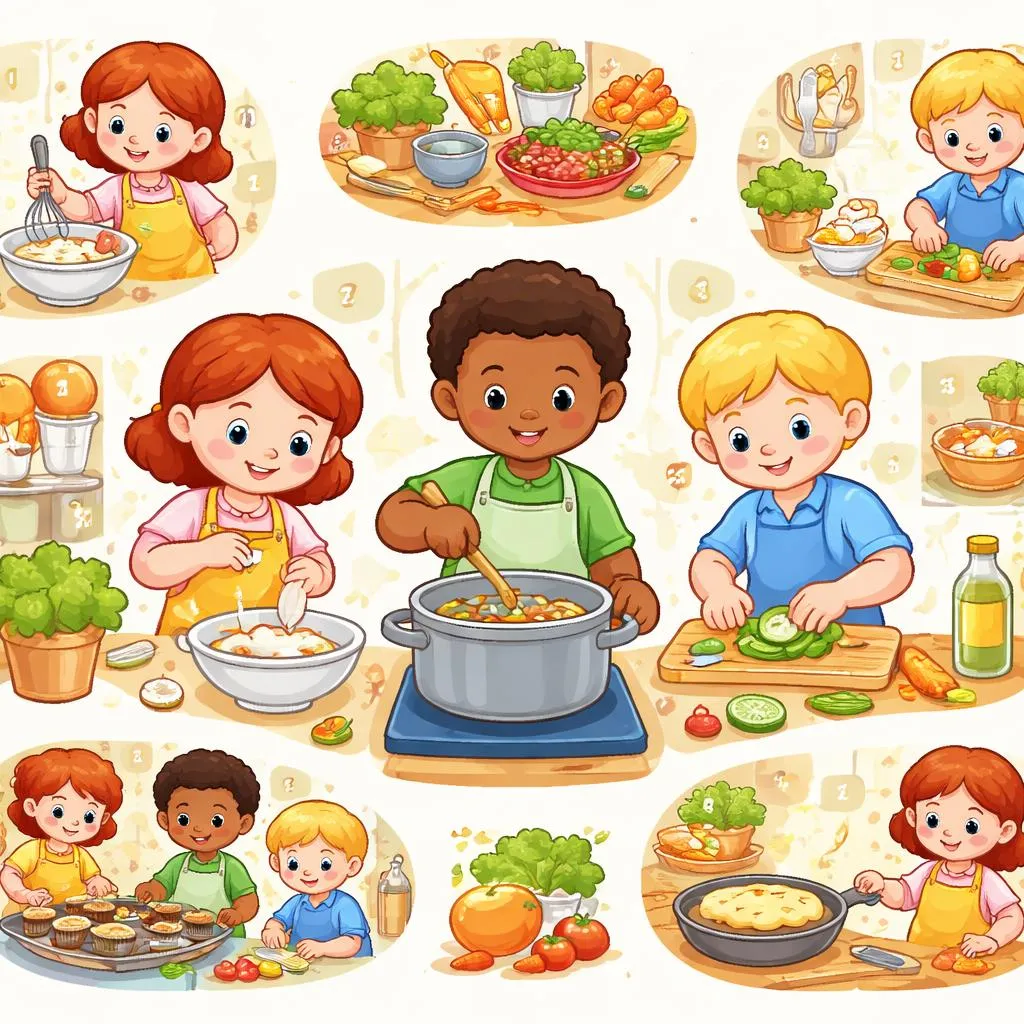

What Are Cooking Terms?
The keyword cooking terms refers to special words used in the kitchen. These words describe actions, tools, and ingredients. Cooking language appears in recipes, shows, and daily conversations.
Cooking terms support real-life English learning. Food and cooking create natural and meaningful language situations. Learning these words builds confidence in daily communication.
Meaning and Explanation of Cooking Terms
Cooking terms describe how food is prepared. They also describe tools, ingredients, and cooking steps.
Words like chop, bake, boil, and mix describe actions. Words like pan, pot, spoon, and oven describe tools. Words like salt, sugar, flour, and oil describe ingredients.
These words appear in simple instructions and stories. This makes cooking terms ideal for early English learning.
Categories of Cooking Terms
Cooking terms can be grouped into action words, tools, and ingredients. Action words describe what happens to food. Tool words describe kitchen objects. Ingredient words describe food items.
Each category supports vocabulary building and real-world understanding. Clear categories help learners organize new words.
Common Cooking Action Words
Words like cut, chop, slice, stir, mix, bake, boil, fry, grill, and steam appear often. Each word describes a specific movement or cooking method.
Chop means cutting food into small pieces. Bake means cooking food in an oven. Boil means cooking food in hot water. Stir means moving food in a pot or bowl.
These words appear in simple recipes and classroom activities.
Common Cooking Tools Vocabulary
Kitchen tools have clear names and shapes. Words like pan, pot, bowl, spoon, fork, knife, and oven appear frequently.
A pan cooks food on the stove. A pot cooks soup or pasta. A bowl holds ingredients. A spoon mixes and tastes food.
Tool vocabulary supports object recognition and labeling skills.
Common Ingredient Words
Ingredient words describe what goes into a dish. Words like flour, sugar, salt, butter, milk, eggs, and oil appear often.
Fruit and vegetable names also appear in cooking lessons. Apple, banana, carrot, and tomato appear in simple recipes.
These words connect language with sensory experiences like taste and smell.
Daily Life Examples of Cooking Terms
Cooking terms appear in home routines and classroom projects. Breakfast preparation uses words like pour, toast, and spread. Lunch preparation uses words like cook, heat, and serve.
Watching cooking shows introduces real-life cooking language. Reading simple recipes supports reading comprehension. Pretend play kitchens provide meaningful speaking opportunities.
Vocabulary Learning with Cooking Terms
Cooking lessons introduce concrete and meaningful vocabulary. Words connect with actions, objects, and food items.
Visual aids like pictures and real objects support comprehension. Repeating actions with words strengthens memory.
Short sentences help build expressive language. “The chef chops carrots.” “The pan is hot.”
Phonics Points in Cooking Terms
Cooking vocabulary supports phonics practice. The /b/ sound appears in bake, bowl, and boil. The /c/ sound appears in cook and cut.
Short vowels appear in pot and pan. Long vowels appear in bake and steam.
Rhyming sets can be created with cooking words. Bake, cake, and make share similar sounds.
Syllable practice works well with ingredient names. To-ma-to, ba-na-na, po-ta-to.
Grammar Patterns with Cooking Terms
Simple present tense appears in recipes. “Mix the flour.” “Add the milk.”
Imperative sentences appear often. “Stir the soup.” “Heat the pan.”
Nouns and verbs appear clearly in cooking instructions. This clarity supports early grammar learning.
Questions can appear in cooking discussions. “What do we cook?” “Where is the spoon?”
What Makes Cooking Terms Effective for Learning
Cooking provides real-life context for language. Food and cooking attract attention and curiosity.
Hands-on activities support multisensory learning. Seeing, touching, and smelling ingredients enhance memory.
Cooking language connects classroom learning with daily life. This connection increases motivation and retention.
Learning Activities with Cooking Terms
Pretend cooking centers can simulate kitchen activities. Role-play activities can describe cooking actions.
Cooking storytelling can describe a day in a kitchen. Simple recipes can be read and followed step by step.
Art activities can draw and label kitchen tools and food. Movement activities can act out cooking actions like stir and chop.
Printable Flashcards for Cooking Terms
Flashcards can show cooking tools, ingredients, and actions. Pictures next to words support visual recognition.
Sentence cards can show simple patterns. “Chop the onion.” “Bake the cake.”
Large flashcards can decorate classrooms and learning corners.
Printable Materials for Classroom and Home
Worksheets can match words with pictures of food and tools. Tracing worksheets can practice spelling of cooking words.
Mini recipe books can provide reading practice. Coloring pages can show kitchen scenes and ingredients.
Cut-and-paste worksheets can build a paper kitchen set.
Educational Games with Cooking Terms
Memory games can match tools with their names. Sorting games can group words into actions, tools, and ingredients.
Listening games can follow cooking instructions. “Touch the pan.” “Point to the milk.”
Board games can include cooking prompts and vocabulary challenges. Digital quizzes can check comprehension and spelling.
Integrating Cooking Terms into Language Lessons
Listening lessons can include cooking stories and instructions. Speaking lessons can include role-play kitchens and recipe discussions.
Reading lessons can include simple recipes and food labels. Writing lessons can include short recipe steps and food descriptions.
This integrated approach builds balanced language skills.
Cross-Curricular Connections
Science lessons can explore how heat changes food. Math lessons can measure ingredients and count spoons. Art lessons can draw and paint food and kitchens.
Social studies lessons can explore foods from different cultures. Health lessons can discuss healthy eating habits.
These connections deepen understanding and engagement.
Teaching Tips for Parents and Teachers
Clear modeling of cooking actions and words supports understanding. Real objects and pictures provide concrete references.
Slow pacing and repetition build confidence. Encouraging questions and exploration supports curiosity.
Safety language can be introduced with cooking activities. Words like hot, sharp, and careful support real-life communication.
Assessment and Progress Tracking
Listening assessments can identify cooking vocabulary. Speaking assessments can evaluate sentence production in cooking contexts.
Reading assessments can check recognition of recipe words. Writing assessments can include simple cooking instructions.
Creative projects like mini cookbooks show comprehension and expression.
Cultural and Social Value of Cooking Language
Cooking connects people across cultures. Food traditions create opportunities for cultural exchange.
Cooking stories build family and classroom connections. Sharing recipes supports communication and collaboration.
These experiences develop social and language skills together.
Using Technology with Cooking Terms
Cooking videos and animations provide visual input. Interactive apps teach food vocabulary and recipe steps.
Recording tools allow learners to describe cooking actions. Digital flashcards and quizzes support independent practice.
Extending Learning Beyond Cooking Terms
Creative writing can describe favorite foods and recipes. Science projects can explore how ingredients change when cooked.
Family projects can cook simple dishes and describe the steps in English. Class projects can create a classroom recipe book.
Building Confidence Through Cooking Language
Cooking role-play performances build speaking confidence. Group activities reduce anxiety and encourage collaboration.
Sharing cooking stories and projects celebrates progress and creativity.
Cooking terms create a bridge between language and real life. Food, tools, and actions provide meaningful contexts for communication. Hands-on experiences, stories, and games transform cooking language into an engaging pathway for English learning.