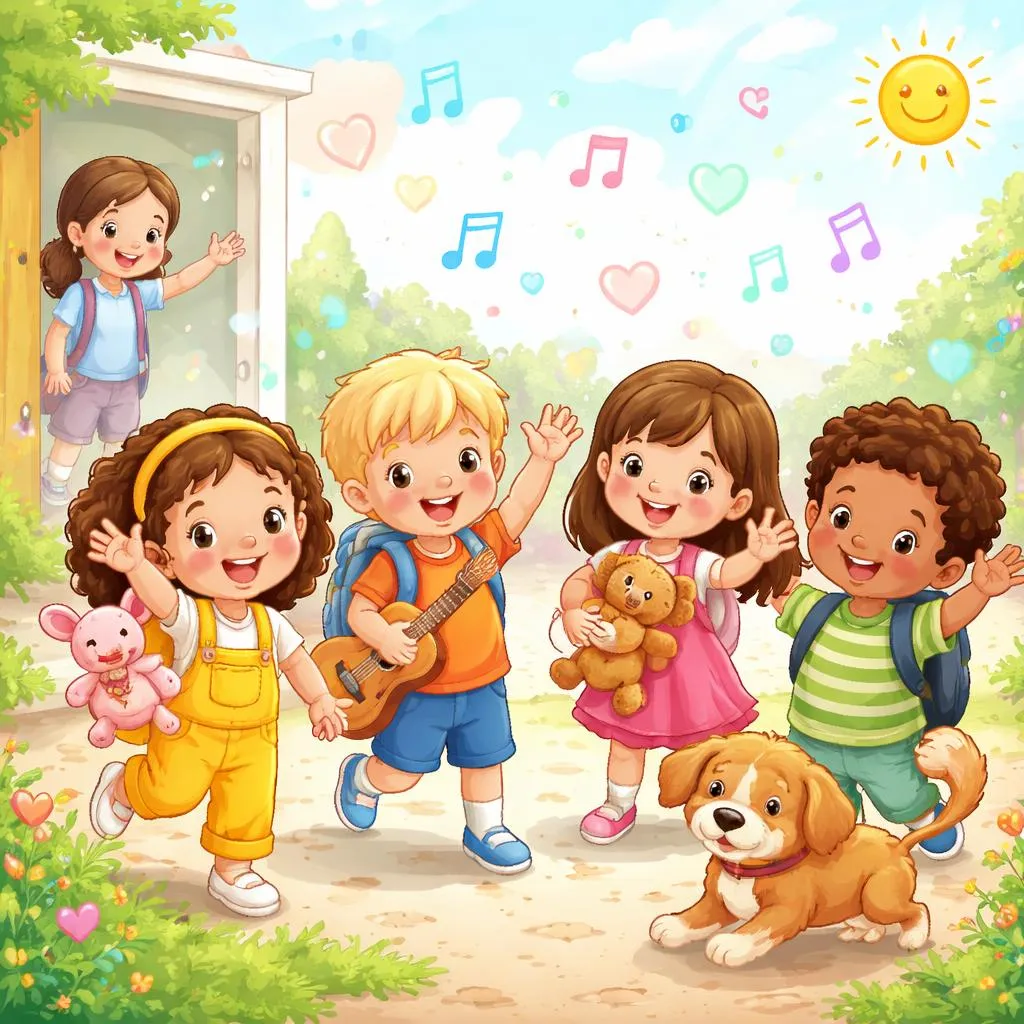

What Are Bye Songs Lyrics?
Bye songs are short and friendly songs used to say goodbye. They appear in classrooms, homes, and children’s shows. The lyrics often repeat simple phrases like “bye-bye,” “see you,” and “good night.”
The keyword bye songs lyrics refers to the words in these goodbye songs. These lyrics support emotional expression and social language. They also help early learners practice English in a calm and positive way.
Songs for saying goodbye create a smooth transition between activities. They help language learning feel safe and joyful.
Popular Bye Songs Lyrics for Children
Many goodbye songs exist around the world. Below are common kid-friendly versions used in early English learning.
Goodbye song 1
Goodbye, goodbye, see you again See you again, my little friends It’s time to go, the day is done Goodbye, goodbye, everyone
Goodbye song 2
Bye-bye, bye-bye, see you tomorrow Bye-bye, bye-bye, time to go Wave your hands and smile so wide Bye-bye, bye-bye, goodbye
Goodbye song 3
See you later, alligator After while, crocodile See you soon, big baboon Bye-bye friends, we’ll meet again
These bye songs lyrics use repetition and rhyme. They keep language predictable and easy to remember.
Vocabulary Learning with Bye Songs
Bye songs include everyday words and phrases. These phrases appear in daily conversations.
Words like goodbye, bye-bye, see, again, tomorrow, and friends appear often. These words help express time, people, and actions.
Phrases like “see you later” and “time to go” teach natural spoken English. These phrases build polite communication skills.
Repetition helps new words stick in memory. Singing and speaking together reinforce meaning and pronunciation.
Phonics Points in Bye Songs Lyrics
Bye songs contain many helpful phonics patterns. Short and long vowel sounds appear in common goodbye phrases.
Bye and my show the long “i” sound. See and we show the long “e” sound. Go and tomorrow show the long “o” sound.
Rhyming words like again and friends help recognize sound patterns. Clapping with each syllable highlights rhythm and stress.
Songs also include consonant blends like “fr” in friends and “gr” in goodbye. Practicing these sounds supports clear pronunciation and early reading skills.
Grammar Patterns in Goodbye Songs
Bye songs use simple grammar structures. These structures model real spoken English.
“See you tomorrow” uses the present tense for future meaning. “It’s time to go” shows a common expression with “it is.” “Goodbye, everyone” shows direct address and social language.
Questions can follow the songs. For example, “Who will we see tomorrow?” or “Where will we go?” These questions encourage sentence building and comprehension.
Learning Activities with Bye Songs Lyrics
Movement activities match goodbye songs well. Waving hands, clapping, and gentle dancing keep engagement high.
Echo reading can build speaking confidence. One line can be spoken, then repeated.
Picture cards can show friends, clocks, or tomorrow calendars. Visuals connect meaning to words.
Role-play activities can include saying goodbye to a puppet or toy. This supports emotional expression and social language.
Printable Materials for Bye Songs
Printable lyric sheets help reading practice. Large font and simple spacing support beginner readers.
Flashcards with words like goodbye, tomorrow, and friends reinforce vocabulary. Coloring pages with waving characters add creative expression.
Simple worksheets can include sentence tracing like “See you again.” This builds writing and letter recognition skills.
Educational Games Using Goodbye Songs
Freeze-and-wave games build listening skills. When the music stops, waving stops.
Word matching games can connect goodbye phrases with pictures. This supports comprehension and memory.
Rhyming challenges can invite new goodbye rhymes. This encourages phonemic awareness and creativity.
Goodbye circle games can include passing a soft toy while singing. This builds turn-taking and social confidence.
Why Bye Songs Support Emotional Learning
Goodbye can feel difficult for young learners. Songs make farewells gentle and predictable.
Music helps express feelings in a safe way. Repetition builds comfort and routine.
Knowing what comes next reduces anxiety. A goodbye song signals transition with warmth and clarity.
Using Bye Songs in Daily Routines
Bye songs fit well at the end of class or day. They can also mark transitions between activities.
Morning sessions can preview the goodbye song. This prepares learners for the end of the session.
Home routines can include bedtime goodbye songs. This supports calm and positive closure of the day.
Digital learning sessions can end with a virtual goodbye song. This keeps connection strong across screens.
Cultural Notes About Goodbye Songs
Many cultures use songs to say farewell. Some songs include animals, rhymes, or playful language.
English goodbye songs often use friendly and polite phrases. They reflect social values like kindness and connection.
Exploring goodbye songs from different cultures builds curiosity. It also shows how language and music connect people worldwide.
Extending Learning Beyond Goodbye Songs
Other routine songs can support daily English practice. Hello songs, clean-up songs, and weather songs complement goodbye songs.
Comparing hello and goodbye songs helps identify opposites. This builds vocabulary and concept understanding.
Creative tasks can include writing new verses for goodbye songs. This supports sentence creation and storytelling skills.
Supporting Different Learning Styles
Auditory learners benefit from melody and rhythm. Visual learners benefit from pictures and printed lyrics. Kinesthetic learners benefit from waving, clapping, and dancing.
Combining sound, sight, and movement creates strong learning pathways. This multisensory approach improves retention and engagement.
Adapting Bye Songs for Different Levels
Beginners can focus on repeating short phrases like “bye-bye.” Intermediate learners can create simple sentences like “See you tomorrow.” Advanced learners can write short goodbye messages or stories.
Simplified songs can use only a few key words. Expanded songs can include time phrases and emotions.
Language Skills Built Through Bye Songs Lyrics
Listening skills grow through melody and repetition. Speaking skills grow through singing and echoing lines. Reading skills grow through printed lyrics and word recognition. Writing skills grow through tracing and creative sentence practice.
Bye songs integrate emotional learning with language learning. They provide meaningful context for communication.
Practical Classroom and Home Integration
Short daily goodbye rituals build routine and predictability. Consistency strengthens memory and emotional security.
Group singing encourages cooperation and shared experience. Solo practice supports individual pronunciation practice.
Recording performances can build confidence and track progress. Celebrating new verses and gestures increases motivation.
Creative Extensions with Goodbye Songs
Art activities can include drawing friends waving goodbye. This reinforces vocabulary and emotional expression.
Story prompts can include “Where will we meet tomorrow?” This builds imagination and narrative skills.
Simple instruments like bells or shakers can match song rhythm. This supports timing and auditory discrimination.
Digital Learning Ideas for Bye Songs
Animated videos can show characters waving and smiling. Interactive lyrics can highlight words as they are sung.
Karaoke tracks encourage clear pronunciation. Digital flashcards with audio reinforce vocabulary.
Recording tools allow learners to perform and reflect. This supports self-monitoring and confidence.
Assessment Through Play
Observation of gestures and singing shows engagement. Word recognition tasks show vocabulary growth.
Sentence creation shows grammar development. Storytelling about goodbyes shows comprehension and emotional awareness.
Informal assessment keeps learning joyful and pressure-free.
Long-Term Benefits of Routine Songs
Routine songs build structure in language learning. They strengthen memory, phonological awareness, and social language.
Goodbye songs support emotional regulation and positive transitions. They create a safe and predictable learning environment.
The bye songs lyrics provide language, rhythm, and emotional meaning in one simple tool. They offer daily opportunities for listening, speaking, reading, and creative expression. They fit classrooms, homes, and digital platforms with ease. They turn every goodbye into a warm language-learning moment.