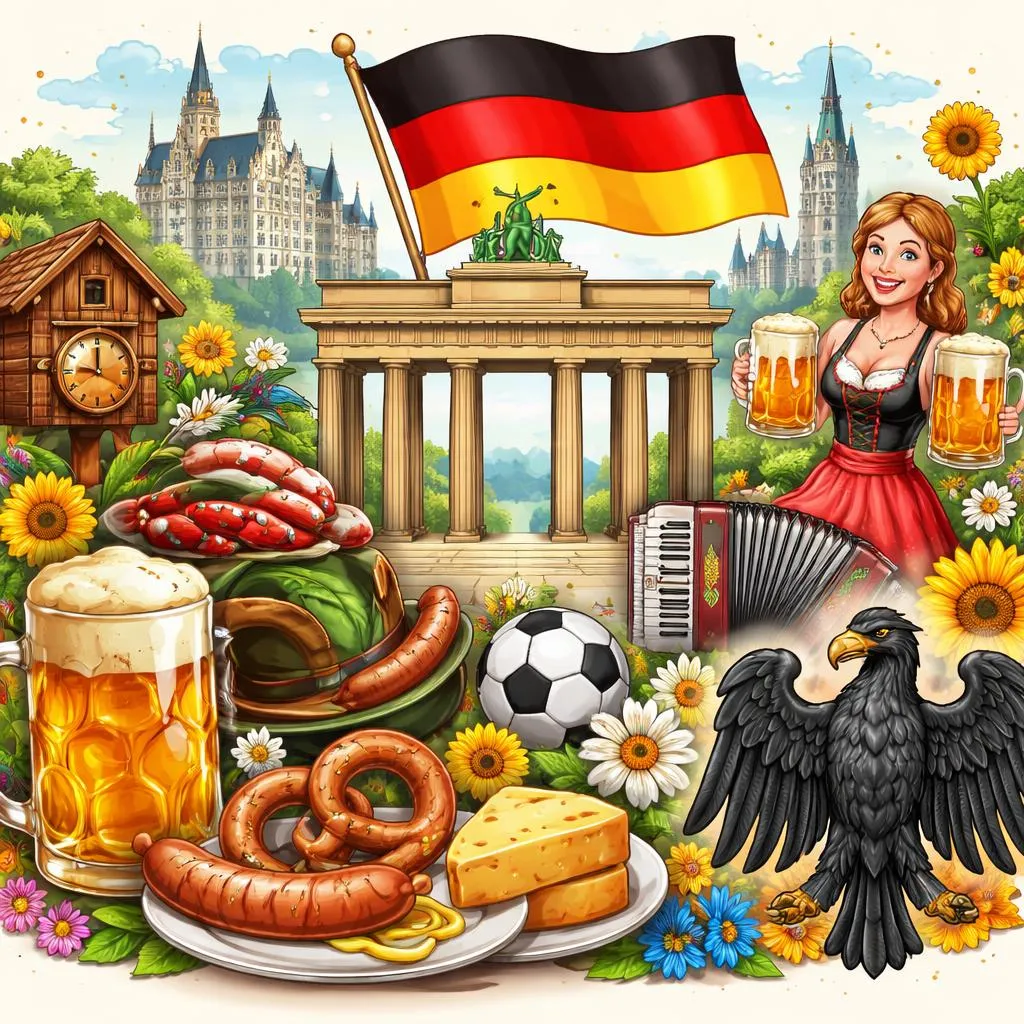

What is a German Symbol? A German symbol is an image or object that represents Germany’s identity, culture, and history. Symbols can be found in many areas, including national symbols, cultural icons, and language. Let’s explore some of the most important symbols of Germany.
Symbols represent Germany’s identity and culture.
The German Flag The national flag of Germany consists of three horizontal stripes: black at the top, red in the middle, and gold at the bottom. This flag is a powerful symbol of the unity and freedom of Germany. The colors represent the ideals of liberty, equality, and fraternity.
The German flag is a symbol of unity and freedom.
The German Eagle The German eagle is a national symbol of Germany, often seen in government buildings, coins, and the German coat of arms. The eagle represents strength, courage, and the country’s long history. It is one of the oldest symbols, dating back to the Holy Roman Empire.
The German eagle symbolizes strength and courage.
The Coat of Arms The German coat of arms features a black eagle with outstretched wings. This eagle is centered on a gold shield. It represents Germany’s official sovereignty and authority.
The coat of arms represents sovereignty.
The Brandenburg Gate The Brandenburg Gate is one of Germany’s most iconic landmarks and symbols of Berlin. It was built in the 18th century and represents peace and unity. The gate stood as a symbol of division during the Cold War but now symbolizes Germany’s reunification.
The Brandenburg Gate symbolizes unity and peace.
The Berlin Bear The Berlin bear is the symbol of Berlin, the capital of Germany. It can be found on the city’s coat of arms and many local items. The bear represents the strength and resilience of the people of Berlin.
The Berlin bear represents strength and resilience.
The Iron Cross The Iron Cross is a military symbol that was used in Germany from the 19th century onward. It was originally awarded for bravery and distinguished service in battle. Though controversial due to its historical association, it remains a symbol of military honor in modern Germany.
The Iron Cross symbolizes military honor.
The German Swastika (Historical Context) The swastika is an ancient symbol that was used in many cultures around the world. In the 20th century, the swastika became associated with Nazi Germany and is now seen as a symbol of hate and oppression. Because of its dark history, it is illegal to display the swastika in Germany.
The swastika has a dark historical association.
The German Lion The lion is another animal symbol used in Germany, particularly in the coat of arms of various states. It symbolizes courage, bravery, and strength. For example, the lion appears on the coat of arms of the state of Hesse.
The lion symbolizes courage and bravery.
The German Wine Regions Symbol Wine is an important part of German culture, and certain regions, like the Mosel, are famous for their wine production. A symbol for German wine regions typically features vines or grape clusters. It represents the tradition and pride in Germany’s wine-making industry.
The wine regions symbol represents tradition and pride.
German Language Symbols In the German language, certain words or characters are symbolic of German culture and identity. For example, the letter “ß” (Eszett or sharp S) is a unique character in the German alphabet. It is used in certain words to represent a sharp “s” sound, such as in “Straße” (street).
The letter “ß” is a unique symbol in the German language.
The Unity of Germany Symbol The unification of Germany in 1990 is represented by symbols such as the Brandenburg Gate and the German flag. These symbols reflect the country’s journey from division to unity. Today, they continue to remind the world of Germany’s progress.
Unity symbols represent Germany’s reunification.
German Music and Cultural Symbols In German music, composers like Beethoven and Bach are iconic. The musical symbols from their works, such as notes, clefs, and staffs, represent the rich history of German classical music. These symbols are important to the national identity and cultural heritage of Germany.
Musical symbols represent Germany’s classical music history.
Germany’s Symbols in Daily Life In daily life, symbols like the German flag, the eagle, and the Berlin bear can be seen in various forms. From sports teams to festivals, these symbols remind the people of Germany’s rich heritage and cultural pride. They also represent the country’s unity and respect for tradition.
Symbols appear in many aspects of German life.
Learning About German Symbols By learning about these symbols, one can better understand Germany’s culture, history, and values. Each symbol represents a part of the country’s story, from its beginnings to modern-day achievements. Whether through its flag, coat of arms, or cultural icons, Germany’s symbols play a significant role in shaping its identity.
Symbols help understand Germany’s culture and history.
Through these symbols, it’s clear how much history and pride Germany holds in its visual representations. Learning about these symbols helps build a connection with the country’s rich past and future. From the German eagle to the Berlin Bear, every symbol tells a story of strength, unity, and identity.
Symbols tell the story of Germany’s identity.
German Symbol: Understanding the Key Symbols of Germany
Tags: German symbol, German culture, German history, German national symbols, Germany symbols, German language symbols
Symbols are powerful tools for expressing a country’s identity. Germany, with its rich history, has a variety of symbols that represent different aspects of the country. From the national flag to cultural icons like the Brandenburg Gate, these symbols hold deep meaning.
Symbols tell the story of a country’s identity.
The German Flag The national flag of Germany, with its three horizontal stripes of black, red, and gold, represents unity and the ideals of freedom. The flag dates back to the 19th century when it was first adopted during the revolutions. The black represents the people, the red stands for the struggle for liberty, and the gold symbolizes the country’s unity.
The German flag is a symbol of unity and liberty.
The German Eagle The eagle has long been a symbol of power and strength. In Germany, it’s used in various official symbols, including the coat of arms. During the Holy Roman Empire, the eagle was adopted as a symbol of imperial power, and it remains a symbol of authority today.
The German eagle symbolizes strength and authority.
The Coat of Arms The coat of arms of Germany features a black eagle displayed on a golden shield. It is an important symbol that reflects Germany’s sovereignty, independence, and the idea of a united nation. The eagle has been part of German heraldry for centuries, representing the continuity of the state.
The coat of arms is a symbol of sovereignty and independence.
The Brandenburg Gate Perhaps one of the most iconic landmarks in Germany, the Brandenburg Gate is a powerful symbol of both division and unity. During the Cold War, the gate stood as a symbol of the division of East and West Berlin. After reunification in 1990, it became a symbol of Germany’s reunification and peace.
The Brandenburg Gate symbolizes division and unity.
The Berlin Bear The Berlin Bear is the symbol of Berlin, Germany’s capital. It appears on the city’s coat of arms and has been associated with the city since the 13th century. The bear is seen as a symbol of strength and protection, and it is widely used in souvenirs, monuments, and events.
The Berlin Bear represents the city’s strength and history.
The Iron Cross The Iron Cross is a symbol that has been associated with military honor in Germany. First created in the early 19th century, it was used as a military decoration for bravery. Though it became associated with the Nazi regime during World War II, it is still used today in a more neutral sense as a military symbol.
The Iron Cross represents military honor and bravery.
The Swastika (Historical Context) The swastika, once an ancient symbol used in various cultures around the world, became infamous as the symbol of Nazi Germany. It is now illegal to display in Germany due to its association with hate, violence, and oppression. Understanding the history of the swastika is important to grasp the complex history of Germany.
The swastika has a dark and controversial history.
The German Lion The lion appears on the coats of arms of various German states. In particular, the lion is an important symbol of the state of Hesse. It represents courage, bravery, and the strength of the people in these regions.
The German lion symbolizes courage and strength.
The German Wine Regions Symbol Wine has a long-standing tradition in Germany, especially in regions like the Mosel and Rhine. Symbols for these wine regions often feature grapevines or clusters of grapes. German wine culture is a significant part of the country’s heritage, and these symbols reflect the pride in wine-making.
Wine region symbols reflect Germany’s pride in wine-making.
The National Anthem: “Deutschlandlied” The national anthem of Germany, “Deutschlandlied” (Song of Germany), is a symbol of the country’s history and unity. The anthem was written in the 19th century and adopted as the official anthem after World War II. The music and lyrics reflect a strong sense of national pride, unity, and hope for peace.
The national anthem is a symbol of unity and national pride.
German Language Symbols In the German language, certain words and letters have symbolic meanings. For example, the letter “ß” (Eszett or sharp S) is a unique character in German that is used in certain words, such as “Straße” (street). This letter is a symbol of the distinctiveness of the German language.
The letter “ß” is a unique symbol of the German language.
The Unity of Germany Symbol The reunification of Germany in 1990 is another important symbol in the country’s history. Symbols like the Brandenburg Gate and the German flag represent this monumental event. These symbols remind the world of the peaceful reunification of East and West Germany.
Unity symbols celebrate the reunification of Germany.
German Music and Cultural Symbols Germany has a rich history of classical music, with composers like Beethoven, Bach, and Brahms being internationally renowned. Musical symbols, such as notes and clefs, are used to represent this rich tradition in various contexts. These symbols are closely tied to the cultural identity of the country.
Musical symbols represent Germany’s rich cultural history.
German Symbols in Daily Life In everyday life, symbols like the German flag, the eagle, and the Brandenburg Gate can be seen in various forms. These symbols appear in the country’s government buildings, sporting events, and cultural celebrations. They reflect Germany’s national pride and deep connection to its history.
National symbols are seen in everyday life in Germany.
Learning About German Symbols Learning about these symbols helps understand the values and culture of Germany. Each symbol represents a unique part of the country’s identity, whether it’s the strength of the eagle, the unity of the flag, or the historical significance of the Brandenburg Gate. Understanding these symbols connects us to the story of Germany.
Learning about symbols deepens understanding of Germany’s culture.
Through these symbols, Germany’s identity is brought to life. From the national flag to historical monuments, each symbol has a specific meaning and importance. By studying these symbols, one gains insight into the country’s rich history, culture, and values.
Symbols help understand the history and culture of Germany.