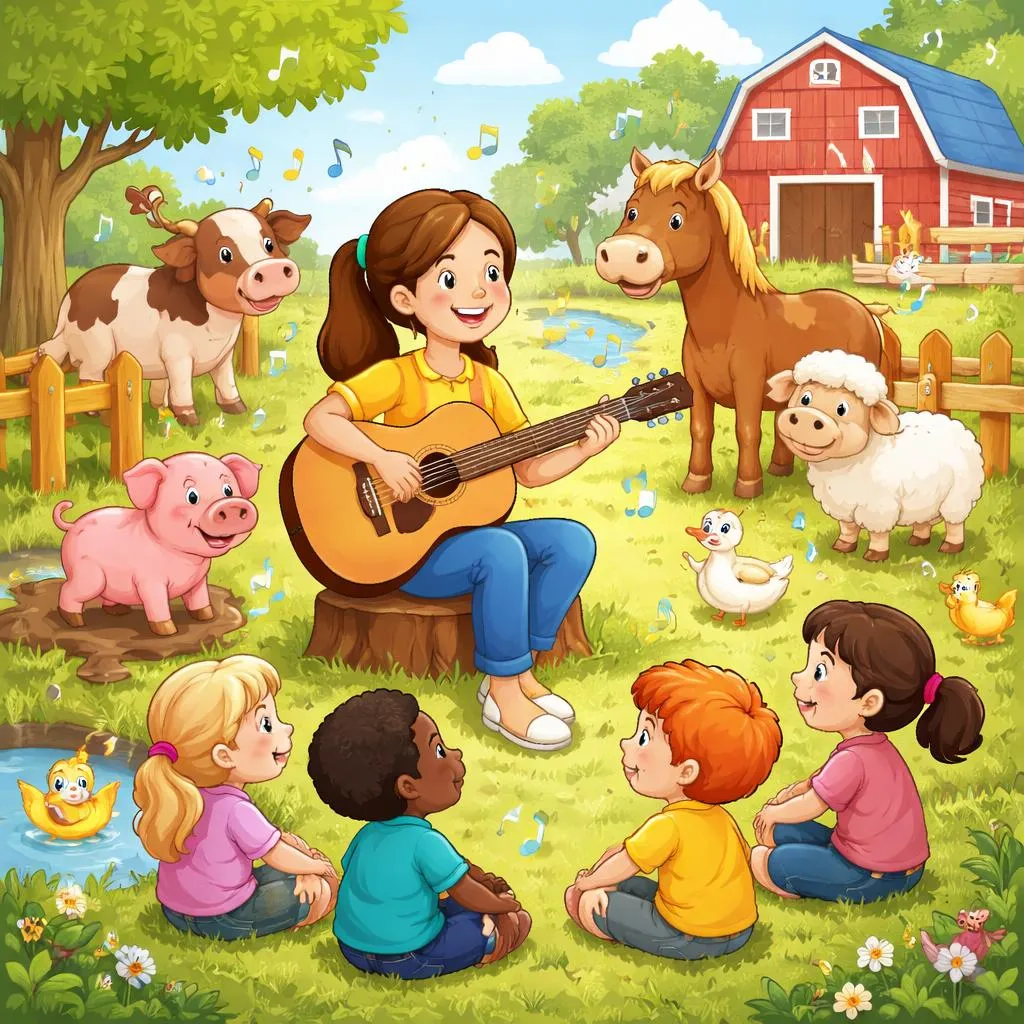

Had a Farm Lyrics as a Timeless Learning Song
Songs have a special power in early learning. They slow language down and wrap words in rhythm and joy. One of the most well-known nursery rhymes is had a farm lyrics, often recognized as part of the song “Old MacDonald Had a Farm.”
This song has appeared in classrooms and homes for many years. Its simple structure, repeating lines, and playful animal sounds make it an excellent learning tool. From a teacher’s perspective, this rhyme supports language, listening, and imagination in a calm and natural way.
What Are Had a Farm Lyrics?
Had a farm lyrics come from a traditional English nursery rhyme. The song tells about a farmer and the animals on a farm. Each verse introduces a new animal and its sound.
The repeated line “Old MacDonald had a farm” creates a steady rhythm. Animal sounds change with each verse, keeping the song lively and engaging.
This simple structure makes the song easy to follow and enjoyable to repeat.
The Story Behind Had a Farm Lyrics
The song does not tell a long story. Instead, it builds a farm scene step by step. A farmer owns a farm. Animals live there. Each animal makes a sound.
This simple idea allows imagination to grow. The farm becomes a place full of life and movement.
The song invites listeners to picture animals, sounds, and actions in their minds.
The Lyrics of the Had a Farm Song
A common version of the had a farm lyrics includes a repeating pattern.
“Old MacDonald had a farm, E-I-E-I-O And on that farm he had a cow, E-I-E-I-O With a moo moo here and a moo moo there Here a moo, there a moo, everywhere a moo moo Old MacDonald had a farm, E-I-E-I-O”
Each verse changes the animal and the sound. The structure stays the same.
This repetition supports memory and confidence.
Meaning and Explanation of the Lyrics
The phrase “had a farm” shows ownership. It introduces the setting.
“On that farm he had a cow” introduces animals one by one.
Animal sounds like moo, quack, and oink represent real sounds animals make.
The playful sounds connect language with real-world experience.
The letters “E-I-E-I-O” add rhythm and fun, even though they do not carry meaning.
Vocabulary Learning Through Had a Farm Lyrics
This song introduces many useful words.
Farm connects to nature and work.
Animals like cow, duck, pig, and sheep appear often.
Sound words like moo and quack build expressive language.
These words appear in stories, books, and daily conversation.
Animal Vocabulary in the Song
Each verse focuses on one animal.
Common animals include cow, duck, pig, horse, and sheep.
These animals often appear in early learning materials.
Learning animal names through song makes them easy to remember.
Animal Sounds and Language Development
Animal sounds support early speech.
Imitating sounds feels playful and low-pressure.
Sound words help connect meaning and expression.
These playful noises support pronunciation and confidence.
Phonics Points in Had a Farm Lyrics
The song includes clear sound patterns.
The “m” sound appears in moo.
The “q” sound appears in quack.
The “o” sound appears often in E-I-E-I-O.
Singing stretches sounds, making them easier to hear.
Rhythm and Repetition in the Song
Repetition is one of the strongest learning tools.
The same lines repeat in every verse.
Only one word changes at a time.
This pattern helps learners predict and participate.
Grammar Patterns Found in the Lyrics
The song uses simple past tense.
“Had a farm” shows something that existed.
Simple sentence structure appears again and again.
Grammar appears naturally without explanation.
Using Had a Farm Lyrics to Teach Past Tense
The phrase “had a farm” introduces past tense gently.
This exposure builds awareness over time.
Understanding grows through repeated listening.
Grammar becomes familiar through context.
Question and Response Opportunities
The song invites interaction.
Pausing before animal sounds encourages guessing.
Questions like “What animal comes next?” fit naturally.
Interaction supports listening and thinking skills.
Movement and Actions With the Song
Movements bring the song to life.
Miming animal actions adds fun.
Pointing or acting out sounds connects body and language.
Movement supports focus and understanding.
Emotional Connection Through Farm Songs
Farm songs feel warm and friendly.
Animals often bring joy and curiosity.
The calm rhythm creates a safe learning space.
Positive emotions support memory.
Using Had a Farm Lyrics in the Classroom
The song fits well into group activities.
Circle time often includes this rhyme.
Clear rhythm helps groups stay together.
The song works well for mixed ability levels.
Using the Song at Home
At home, the song supports bonding.
Singing together builds shared moments.
Language learning blends with play and laughter.
Comfort supports confidence.
Extending Vocabulary Beyond the Song
After learning basic animals, new ones appear.
Goat, chicken, and dog may join the farm.
New words fit into a familiar pattern.
Expansion feels easy and natural.
Creative Activities Inspired by the Song
Drawing farm scenes supports imagination.
Coloring animals connects art and language.
Making simple animal masks adds creativity.
Creative play deepens engagement.
Printable Materials for Had a Farm Lyrics
Printable lyric sheets support early reading.
Animal picture cards support recognition.
Matching sounds to animals builds thinking skills.
Printables support quiet practice time.
Educational Games Based on the Song
A guessing game may play animal sounds.
A matching game may pair animals with sounds.
A sequencing game may order animals from the song.
Games keep learning playful and focused.
Cultural Importance of Farm Songs
Farm songs appear in many cultures.
Animals and farms are universal themes.
Learning this song connects learners to shared traditions.
Cultural familiarity builds confidence.
Music and Memory in Early Learning
Music strengthens memory pathways.
Melody helps words stay longer.
Rhythm organizes language clearly.
Songs make learning enjoyable.
Supporting Social Skills Through Group Singing
Group singing encourages cooperation.
Listening to others builds patience.
Shared singing builds community.
Social growth happens alongside language growth.
Language Confidence Through Familiar Rhymes
Familiar rhymes reduce anxiety.
Knowing what comes next builds confidence.
Confidence encourages participation.
Participation supports language development.
Connecting Had a Farm Lyrics to Real Life
Visits to farms or zoos connect song and experience.
Storybooks about animals support vocabulary.
Daily conversations about animals feel richer.
Language moves beyond the song.
Integrating Music, Language, and Imagination
The had a farm lyrics offer more than a simple rhyme. They combine music, animals, sounds, and repetition into a powerful learning experience. Through gentle rhythm and playful sounds, English feels friendly and accessible.
This song supports vocabulary, phonics, grammar awareness, and emotional connection. Learning flows naturally through singing, movement, and imagination, making had a farm lyrics a lasting and joyful part of early English learning.