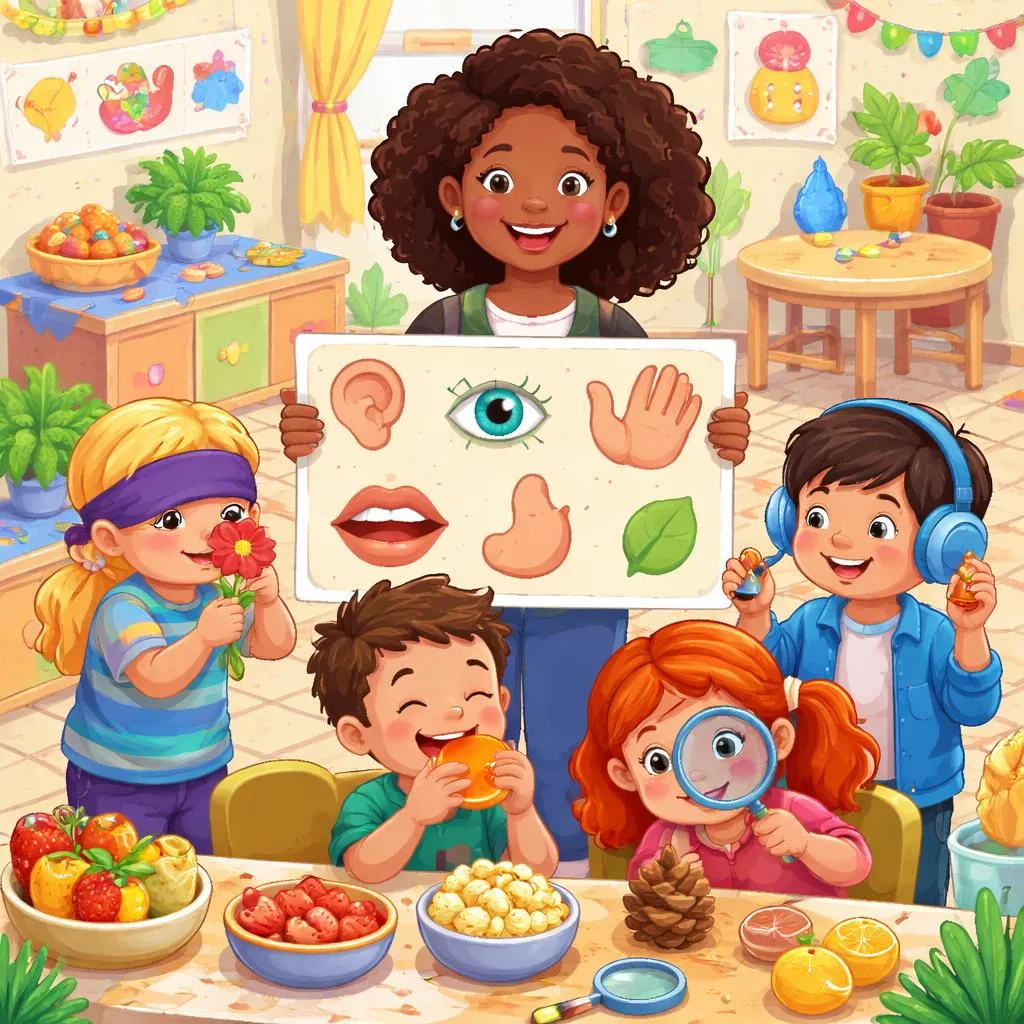

Teaching kindergarten is a journey of discovery. Every day, young learners explore the world around them. One of the best ways to channel this natural curiosity is through a 5 senses kindergarten lesson. These lessons help children understand how they experience the world. It moves learning from abstract ideas to concrete, physical experiences. As educators, we simply need to guide them. Let’s look at how to build a rich, engaging unit around this topic.
What Are the 5 Senses in Kindergarten? Before jumping into activities, we establish a foundation. We introduce the five senses as special tools our bodies have. We explain that these tools send information to our brains. This helps us understand what is happening around us.
We name each sense clearly. We point to the body part associated with it. We teach that our eyes are for sight. Our ears are for hearing. Our skin is for touch. Our nose is for smell. Our tongue is for taste. This simple labeling creates a common vocabulary for the class to use throughout the 5 senses kindergarten lesson plan.
Meaning and Explanation: How Do We Use Our Senses? Now we dig a little deeper. It is important to explain that we use our senses all the time, even without thinking. We use our sense of hearing to listen to a bell. We use our sense of sight to see a friend’s smile.
We can guide students to realize that senses work together. When we eat an apple, we use multiple senses. We see its red color. We hear the crunch. We feel its smooth skin. We taste its sweetness. This integrated understanding is a key goal of any comprehensive 5 senses kindergarten lesson.
Categories or Lists: Exploring Each Sense in Detail To keep the information organized, we break the senses down one by one. This allows for focused exploration.
Sight: This sense uses our eyes. It helps us see colors, shapes, and sizes. We see the words in a book. We see the sun in the sky.
Hearing: This sense uses our ears. It detects sounds. Sounds can be loud or soft. They can be high or low. We hear music and laughter.
Smell: This sense uses our nose. It detects odors. Some smells are pleasant, like flowers. Others warn us, like smoke.
Taste: This sense uses our tongue. It identifies flavors. The basic tastes are sweet, sour, salty, and bitter. We taste our favorite foods.
Touch: This sense uses our skin. It feels texture, temperature, and pressure. We feel if something is hot or cold. We feel if it is soft or rough.
Daily Life Examples: Connecting Senses to the Real World Learning sticks when it connects to a child’s daily routine. We can prompt students to think about their morning. How did they wake up? They heard an alarm (hearing). What did they eat for breakfast? They tasted their cereal (taste). Was it warm or cold? They felt the bowl (touch).
We can continue this line of questioning throughout the day. During recess, what do they see on the playground? During snack, what does the orange smell like? By consistently pointing out these examples, the 5 senses kindergarten lesson becomes a living, breathing part of the classroom culture, not just a one-time event.
Printable Flashcards: Tools for Visual Reinforcement Visual aids are crucial in kindergarten. Printable flashcards serve as excellent reinforcement. They help with memory and recall. We can create simple cards. On one side, place a picture of the body part. On the other side, place the name of the sense.
We can use these cards in many ways. Hold them up for a quick review. Ask students to point to the card that matches a description. "Which sense do we use to listen to a story?" They can point to the ear card. These flashcards become a go-to resource for any 5 senses kindergarten lesson.
Learning Activities or Games: Making Learning Interactive Now we arrive at the most exciting part: the activities. Games transform information into experience. Here are some structured, teacher-guided activities perfect for the classroom.
Activity 1: The Mystery Sound Game For this auditory game, we need a few objects that make noise. We can use a bell, a whistle, crinkling paper, or a shaker. We ask the children to close their eyes. This removes the sense of sight. Then, we make a sound with one object. The students raise their hands to guess the source of the sound. This sharpens their listening skills.
Activity 2: The Feely Bag Exploration This game focuses on the sense of touch. We need a bag that you cannot see through. Place a variety of objects inside. Think of a feather, a pinecone, a smooth stone, and a piece of fabric. One student reaches into the bag. Without looking, they describe how the object feels. Is it bumpy? Is it soft? The class tries to guess the object. This is always a highlight of any 5 senses kindergarten lesson.
Activity 3: Scented Painting This activity combines sight and smell. We can add flavored drink mix powder to plain white paint. This gives the paint a distinct scent. For example, orange powder makes orange paint that smells like oranges. As children paint pictures, they are not only seeing the colors but also smelling the citrus scent. It creates a multi-sensory art experience.
Activity 4: Taste Test Party With proper permissions, a taste test is a memorable event. We provide small samples of different foods. Offer something sweet, like a strawberry. Offer something salty, like a pretzel. Offer something sour, like a lemon wedge. We guide students to taste each one. We ask them to identify the flavor. This is a safe, structured way to explore the sense of taste together.
Activity 5: Five Senses Scavenger Hunt This culminating activity reviews all the senses. We create a simple chart or checklist. It has columns for each sense. We then take a walk around the school or playground. We ask students to find things they can see, hear, smell, and touch. (Tasting is reserved for the classroom). They can draw pictures or check off their findings. This shows them that a 5 senses kindergarten lesson extends far beyond the classroom walls.
By using these varied approaches, from detailed explanations to playful games, we provide a rich educational experience. We guide our kindergarteners to become aware of their own amazing abilities. They learn to appreciate the intricate ways they interact with their world every single day.