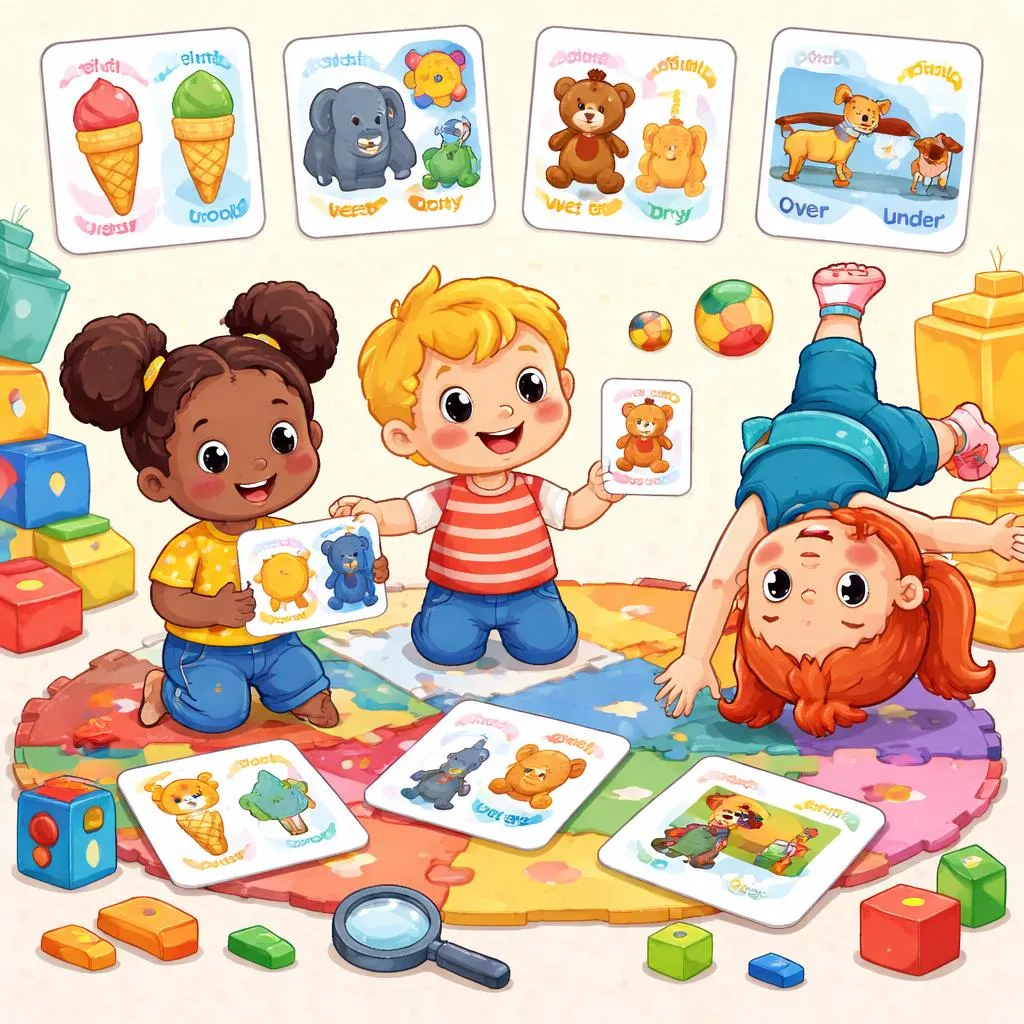

Inversion is when we change the normal order of words in a sentence. Usually we say "you are happy." With inversion, we say "are you happy?" for questions. For a four-year-old, inversion is a natural part of learning to ask questions and express surprise. Words like "can I?" and "is it?" are inversions they use every day. Learning the 50 most common inversions for 4-year-olds helps children form questions correctly and understand the different word orders they hear in stories and conversations. These patterns become the foundation for clear communication.
Meaning of Inversion
Inversion means swapping the usual order of words. In normal sentences, the subject comes before the verb. "You are my friend." In inverted sentences, the verb comes before the subject. " Are you my friend?"
English uses inversion most often in questions. Instead of saying "you can go," we ask " can you go?" The helping verb moves to the front. This change in word order signals that we are asking something.
For young children, inversion happens naturally when they learn to ask questions. They hear " do you want milk?" and learn that questions sound different from statements. They do not need to know the grammar rule. They just need to hear and use the patterns.
Inversion also appears in other places. We use it after words like "here" and "there." " Here comes the bus." " There goes the cat." We use it in exclamations. " Isn't that pretty!" These patterns add variety and expression to language.
When we talk about the 50 most common inversions for 4-year-olds, we mean the question forms and other inverted patterns that children use and hear most often in their daily lives.
Conjugation of Inversion
Inversion follows simple patterns that stay the same for different subjects. The helping verb moves to the front, and the subject comes next. The main verb stays in its place.
With the verb be:
Statement: You are my friend.
Question: Are you my friend?
Statement: He is sleeping.
Question: Is he sleeping?
Statement: They are coming.
Question: Are they coming?
With helping verbs like can, will, do:
Statement: You can help me.
Question: Can you help me?
Statement: She will come later.
Question: Will she come later?
Statement: You do like cookies.
Question: Do you like cookies?
With have and has:
Statement: You have eaten lunch.
Question: Have you eaten lunch?
Statement: He has a new toy.
Question: Has he a new toy? (or "Does he have a new toy?")
For young children, the most important thing is hearing and using these patterns. They will learn the rules naturally through practice.
Present Tense with Inversion
In the present tense, inversion helps us form questions and express surprise. These are patterns children use many times every day.
Questions with be: " Am I funny?" " Is this your bear?" " Are you my friend?" These are some of the first questions children learn to ask.
Questions with do: " Do you want juice?" " Does he like pizza?" " Do they have toys?" The word do or does moves to the front to ask about actions.
Questions with can: " Can I have a cookie?" " Can we go outside?" " Can you help me?" These ask about ability or permission.
Questions with have: " Have you seen my shoe?" " Has she got a dog?" These ask about experiences or possessions.
Exclamations with inversion: " Isn't that beautiful!" " Aren't you clever!" " Wasn't that fun!" These express strong feelings.
Here are some present tense examples you might hear from a four-year-old:
" Is it time to eat?"
" Can I watch cartoons?"
" Do you like my picture?"
" Have you seen my blankie?"
" Isn't this the best day ever?"
Past Tense with Inversion
In the past tense, inversion helps us ask about things that have already happened. The helping verb changes to its past form and moves to the front.
Questions with was/were: " Was I a good boy?" " Were you at school today?" " Was the movie scary?" These ask about past states or situations.
Questions with did: " Did you eat breakfast?" " Did she call Grandma?" " Did they go to the park?" The word did moves to the front, and the main verb stays in base form.
Questions with could: " Could you see the stars?" " Could he reach the shelf?" These ask about past ability.
Questions with had: " Had you ever seen a deer before?" " Had she finished her lunch?" These ask about past experiences before another time.
Here are some past tense examples:
" Was it fun at the playground?"
" Did you see the big truck?"
" Could you find your shoes?"
" Had you ever tried broccoli before?"
Future Tense with Inversion
In the future tense, inversion helps us ask about things that will happen. The helping verb will moves to the front of the sentence.
Questions with will: " Will you read me a story?" " Will it rain tomorrow?" " Will Grandma come to visit?" These ask about future events.
Questions with shall: " Shall we go to the park?" " Shall I help you?" These are polite ways to make suggestions or offers.
Questions with going to: " Are you going to share?" " Is he going to sleep now?" Here the first part of "going to" inverts with the subject.
Here are some future tense examples:
" Will you play with me later?"
" Shall we bake cookies today?"
" Are we going to see the elephants at the zoo?"
" Will I be bigger when I grow up?"
Questions with Inversion
Questions are where children use inversion most often. Learning to form questions correctly helps them get information and express their needs.
Yes/No questions start with the helping verb and expect a yes or no answer.
" Is this your cup?"
" Can you tie your shoe?"
" Do you like broccoli?"
" Have you been to the beach?"
Wh- questions start with a question word like what, where, when, why, or how, followed by the helping verb.
" What is your name?"
" Where are my shoes?"
" When will we eat?"
" Why is the sky blue?"
" How do you make pancakes?"
Choice questions offer two options.
" Do you want milk or juice?"
" Is this your book or mine?"
" Can we play inside or outside?"
Here are some question examples children use every day:
" Where is my teddy bear?"
" What are you doing?"
" Why do I have to go to bed?"
" How did you make this pretty picture?"
" Can I have more please?"
Other Uses of Inversion
Inversion appears in other places besides questions. Children hear these patterns in stories and songs.
Here and there: We often put here or there at the beginning and invert the subject and verb. " Here comes the ice cream truck!" " There goes the fire truck!" " Here is your present." These patterns are very common in spoken English.
After negative words: Sometimes we start sentences with words like never or not only, and this causes inversion. " Never have I seen such a big cake!" This is more advanced, but children hear it in stories.
In exclamations: " What a beautiful day it is!" " How funny you are!" These express strong feelings.
In songs and rhymes: Many children's songs use inversion for rhythm and rhyme. " Twinkle, twinkle, little star, how I wonder what you are." " Baa, baa, black sheep, have you any wool?"
Here are some examples children might hear:
" Here comes the birthday cake!"
" There goes the school bus."
" What big eyes you have, Grandma!" (from Little Red Riding Hood)
" Never have I seen such a mess!"
Learning Tips for Inversion
Helping your child learn inversion happens naturally through everyday conversations. You do not need special lessons. You just need to use these patterns and gently encourage your child to use them too.
Model questions naturally: Ask your child lots of questions throughout the day. " Are you hungry?" " What do you want to play?" " Where did you put your shoes?" This gives them constant examples of inversion.
Answer questions fully: When your child asks a question, answer in a complete sentence. This reinforces the connection between questions and answers. Child: " Can I have a cookie?" You: "Yes, you can have a cookie after lunch."
Expand their statements into questions: When your child makes a statement, turn it into a question to model the inverted form. Child: "I want juice." You: " Do you want juice?" This shows the difference between statement and question.
Read books with lots of questions: Many children's books have characters asking questions. As you read, emphasize the inverted word order. "The little bear asked, ' Who has been sleeping in my bed?'" This helps children hear inversion in stories.
Sing songs together: Children's songs are full of inversion. " Do you know the muffin man?" " Are you sleeping, Brother John?" Singing makes these patterns stick.
Educational Games for Inversion
Games make learning inversion fun and natural. Here are some games you can play with your child to practice question forms and other inverted patterns.
The Question and Answer Game: Take turns asking and answering questions. You ask a question using inversion. " Can you hop like a frog?" Your child answers and then asks you a question. " Do you like ice cream?" This practices both asking and answering.
The Yes/No Game: Ask your child questions that require a yes or no answer. " Is the sky green?" "No!" " Are you a dinosaur?" "No!" " Do you love cookies?" "Yes!" This is silly and fun while practicing inversion.
The Question Hunt: Hide a small toy somewhere in the room. Your child must ask questions to find it. " Is it under the pillow?" " Is it in the toy box?" " Is it behind the chair?" This practices yes/no questions naturally.
The Here Comes Game: Sit by a window or go outside and watch for things. When you see something interesting, use inversion. " Here comes a dog!" " There goes a bird!" " Here comes a big truck!" Your child will start using the pattern too.
The Story Question Game: While reading a story, stop and ask your child questions about what might happen next. " Will the bear find his friend?" " What will happen if it rains?" " Can the little rabbit run fast?" This builds prediction skills and question formation.
The Interview Game: Pretend to be a reporter interviewing your child about their day. Use lots of questions. " What did you eat for breakfast?" " Where did you go this morning?" " Who did you play with?" Then switch roles and let your child interview you.
By using these tips and games, you are helping your child master the 50 most common inversions for 4-year-olds in a natural and enjoyable way. These question patterns and inverted forms will become a comfortable part of their language. They will use them to ask for what they need, to learn about their world, and to express surprise and excitement. Every conversation gives them more practice. Your child will gain confidence as they learn to form questions correctly and understand the different word orders they hear. The more they hear and use inversion, the more naturally these patterns will flow in their everyday speech. Soon they will be asking you questions all day long, using inversion like little language experts.