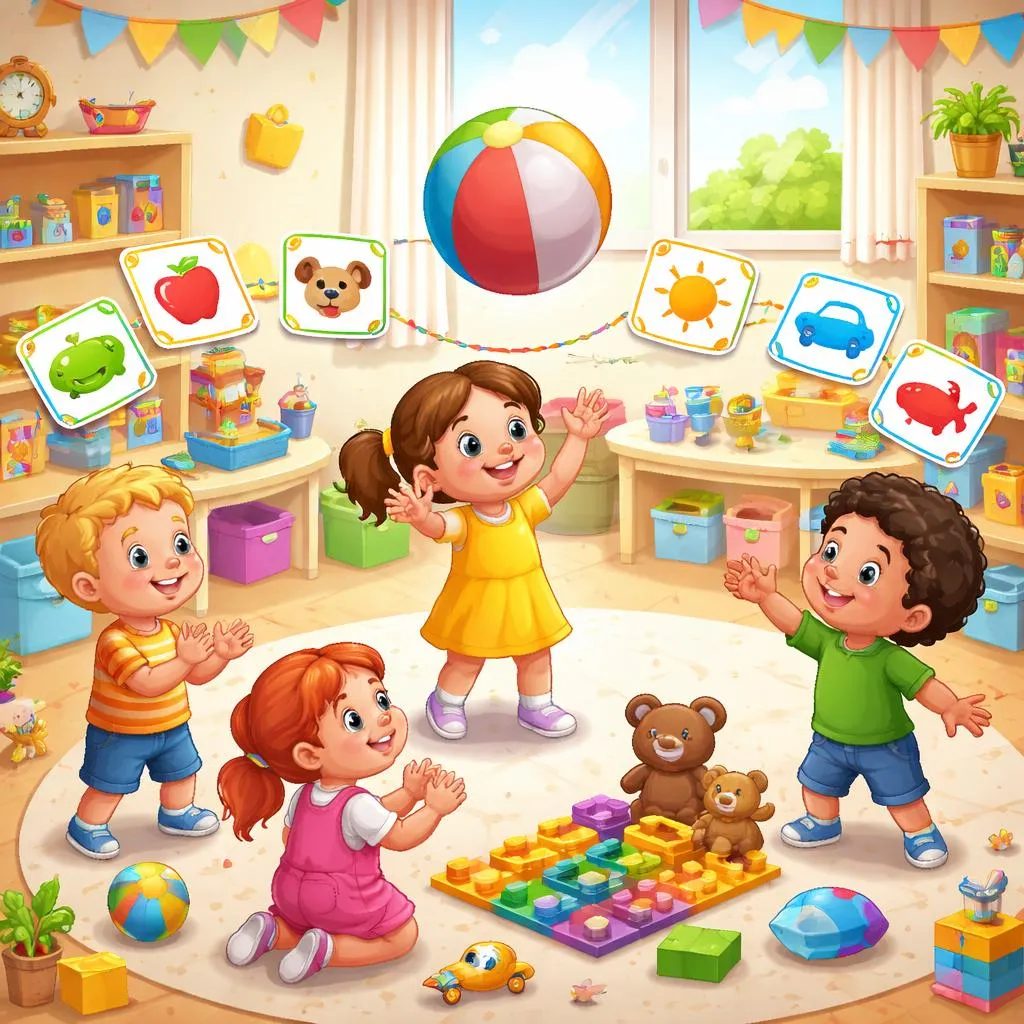

Hello, little word catcher! Do you know how to play catch? You throw a ball. Your friend catches it. The ball is caught. In a sentence, we can play catch with words too! The action word (verb) throws the action. The word that catches the action is called the object. The object receives the action. It is the catcher's mitt! Today, we will play catch with sixty wonderful word balls. Our guide is Ollie the Octopus. Ollie has eight arms, perfect for catching! He will show us objects at home, the playground, school, and in the ocean. Let's play!
What Is an Object? An object is your sentence catcher's mitt. It is a noun or a pronoun. It receives the action of the verb. The subject does the action. The object gets the action. At home, you say "I hug my mom." The action is "hug". Who gets the hug? My mom! "My mom" is the object. At the playground, you say "I kick the ball." The object is "the ball". It receives the kick. At school, you say "The teacher reads a book." The object is "a book". In nature, Ollie says "I catch a fish." "Ollie loves his friends." Learning these must-know objects makes your sentences complete and clear.
Why Do We Need a Catcher's Mitt? Objects are your completion tools! They help your ears listen. You know what is receiving the action. They help your mouth speak. You can say exactly what you are acting upon. "I want the red apple." They help your eyes read. You will see objects finishing the thought in stories. They help your hand write. You can write sentences that tell the whole story. A sentence with an action often needs a catcher's mitt. Without it, the action might feel incomplete. "I draw" is okay. "I draw a picture" is even better!
What Are the Main Types of Catcher's Mitts? We have two main types of objects. Each one catches in a slightly different way.
First, the direct object. This catches the action of the verb directly. It answers "What?" or "Whom?". "I eat a sandwich." (Eat what? A sandwich). "I see you." (See whom? You).
Next, the object of a preposition. This comes after a preposition (like in, on, with, to). It is part of a prepositional phrase. "I play with my friend." The word "friend" is the object of the preposition "with".
For 5-year-olds, we will focus on simple direct objects. They are the most common and useful catcher's mitts.
How Can You Find the Catcher's Mitt? Finding the object is a fun game. First, find the subject and the verb. Then, ask the question: Subject + Verb + What? or Whom? The answer is often the direct object. Look at Ollie's game. "Ollie holds a seashell." Ask: Ollie holds what? A seashell. The object is "a seashell". You found the mitt! Another trick: The object usually comes after the verb. It is often a noun or pronoun.
How Do We Play Sentence Catch? Playing sentence catch is about putting the parts in order. A common order is: Subject + Verb + Object. "The girl throws the ball." You can add more words, but this is the basic game. Ollie shows us. "I + love + you." Subject: I. Verb: love. Object: you. Start with a simple action. Then ask yourself, "What did I act upon?" That is your object.
Let's Fix Some Dropped Catches. Sometimes we drop the ball. Let's fix that. A common mix-up is using a subject pronoun as an object. A child might say "Mom hugged I." This is wrong. "I" is a subject pronoun. For the object, we need "me". The right way is "Mom hugged me." Another mix-up is forgetting the object when it is needed. "I am drawing" is fine. But if you are drawing something specific, add the object: "I am drawing a house." Also, the object must make sense with the verb. You "eat food", not "eat running".
Can You Be a Catch Champion? You are a great champion! Let's play the "Find the Mitt" game. I will say a sentence. You find the object. "We read a story." You say: "a story!" "I helped my dad." You say: "my dad!" Great! Here is a harder challenge. Take the verb "see". Say three sentences with three different objects. "I see a car. I see the sky. I see you." You are catching must-know objects.
Your Trophy Case of 60 Must-Know Objects. Ready to see your trophies? Here are sixty wonderful objects. Ollie the Octopus has caught them all. They are grouped by the scene. Remember, these are the words that catch the action.
Home Objects (15 Catches).
- I love my family.
- Mom reads a story.
- Dad fixes the car.
- I wash my hands.
- We eat dinner.
- I hug my teddy bear.
- The dog eats his food.
- I see my toys.
- I hear a noise.
- I make my bed.
- I find my sock.
- I open the door.
- I drink my milk.
- I share my cookies.
- I thank my mom.
Playground Objects (15 Catches).
- I push the swing.
- I kick the ball.
- I climb the ladder.
- I catch the frisbee.
- I slide down the slide.
- I dig a hole.
- I throw the sand.
- I play a game.
- I see my friends.
- I hear laughter.
- I feel the sunshine.
- I share my shovel.
- I watch the birds.
- I ride my bike.
- I enjoy the park.
School Objects (15 Catches).
- The teacher teaches the class.
- I write my name.
- I read a book.
- I draw a picture.
- I color the circle.
- I cut the paper.
- I glue the pieces.
- I ask a question.
- I answer the teacher.
- I listen to a story.
- I learn new words.
- I raise my hand.
- I carry my backpack.
- I like my school.
- I help my friend.
Nature and Animal Objects (15 Catches).
- I see a tree.
- I hear a bird.
- I smell a flower.
- I touch the grass.
- I watch the clouds.
- I pick up a rock.
- I plant a seed.
- I water the plant.
- I feed the ducks.
- I walk my dog.
- I love animals.
- I hear the wind.
- I feel the rain.
- I enjoy nature.
- I protect the Earth.
Objects of Prepositions. Objects can also follow little words like to, for, with, at. Here are a few more examples from our scenes: I play with my sister. (Object of the preposition: sister) The toy is for you. (Object: you) I sit on the chair. (Object: the chair) We go to the park. (Object: the park) I draw with a crayon. (Object: a crayon)
These sixty objects are your must-know catcher's mitts. Use them to complete your action sentences.
Completing Your Thoughts with a Perfect Catch. You did it! You are now an object expert. You know an object is the catcher's mitt in a sentence. It receives the action of the verb. You can find it by asking "what?" or "whom?" after the verb. Ollie the Octopus is proud of your catching skills. Now you can make sentences that are full and complete. Your sentences will clearly tell who did what to whom or what.
Here is what you can learn from our game of catch. You will know what an object is. You will understand that an object receives the action. You can identify the direct object in a sentence. You can use objects correctly after action verbs. You have a trophy case of sixty key objects to use in your speech.
Now, let's do some life practice! Your mission is today. Be a word catcher. Listen for actions. Then, say what receives the action. Tell your grown-up: "I am holding a cup. I am eating an apple. I see you." You just used three different objects! Keep playing sentence catch every day. Have fun, little champion!