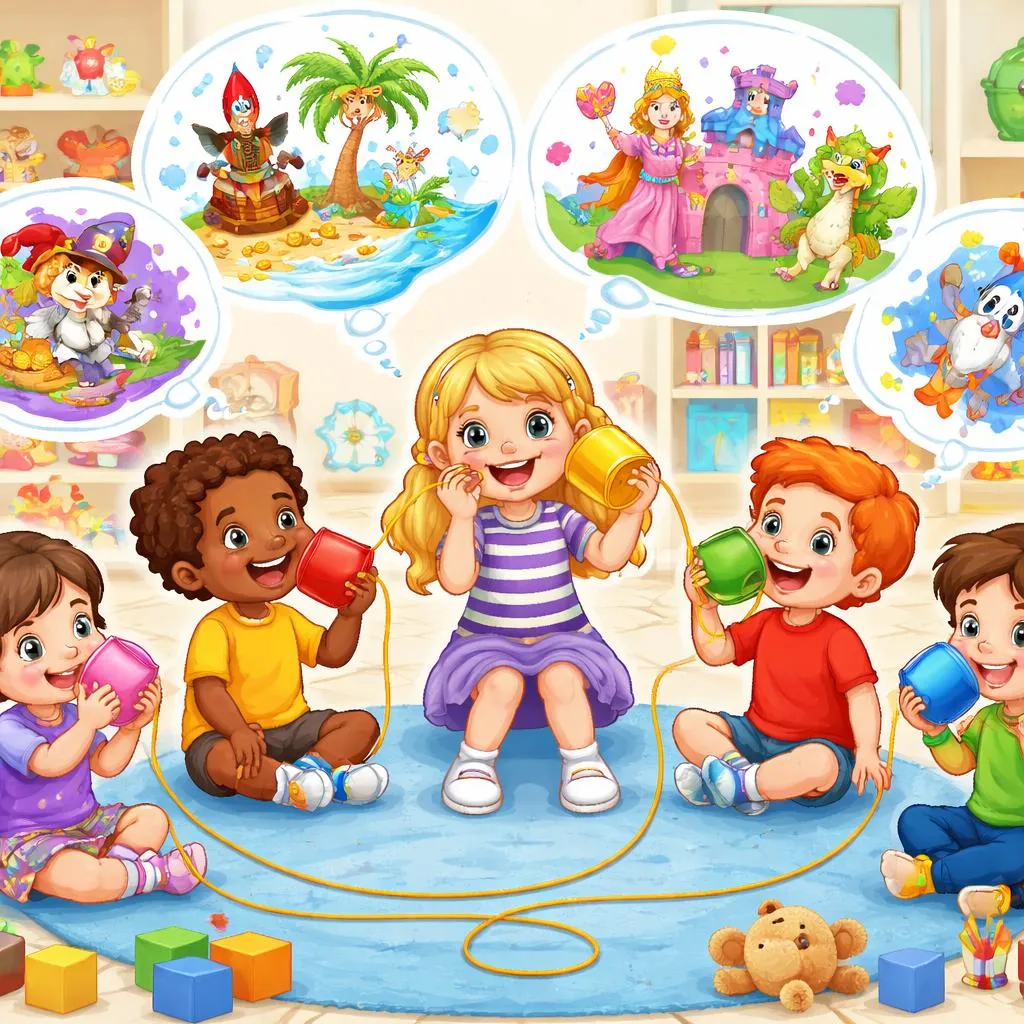

Hello, little word reporter! Do you know about a telephone? You can hear your friend's exact words. "I am happy!" they say. Then, you can tell someone else. You can say, "My friend said she was happy." Your words can be a telephone too! This is called direct and indirect speech. Direct speech shares the exact words. Indirect speech shares the meaning. Today, we will share sixty wonderful stories. Our guide is Daisy the Storyteller Dolphin. Daisy loves to share messages! She will show us direct and indirect speech at home, the playground, school, and in the ocean. Let's start the call!
What Is Direct and Indirect Speech?
Direct and indirect speech is your storytelling telephone. Direct speech is when you tell the exact words someone said. You use quotation marks. It is like a live call. At home, your mom says, "Please clean your room." You tell your dad, "Mom said, 'Please clean your room.'" Those are her exact words. That is direct speech. Indirect speech is when you tell what someone said, but not their exact words. You do not use quotes. It is like leaving a message. You tell your dad, "Mom said to clean my room." You shared the meaning. At the playground, a friend says, "I want to swing." You report, "My friend said she wanted to swing." At school, the teacher says, "It is time for lunch." You tell a friend, "The teacher said it was time for lunch." In nature, Daisy says, "The ocean is big." "Daisy said the ocean was big." Learning these must-know sentences helps you become a great storyteller.
Why Do We Need a Storytelling Telephone?
Direct and indirect speech are your reporting tools! They help your ears listen. You can remember and share important messages. They help your mouth speak. You can tell stories about what people said. They help your eyes read. You will see quotation marks in all your storybooks. They help your hand write. You can write down conversations in your own stories. Using your storytelling telephone makes you a great friend and reporter.
How Can You Spot the Difference?
Spotting direct and indirect speech is a fun game. Look for these clues.
For direct speech, look for quotation marks (" "). The words inside are the exact words. Also, look for a speaker verb like "said", "shouted", or "asked" before or after the quotes.
For indirect speech, there are no quotation marks. The sentence often has the word "that" after the speaker verb. The pronouns and verbs might change. "I" becomes "he" or "she". "am" becomes "was".
Look at Daisy's message. Direct: Daisy said, "I love to swim." Indirect: Daisy said that she loved to swim. See the difference? Another trick: Direct speech feels like a performance. Indirect speech feels like a summary.
How Do We Use Our Storytelling Telephone?
Using direct and indirect speech is about following simple rules. For direct speech, use quotation marks and a comma to introduce the words. Formula: Speaker + said, "Exact words." For indirect speech, use the word "that" (you can sometimes leave it out) and change the words to fit. Formula: Speaker + said + (that) + reported words. Daisy shows us. Direct: "The water is blue," said Daisy. Indirect: Daisy said the water was blue. Start by repeating exactly what someone says. Then, try to tell someone else the same idea in your own words.
Let's Fix Some Mixed-Up Messages.
Sometimes our telephone lines get crossed. Let's fix that. A common mix-up is forgetting the quotation marks in direct speech. A child might write: Mom said clean your room. This is indirect. For direct, add quotes: Mom said, "Clean your room." Another mix-up is using the wrong pronoun in indirect speech. "He said I am tired" is confusing. Did he say "I am tired" or are you tired? Better: He said he was tired. Also, remember to change the verb tense sometimes. "I am happy" becomes "She said she was happy."
Can You Be a Storytelling Expert?
You are a great expert! Let's play the "Direct or Indirect?" game. I will say a sentence. You tell me if it is direct or indirect speech. "She said, 'I am five.'" You say: "Direct!" "She said she was five." You say: "Indirect!" Great! Here is a harder challenge. Listen to someone today. Can you report what they said using both direct and indirect speech?
Your Storybook of 60 Must-Know Examples.
Ready to fill your storybook? Here are sixty wonderful direct and indirect speech sentences. Daisy the Dolphin helped collect them. They are grouped by the scene. The direct speech is in quotes. The indirect speech follows.
Home Storybook (15).
- Mom said, "Dinner is ready." Mom said that dinner was ready.
- Dad said, "I love you." Dad said he loved me.
- The baby said, "Goo goo." The baby made a happy sound.
- I said, "I am tired." I said that I was tired.
- My sister said, "This is my toy." My sister said it was her toy.
- The dog barked, "Woof!" The dog barked loudly.
- Grandma said, "Have a cookie." Grandma told me to have a cookie.
- I said, "I want milk." I said I wanted milk.
- Dad said, "Brush your teeth." Dad told me to brush my teeth.
- Mom said, "Be careful." Mom told me to be careful.
- I said, "I see a bird." I said I saw a bird.
- My brother said, "It is my turn." My brother said it was his turn.
- The cat meowed, "Meow." The cat made a noise.
- Mom said, "Time for bed." Mom said it was time for bed.
- We all said, "Good night." We all said good night.
Playground Storybook (15).
- My friend said, "Push me!" My friend asked me to push her.
- The coach said, "Run fast!" The coach told us to run fast.
- I said, "I got the ball!" I said I had gotten the ball.
- A child said, "My turn next." A child said it was her turn next.
- The teacher said, "Line up." The teacher told us to line up.
- I said, "This is fun!" I said that was fun.
- My friend said, "Let's play tag." My friend suggested we play tag.
- The big kid said, "No cutting." The big kid said not to cut in line.
- I said, "I am thirsty." I said I was thirsty.
- The guard said, "Swing safely." The guard told us to swing safely.
- We all said, "Ready or not, here I come!" We all yelled the start of the game.
- A friend said, "You are it!" A friend said I was it.
- I said, "I want to slide." I said I wanted to slide.
- The bell rang, "Ding!" The bell made a ringing sound.
- Everyone said, "Bye!" Everyone said goodbye.
School Storybook (15).
- The teacher said, "Open your books." The teacher told us to open our books.
- I said, "I know the answer." I said I knew the answer.
- My classmate said, "Can I have a crayon?" My classmate asked for a crayon.
- The principal said, "Be kind." The principal told us to be kind.
- The storybook said, "Once upon a time " The storybook began with those words.
- I said, "I need help." I said I needed help.
- The teacher said, "Great job!" The teacher said I did a great job.
- My friend said, "Sit by me." My friend asked me to sit by her.
- The rule says, "Walk in the hall." The rule says to walk in the hall.
- I said, "I finished my work." I said I had finished my work.
- The teacher said, "Today is Monday." The teacher said that day was Monday.
- The student said, "I have a question." The student said he had a question.
- The song says, "The wheels on the bus " The song goes like that.
- I said, "I like school." I said I liked school.
- We all said, "The Pledge of Allegiance." We all recited the pledge.
Nature and Animal Storybook (15).
- The guide said, "Look at the tree." The guide told us to look at the tree.
- I said, "I hear a bird." I said I heard a bird.
- The sign said, "Do not feed the animals." The sign said not to feed the animals.
- The wind seemed to say, "Whoosh." The wind made a whooshing sound.
- Dad said, "The sun is setting." Dad said the sun was setting.
- I said, "The flower is pretty." I said the flower was pretty.
- The ocean says, "Crash!" with its waves. The ocean waves crash.
- Mom said, "Stay on the path." Mom told me to stay on the path.
- I said, "I see a bug." I said I saw a bug.
- The squirrel chattered, "Chit chit." The squirrel chattered noisily.
- The camper said, "The stars are bright." The camper said the stars were bright.
- I said, "I love nature." I said I loved nature.
- The gardener said, "Plants need water." The gardener said plants needed water.
- The duck said, "Quack." The duck quacked.
- We all said, "What a beautiful day!" We all exclaimed it was a beautiful day.
Sharing Stories Clearly.
You did it! You are now a direct and indirect speech expert. You know direct speech uses exact words in quotes. You know indirect speech reports the meaning without quotes. You can spot the difference and use both. Daisy the Storyteller Dolphin is proud of your reporting skills. Now you can share conversations and stories clearly. Your storytelling will be accurate and fun.
Here is what you can learn from our telephone adventure. You will know the difference between direct and indirect speech. You will understand how to use quotation marks for direct speech. You can change a simple direct sentence into an indirect one. You can report what someone said in your own words. You have a storybook of sixty key direct and indirect speech examples.
Now, let's do some life practice! Your mission is today. Be a word reporter. Listen to someone. Then, tell someone else what they said. Use both ways. Say, "My sister said, 'I am hungry.'" Then say, "My sister said she was hungry." You just used direct and indirect speech! Keep sharing stories with your word telephone every day. Have fun, little reporter!